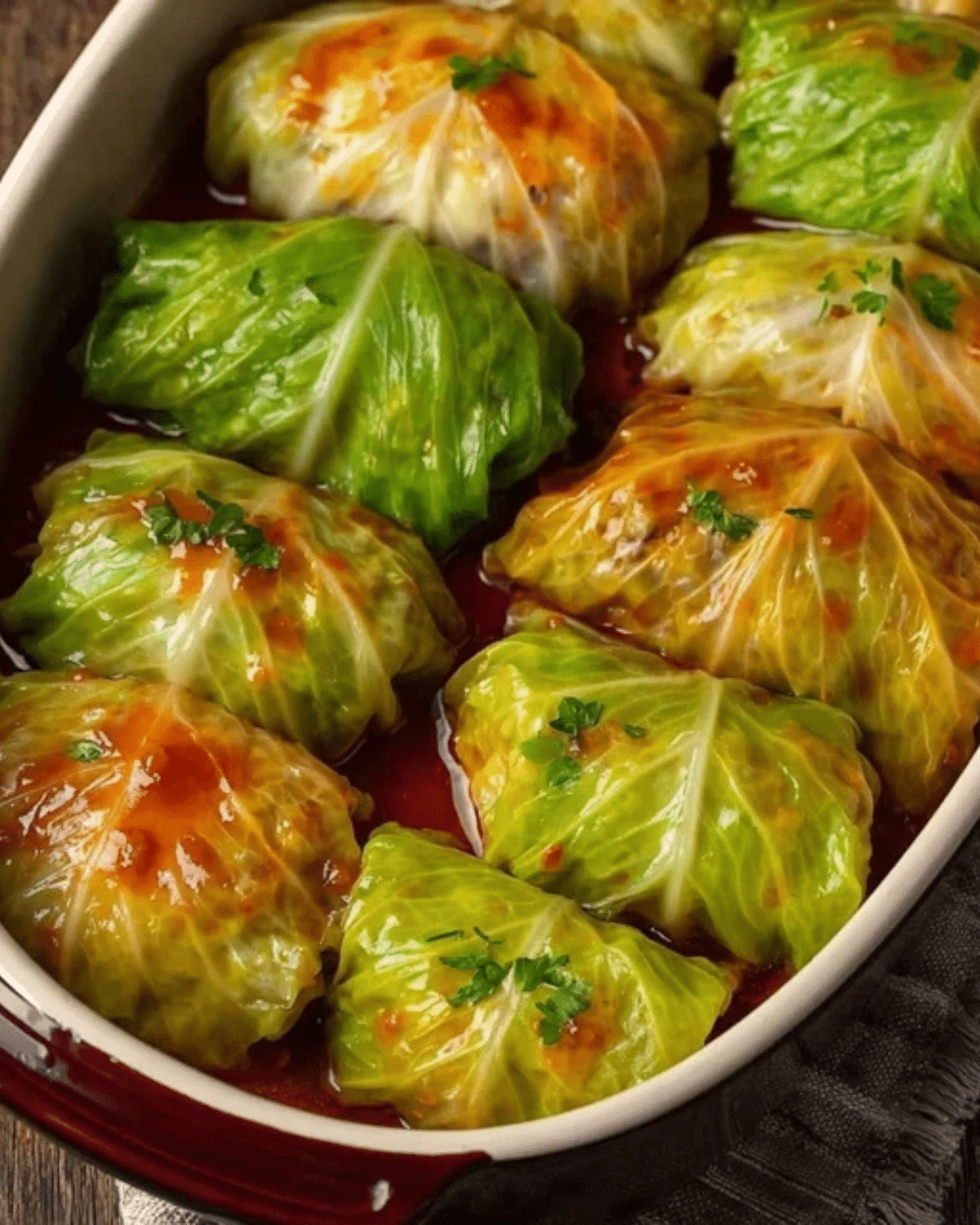
Homemade Polish cabbage rolls with ground beef are a classic comfort food that brings warmth, tradition, and rich flavor to the table. This homemade Polish cabbage rolls with ground beef recipe features tender cabbage leaves wrapped around a savory beef and rice filling, then cooked slowly in a flavorful tomato-based sauce. It’s the kind of dish that feels special, yet deeply familiar.
Polish cabbage rolls, often known as gołąbki, have been enjoyed for generations. While they take a little time to prepare, the result is well worth the effort. In this guide, you’ll learn what makes Polish cabbage rolls unique, how they differ from other versions, and why they remain a beloved homemade meal today.
JUMP TO
Table of Contents
What Are Polish Cabbage Rolls and Why They’re So Popular
Polish cabbage rolls are a traditional dish made by wrapping seasoned ground beef and rice inside softened cabbage leaves, then cooking them gently until tender. They’re hearty, comforting, and designed to feed families generously.
Traditional Polish Cabbage Rolls Explained
In Polish cuisine, cabbage rolls are more than just food. They represent home cooking at its best. The combination of cabbage, beef, rice, and tomato sauce creates a balanced dish that’s filling without being heavy.
The cabbage leaves soften during cooking, allowing them to wrap snugly around the filling. As the rolls cook, flavors blend together, creating a dish that tastes even better the next day.
Why Cabbage Rolls Are Comfort Food Staples
Cabbage rolls are comforting because they’re slow-cooked, hearty, and familiar. Each roll feels substantial, making them perfect for family dinners, holidays, and gatherings.
They’re also practical. Cabbage rolls can be made ahead, stored easily, and reheated without losing flavor. That practicality has helped them remain popular across generations.
How Polish Cabbage Rolls Differ From Other Versions
While many cultures have stuffed cabbage dishes, Polish cabbage rolls typically focus on simple seasoning and balanced flavor. The emphasis is on the cabbage and beef rather than heavy spices.
Compared to other versions, Polish cabbage rolls often use a lighter tomato sauce and rely on slow cooking to develop flavor rather than bold seasoning blends.
Ingredients Needed for Homemade Polish Cabbage Rolls
Homemade Polish cabbage rolls with ground beef rely on straightforward ingredients that come together to create deep, comforting flavor. While the list isn’t long, each ingredient plays a specific role, so choosing and preparing them carefully makes a noticeable difference in the final dish.
Core Ingredients for Authentic Polish Cabbage Rolls
Green cabbage is the foundation of this recipe. Its large, flexible leaves soften beautifully when cooked, making them ideal for wrapping around the filling. Ground beef provides richness and structure, giving the rolls their hearty character. Rice helps bind the filling while adding texture and balance.
Onion and garlic form the aromatic base of the filling. They add depth without overpowering the natural flavor of the beef and cabbage. Tomato sauce or crushed tomatoes are used during cooking to keep the rolls moist and to create a gentle, savory sauce that ties everything together.
Salt and black pepper are the primary seasonings. Traditional Polish cabbage rolls are not heavily spiced, which allows the ingredients themselves to shine.
Choosing the Best Cabbage for Rolling
Selecting the right cabbage is one of the most important steps. Look for a large head of green cabbage with tight but flexible leaves. The leaves should feel sturdy without being thick or brittle.
A fresh cabbage with pale green leaves works best. Older cabbage tends to tear more easily and can be harder to soften evenly. Larger heads are ideal because they provide leaves that are wide enough to wrap the filling securely.
Ground Beef, Rice, and Seasoning Choices
Lean ground beef is a good choice for cabbage rolls because it provides flavor without releasing too much fat during cooking. A moderate fat content keeps the filling juicy while preventing the rolls from becoming greasy.
White rice is traditionally used because it cooks evenly and blends smoothly with the beef. The rice should be slightly cooked or parboiled before mixing so it finishes cooking inside the rolls without becoming mushy.
Seasoning should remain simple. Salt, black pepper, and sometimes a small amount of dried herbs are enough. Over-seasoning can mask the delicate flavor of the cabbage.
How to Make Homemade Polish Cabbage Rolls Step by Step
Making Polish cabbage rolls is a process, but each step is manageable. Taking time with preparation helps ensure the rolls hold together and cook evenly.
Preparing Cabbage Leaves for Rolling
Start by removing the core from the cabbage. Place the whole head into a large pot of boiling water. As the outer leaves soften, gently peel them away using tongs. Continue until you have enough large leaves for rolling.
Lay the softened leaves flat on a cutting board and trim the thick center vein slightly to make them easier to roll. Be careful not to cut all the way through the leaf, as this can cause tearing.
Let the leaves cool slightly before handling so they’re easier to work with.
Making the Ground Beef Filling
In a large bowl, combine ground beef, partially cooked rice, finely chopped onion, minced garlic, salt, and black pepper. Mix gently until just combined. Overmixing can make the filling dense.
The mixture should be moist but firm enough to hold its shape. If it feels too dry, a small amount of water or tomato sauce can be added to loosen it slightly.
Rolling and Assembling Cabbage Rolls
Place a cabbage leaf on a flat surface with the stem end facing you. Spoon a portion of the filling near the bottom of the leaf. Fold the bottom over the filling, then fold in the sides and roll tightly upward.
Repeat with the remaining leaves and filling. Arrange the rolls seam-side down in a baking dish or pot so they stay closed during cooking.
At this stage, the cabbage rolls are ready to be cooked using your preferred method, whether baked or simmered.
Cooking Methods for Polish Cabbage Rolls
Once the cabbage rolls are assembled, the cooking method you choose will shape the final texture and flavor. Polish cabbage rolls with ground beef can be cooked slowly in the oven or gently simmered on the stovetop. Both methods work well, and the choice often depends on tradition, convenience, and personal preference.

Baking Cabbage Rolls in the Oven
Oven baking is one of the most popular methods for cooking homemade Polish cabbage rolls. It allows the rolls to cook evenly and develop flavor slowly without much hands-on attention.
To bake them, arrange the cabbage rolls snugly in a deep baking dish. Pour tomato sauce or crushed tomatoes over the rolls, making sure they are mostly covered. This keeps the cabbage moist and prevents drying.
Cover the dish tightly with foil and bake at a moderate temperature until the rolls are tender and the filling is fully cooked. Keeping the dish covered is important, especially during the first part of cooking, because it traps steam and softens the cabbage leaves further. Toward the end, uncovering the dish allows excess moisture to evaporate and slightly thickens the sauce.
Oven-baked Polish cabbage rolls tend to have a soft, cohesive texture, with flavors that blend deeply as they cook.
Stovetop Simmering Method
The stovetop method is another traditional way to cook Polish cabbage rolls. This approach is often used when cooking larger batches or when oven space is limited.
To simmer the rolls, place them seam-side down in a large pot. Pour tomato sauce and a small amount of water or broth over them until they are mostly submerged. Bring the pot to a gentle simmer, then reduce the heat to low and cover.
The rolls should cook slowly, never at a rolling boil. Gentle simmering prevents the rolls from breaking apart and helps the filling cook evenly. Stirring is not necessary and should be avoided to keep the rolls intact.
Stovetop-simmered cabbage rolls are especially tender, with a sauce that stays lighter and more fluid compared to oven-baked versions.
How Long to Cook Cabbage Rolls Properly
Cooking time depends on the method used and the size of the rolls. Most Polish cabbage rolls take between one and one and a half hours to cook fully.
The rolls are done when the cabbage is very tender and the filling is cooked through. Cutting into one roll to check doneness is the best way to be sure. The rice should be soft, and the beef should be fully cooked but still juicy.
Rushing the cooking process can result in tough cabbage or undercooked filling, so low and slow is always the best approach.
Polish Cabbage Roll Variations You Can Try
While traditional Polish cabbage rolls follow a simple formula, there’s room for variation without losing their character.
Beef and Rice Cabbage Rolls
This is the most classic version and the one most people associate with Polish cabbage rolls. The balance of ground beef and rice creates a filling that’s hearty without being heavy.
Adjusting the ratio of beef to rice slightly can change the texture. More rice makes the filling lighter, while more beef makes it richer.
Stuffed Cabbage Rolls Without Rice
Some variations skip rice altogether and rely solely on ground beef. These rolls are denser and more protein-focused. They’re often served with extra sauce to keep them moist.
This option is popular for those looking to reduce carbohydrates while still enjoying traditional flavors.
Freezer-Friendly Cabbage Rolls
Polish cabbage rolls freeze very well. They can be frozen either before or after cooking. Uncooked rolls should be frozen without sauce, while cooked rolls freeze best when stored with sauce to protect moisture.
Freezer-friendly cabbage rolls are ideal for meal prep and make-ahead dinners.
Serving Ideas for Polish Cabbage Rolls
Polish cabbage rolls are filling on their own, but traditional sides can round out the meal.
Traditional Side Dishes to Serve
Classic sides include mashed potatoes, boiled potatoes, or simple bread. These sides help soak up the tomato sauce and balance the richness of the rolls.
Light salads or pickled vegetables are also commonly served to add freshness and contrast.
Portion Sizes and Plating Tips
Two cabbage rolls per person is a standard serving for dinner. Larger rolls may be served individually, depending on appetite.
Serve the rolls with sauce spooned over the top to keep them moist and visually appealing.
When to Serve Cabbage Rolls
Homemade Polish cabbage rolls are often served for family dinners, holidays, and special gatherings. They’re also popular for Sunday meals because they can be prepared ahead of time and reheated easily.
Storage, Freezing, and Reheating Cabbage Rolls
Polish cabbage rolls are known for tasting even better the next day, making them ideal for leftovers.
How Long Cabbage Rolls Last in the Fridge
Once cooled, store cabbage rolls in an airtight container in the refrigerator. They keep well for up to four days. The flavors continue to develop as they rest.
Freezing Cooked and Uncooked Cabbage Rolls
Cooked cabbage rolls can be frozen with their sauce for up to three months. Uncooked rolls can also be frozen, but they should be thawed before cooking to ensure even heat distribution.
Best Reheating Methods
Reheat cabbage rolls slowly on the stovetop or in the oven, covered, to prevent drying. Adding a small amount of sauce helps restore moisture.
Microwaving works for individual portions, but slower reheating methods preserve texture better.
FAQs About Homemade Polish Cabbage Rolls
Do You Need to Boil Cabbage Before Making Rolls
Yes, cabbage leaves should be softened in boiling water before rolling. This makes them flexible and easier to work with.
Why Do Cabbage Rolls Fall Apart
Cabbage rolls can fall apart if the leaves are torn or if the rolls are not packed snugly during cooking. Keeping them seam-side down helps them stay intact.
Can Cabbage Rolls Be Made Ahead
Yes, cabbage rolls are excellent for making ahead. They can be assembled a day in advance and cooked later or fully cooked and reheated.
Are Polish Cabbage Rolls Healthy
Polish cabbage rolls can be part of a balanced meal. They provide protein from ground beef, carbohydrates from rice, and fiber from cabbage. Portion control and moderate sauce use help keep them balanced.
Conclusion: Why Homemade Polish Cabbage Rolls Are Worth the Effort
Homemade Polish cabbage rolls with ground beef are a true comfort food classic. While they take time to prepare, the process is straightforward, and the reward is a deeply satisfying meal rooted in tradition. Tender cabbage, savory beef filling, and gentle tomato sauce come together to create a dish that feels both hearty and comforting.
Whether served fresh from the oven or reheated the next day, Polish cabbage rolls deliver warmth, flavor, and a sense of home. For cooks who value tradition and homemade meals, this recipe is always worth the effort.
PrintHomemade Polish Cabbage Rolls with Ground Beef – Classic Comfort Recipe

Homemade Polish cabbage rolls with ground beef are a traditional comfort dish made with tender cabbage leaves stuffed with seasoned beef and rice, then slowly cooked in a light tomato sauce.
- Prep Time: 40 minutes
- Cook Time: 1 hour 15 minutes
- Total Time: 1 hour 55 minutes
- Yield: 6 servings 1x
- Category: Main Dish
- Method: Baking or Simmering
- Cuisine: Polish
- Diet: Low Lactose
Ingredients
- 1 large green cabbage
- 1½ pounds ground beef
- 1 cup uncooked white rice, partially cooked
- 1 medium yellow onion, finely chopped
- 2 cloves garlic, minced
- 1 teaspoon salt
- ½ teaspoon black pepper
- 2 cups tomato sauce
- 1 cup crushed tomatoes
- ½ cup water or broth
Instructions
- Remove the core from the cabbage and boil the head until leaves soften.
- Carefully remove softened leaves and trim thick veins.
- In a bowl, mix ground beef, partially cooked rice, onion, garlic, salt, and pepper.
- Place filling on each cabbage leaf, fold sides inward, and roll tightly.
- Arrange rolls seam-side down in a baking dish or pot.
- Mix tomato sauce, crushed tomatoes, and water or broth, then pour over rolls.
- Cover and bake or simmer gently until cabbage is tender and filling is cooked.
- Serve hot with sauce spooned over the top.
Notes
- Do not overfill the cabbage leaves to prevent tearing.
- Keep rolls packed closely so they hold their shape.
- Flavor improves after resting overnight.
- Extra sauce helps keep rolls moist during reheating.
Nutrition
- Serving Size: 2 cabbage rolls
- Calories: 420
- Sugar: 8g
- Sodium: 780mg
- Fat: 18g
- Saturated Fat: 7g
- Unsaturated Fat: 10g
- Trans Fat: 0g
- Carbohydrates: 32g
- Fiber: 6g
- Protein: 28g
- Cholesterol: 85mg