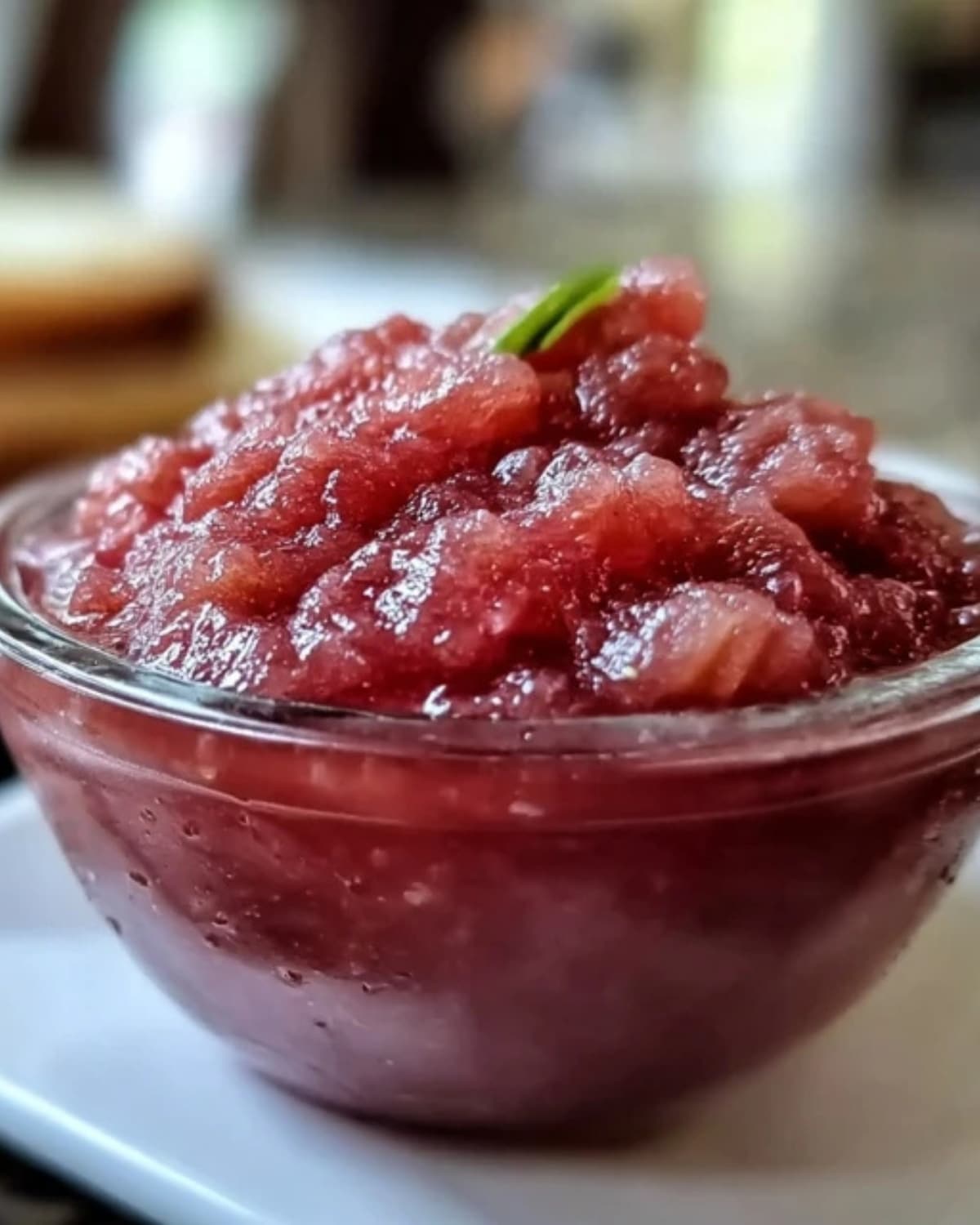
Rhubarb butter is a silky, sweet-tart fruit spread made by slowly cooking rhubarb until thick and smooth. Unlike chunky preserves, rhubarb butter has a velvety texture that spreads easily on toast, biscuits, or muffins. If you love bright spring flavors, this simple homemade recipe deserves a place in your kitchen.
In this complete guide, you’ll learn how to make rhubarb butter from scratch, how to thicken it naturally without pectin, and how to store it properly. Whether you’re new to fruit butters or already enjoy homemade spreads, this recipe is both easy and rewarding.
JUMP TO
Table of Contents
Why Rhubarb Butter Is the Perfect Seasonal Spread
Although rhubarb is often used in pies and crisps, transforming it into rhubarb butter creates something uniquely smooth and versatile.
What Is Rhubarb Butter?
Rhubarb butter is a fruit butter made by slowly simmering rhubarb with sugar until it thickens and becomes smooth. The mixture is often blended for a creamy consistency.
Unlike traditional butter, there’s no dairy involved. The name simply refers to the silky texture.
How Rhubarb Butter Differs from Jam and Compote
While jam contains chunks of fruit and sometimes added pectin, rhubarb butter is blended until smooth and cooked longer to concentrate flavor.
Compote, on the other hand, is typically looser and spoonable. Rhubarb butter falls somewhere between a spread and a thick sauce.
Because of its smooth texture, it spreads evenly without fruit pieces.
The Unique Sweet-Tart Flavor Profile
Rhubarb has a natural tang that shines in this recipe. When cooked slowly with sugar, the sharpness softens while still retaining a bright finish.
The result is rhubarb butter that tastes balanced — not overly sweet, yet not too sour. A touch of vanilla or cinnamon can add warmth without overpowering the fruit.
For safe food handling practices when working with fresh produce, consult the USDA Food Safety and Inspection Service website for reliable guidelines.
Ingredients for the Best Homemade Rhubarb Butter
One of the best things about rhubarb butter is its simplicity. Only a few ingredients are needed to create deep flavor.

Choosing Fresh or Frozen Rhubarb
Fresh rhubarb is ideal during spring. Look for firm, crisp stalks with vibrant color and no wilting.
However, frozen rhubarb works well too. If using frozen, thaw completely and drain excess liquid before cooking.
Sweetener Options and Flavor Enhancers
Granulated sugar is the most common sweetener for rhubarb butter. However, you can experiment with:
- Brown sugar for deeper caramel notes
- Honey for natural sweetness
- Maple syrup for added richness
Optional flavor enhancers include vanilla extract, orange zest, or a pinch of cinnamon.
Do You Need Pectin for Rhubarb Butter?
Unlike jam, rhubarb butter does not require pectin. The thick texture develops naturally as moisture evaporates during simmering.
Cooking slowly over low heat helps concentrate flavor and achieve the perfect consistency.
Ingredient Measurements Table
| Ingredient | Amount | Preparation |
|---|---|---|
| Fresh rhubarb | 4 cups | Chopped |
| Granulated sugar | 3/4 cup | Adjust to taste |
| Water | 2 tablespoons | Prevent sticking |
| Vanilla extract (optional) | 1/2 teaspoon | Added at end |
| Cinnamon (optional) | 1/4 teaspoon | Optional |
How to Make Rhubarb Butter Step by Step
Making rhubarb butter requires patience, but the process is straightforward.
Preparing and Cooking the Rhubarb
First, rinse and trim the rhubarb stalks. Cut them into even pieces.
Place chopped rhubarb, sugar, and water in a saucepan over medium heat. Stir occasionally as the rhubarb releases its juices.
Once the mixture begins to bubble, reduce heat to low and simmer for 15–20 minutes until the fruit softens completely.
Blending for a Smooth Texture
After cooking, use an immersion blender to puree the mixture until smooth. Alternatively, carefully transfer it to a blender and process until velvety.
Blending is what gives rhubarb butter its signature creamy texture.
Simmering to the Perfect Thickness
Return the pureed mixture to the saucepan. Continue simmering on low heat for another 15–20 minutes, stirring frequently.
As moisture evaporates, the rhubarb butter thickens. It’s ready when it coats the back of a spoon without running quickly.
Storage and Preservation Tips
Allow the rhubarb butter to cool completely before transferring it to clean jars.
Store in the refrigerator for up to two weeks. You can also freeze it in small containers for up to three months.
Expert Tips for Perfect Rhubarb Butter
Although rhubarb butter is simple to prepare, a few small adjustments can dramatically improve the final texture and flavor. Because the mixture thickens as it cooks, careful attention ensures a smooth, rich spread instead of a scorched or overly thin result.
How to Prevent Burning
Since rhubarb butter cooks down for an extended period, it can stick to the bottom of the pan if left unattended. Therefore, always use a heavy-bottomed saucepan. This distributes heat more evenly and reduces hot spots.
Additionally, keep the heat low during the final simmer. As the mixture thickens, stir more frequently to prevent scorching. Once it reaches a thicker consistency, even a few minutes without stirring can cause sticking.
If you notice slight sticking, lower the heat immediately and continue stirring gently. Avoid scraping burnt bits from the bottom, as they can affect flavor.
Adjusting Sweetness and Acidity
Rhubarb naturally carries a bold tang. Because of this, adding sugar gradually allows better flavor control. Start with the recommended amount, then taste once the mixture has softened.
If it’s too tart, stir in small amounts of sugar or honey. However, remember that flavors intensify as the butter cools. For that reason, avoid over-sweetening while it’s still hot.
To round out acidity without adding too much sugar, try:
- A splash of orange juice
- A pinch of salt
- A dash of vanilla extract
These additions enhance depth without masking the fruit’s character.
Achieving a Rich, Velvety Texture
Texture is what sets rhubarb butter apart from jam. After blending, continue simmering until the mixture becomes thick and glossy. It should slowly fall from a spoon rather than drip quickly.
For an ultra-smooth finish, strain the puree through a fine-mesh sieve before the final simmer. Although optional, this step removes fibers and creates a silkier consistency.
Most importantly, allow the spread to cool completely before judging thickness. Rhubarb butter continues to thicken as it rests.
Delicious Ways to Use Rhubarb Butter
Once you make a batch, you’ll quickly discover how versatile rhubarb butter can be. Its smooth texture and bright flavor make it perfect for both sweet and savory dishes.
Breakfast Favorites
Spread rhubarb butter over warm toast, English muffins, or biscuits for a simple yet flavorful breakfast. It also pairs beautifully with:
- Pancakes and waffles
- Oatmeal
- Greek yogurt
- Cottage cheese
Because it spreads easily, it blends smoothly into soft foods without clumps.
Baking and Dessert Ideas
Rhubarb butter can elevate baked goods instantly. Use it as:
- A filling for layer cakes
- A swirl in muffin batter
- A topping for cheesecake
- A glaze for sweet breads
Its concentrated flavor adds moisture and brightness to desserts.
Creative Savory Pairings
Although typically used in sweet dishes, rhubarb butter also complements savory meals. Try serving it alongside roasted pork or turkey. The sweet-tart contrast balances rich meats beautifully.
You can also stir a spoonful into vinaigrettes for a tangy salad dressing.
Frequently Asked Questions About Rhubarb Butter
How long does rhubarb butter last?
When stored in an airtight container in the refrigerator, rhubarb butter lasts up to two weeks. Always use clean utensils when scooping to extend freshness.
Can you freeze rhubarb butter?
Yes, rhubarb butter freezes very well. Portion it into freezer-safe containers, leaving some headspace for expansion. It can be frozen for up to three months. Thaw overnight in the refrigerator before using.
Is rhubarb butter the same as rhubarb jam?
No, rhubarb butter is smoother and cooked longer than jam. It does not require pectin and contains no fruit chunks. The result is a creamy, spreadable texture.
Why is my rhubarb butter too thin?
If your rhubarb butter is too thin, it likely needs more simmering time. Continue cooking over low heat until excess moisture evaporates. Keep in mind that it thickens further as it cools.
Conclusion: Make Rhubarb Butter Every Spring
Rhubarb butter is one of the simplest ways to celebrate spring produce. With minimal ingredients and gentle simmering, you can create a smooth, flavorful spread that works across meals.
Because it stores well and freezes beautifully, rhubarb butter allows you to enjoy seasonal flavor long after rhubarb disappears from markets. Once you master this easy method, you’ll find endless ways to use this sweet-tart favorite in your kitchen.
PrintRhubarb Butter – 5 Easy Steps to the Perfect Spread

Rhubarb butter is a smooth, sweet-tart fruit spread made by slowly simmering fresh rhubarb with sugar until thick and velvety. This easy homemade recipe is perfect for toast, yogurt, baking, and freezing.
- Prep Time: 10 minutes
- Cook Time: 35 minutes
- Total Time: 45 minutes
- Yield: 2 cups 1x
- Category: Spread
- Method: Baking or Simmering
- Cuisine: American
- Diet: Vegetarian
Ingredients
- 4 cups fresh rhubarb, chopped
- 3/4 cup granulated sugar (adjust to taste)
- 2 tablespoons water
- 1/2 teaspoon vanilla extract (optional)
- 1/4 teaspoon ground cinnamon (optional)
Instructions
- Rinse and trim the rhubarb stalks, then chop into even pieces.
- Place chopped rhubarb, sugar, and water into a heavy-bottomed saucepan.
- Cook over medium heat, stirring occasionally, until the rhubarb releases its juices and begins to soften.
- Reduce heat to low and simmer for 15–20 minutes, until the rhubarb is completely tender.
- Use an immersion blender (or carefully transfer to a blender) and puree until smooth.
- Return the puree to the saucepan and simmer on low heat for another 15–20 minutes, stirring frequently, until thickened.
- Stir in vanilla extract or cinnamon if using.
- Allow to cool completely before transferring to clean jars. Refrigerate or freeze for storage.
Notes
- Use a heavy-bottomed saucepan to prevent burning during simmering.
- If using frozen rhubarb, thaw and drain excess liquid before cooking.
- For a smoother texture, strain through a fine-mesh sieve before the final simmer.
- The mixture thickens further as it cools, so avoid overcooking.
- Store in the refrigerator for up to 2 weeks or freeze for up to 3 months.
Nutrition
- Serving Size: 1 tablespoon
- Calories: 45
- Sugar: 10g
- Sodium: 2mg
- Fat: 0g
- Saturated Fat: 0g
- Unsaturated Fat: 0g
- Trans Fat: 0g
- Carbohydrates: 11g
- Fiber: 0.5g
- Protein: 0g
- Cholesterol: 0mg