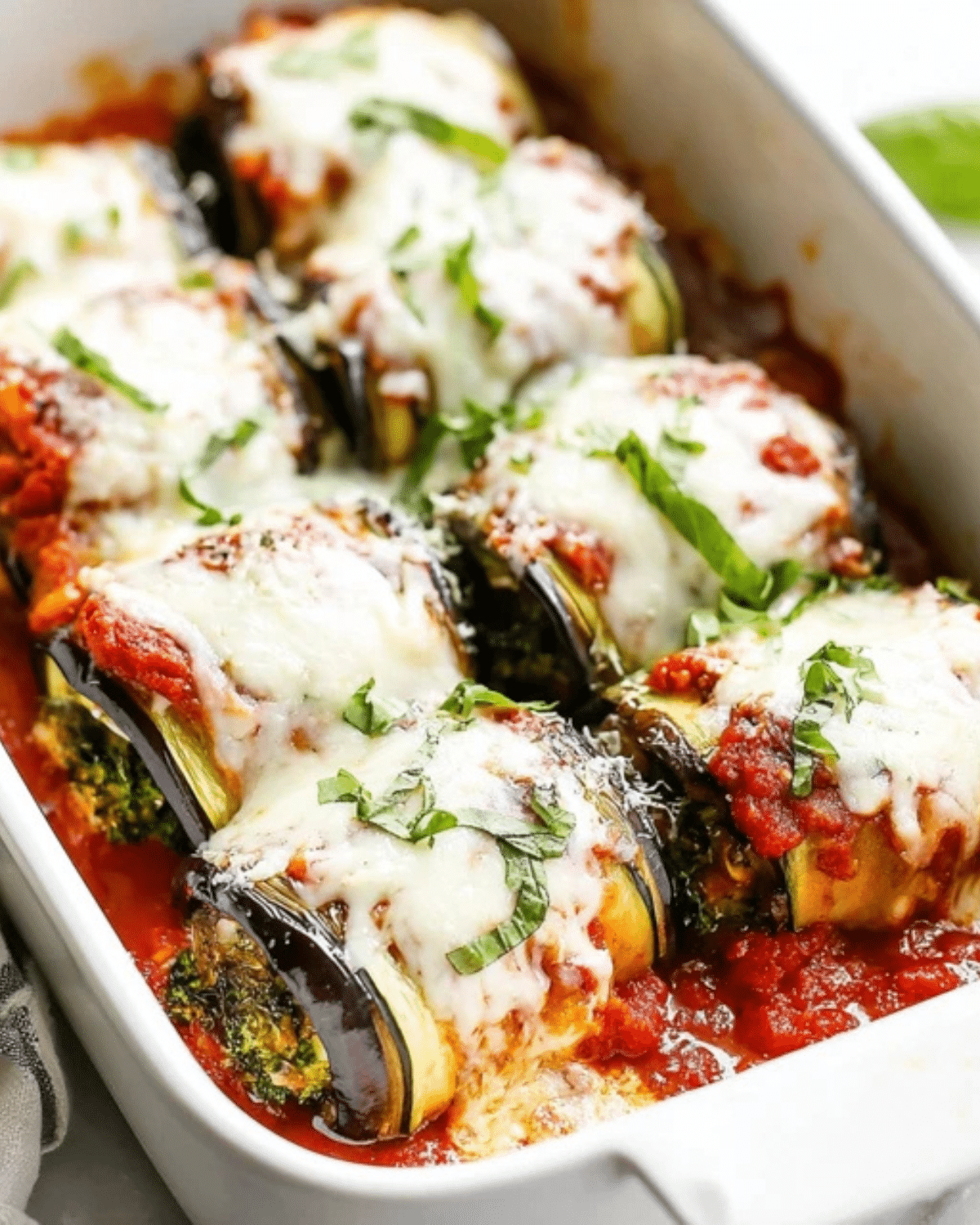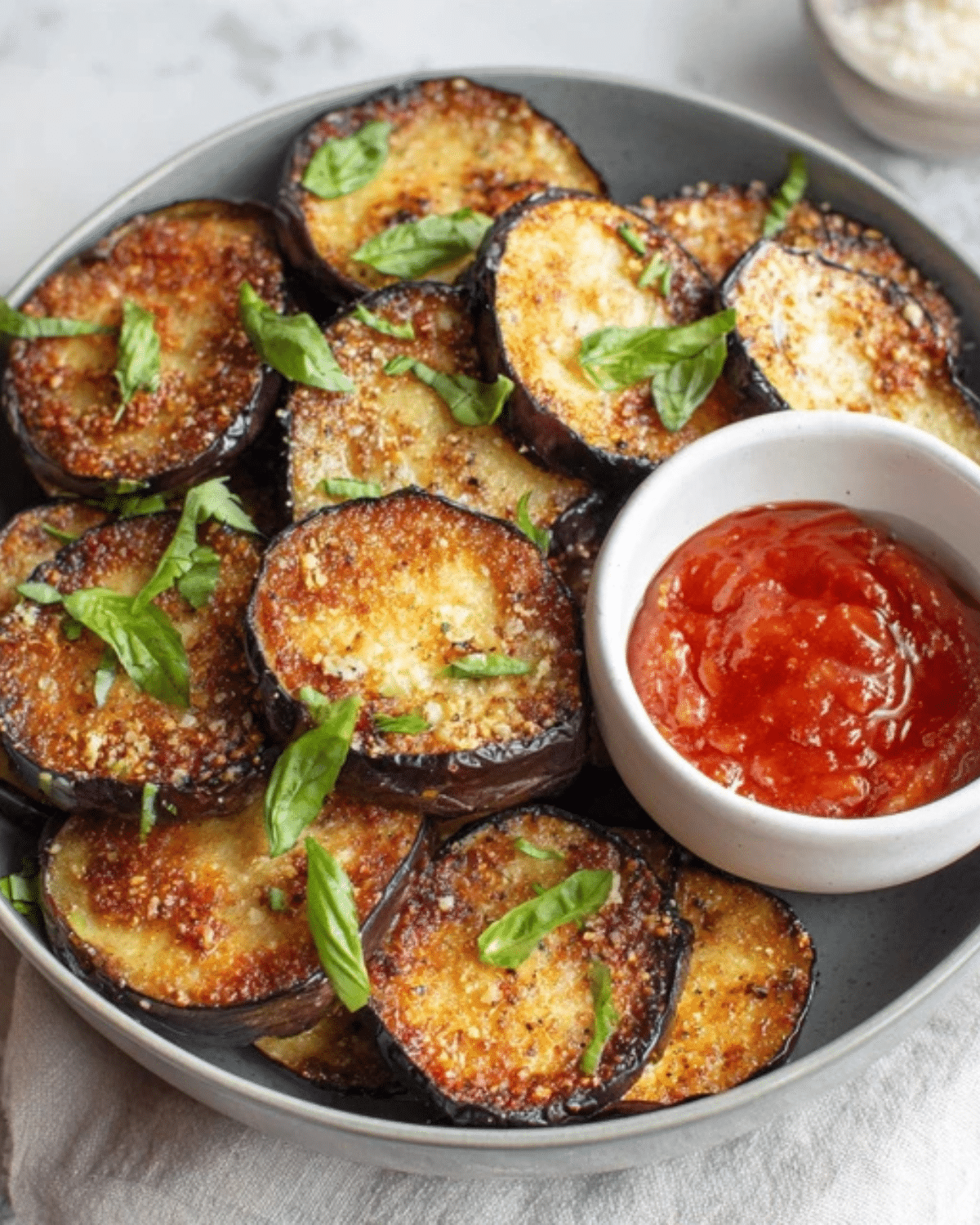
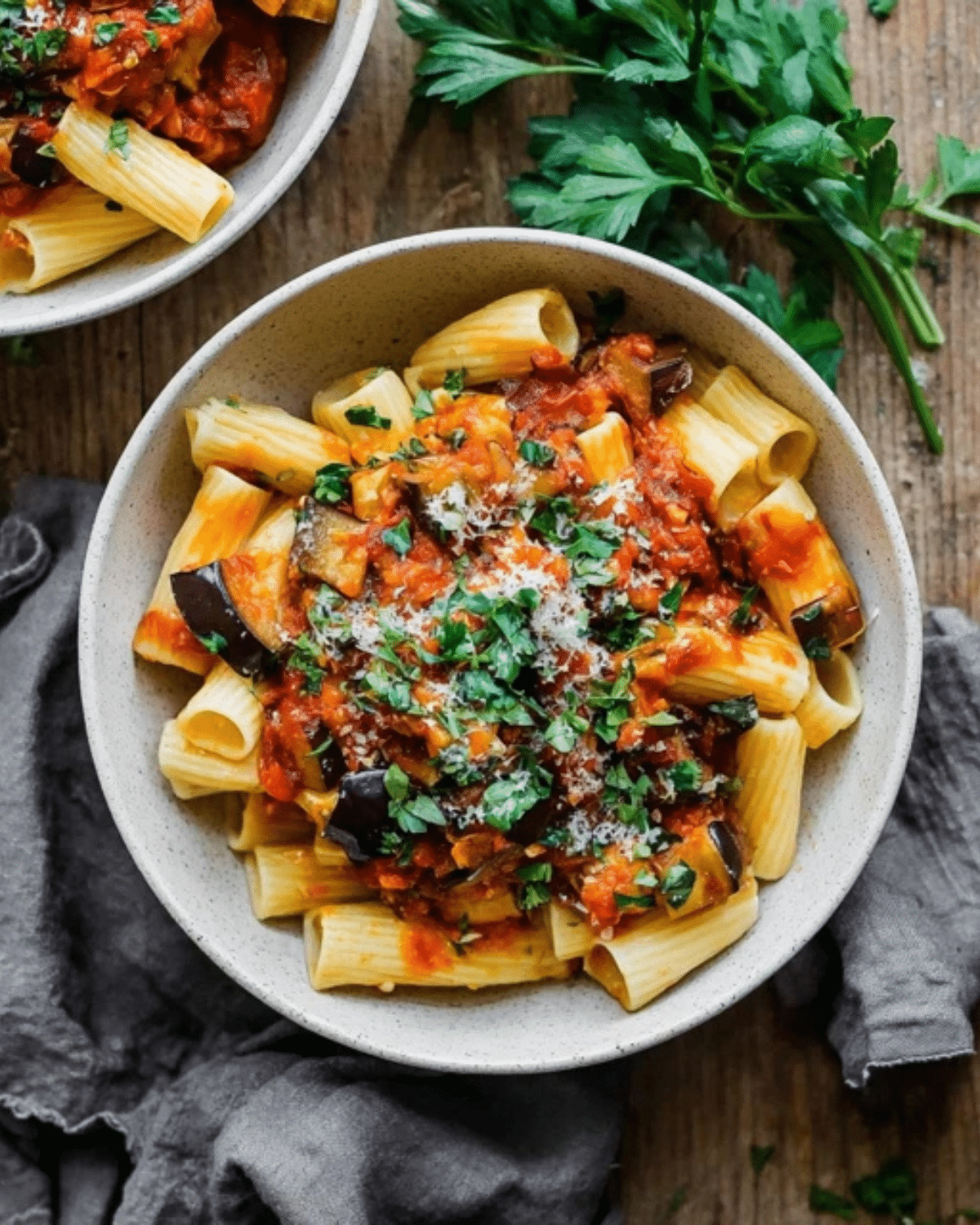
Roasted Eggplant Pasta is the kind of comforting, flavor-packed dinner that feels fancy but is surprisingly simple to make. With tender caramelized eggplant, perfectly cooked pasta, garlic, olive oil, and a rich tomato-based sauce, this dish brings bold Mediterranean flavor to your table in under an hour. Whether you’re looking for a satisfying vegetarian meal or a hearty pasta loaded with vegetables, roasted eggplant pasta delivers every time.
Because roasting transforms eggplant into soft, golden cubes with deep flavor, this method creates a richer and more balanced dish than sautéing alone. In this complete guide, you’ll learn how to roast eggplant properly, cook pasta to al dente perfection, build a flavorful sauce, and combine everything into a restaurant-quality meal.
Let’s start with why roasting makes such a difference.
JUMP TO
Table of Contents
Why This Roasted Eggplant Pasta Is So Delicious
There are countless pasta recipes, but roasted eggplant pasta stands out for its texture and depth of flavor. Roasting changes everything.
The Magic of Roasting Eggplant
Eggplant has a sponge-like texture that absorbs flavor beautifully. When roasted at high heat, its natural sugars caramelize. As a result, you get:
- Golden-brown edges
- Creamy interior
- Slightly smoky, sweet flavor
Unlike sautéing, roasting spreads heat evenly across the eggplant. Therefore, the cubes brown properly without becoming overly oily.
Because caramelization intensifies flavor, roasted eggplant pasta tastes richer and more complex than stovetop-only versions.
A Perfect Balance of Pasta and Vegetables
While pasta provides comfort and heartiness, roasted eggplant adds substance and nutrients. The combination creates a satisfying dish that doesn’t feel heavy.
Moreover, eggplant’s tender texture blends seamlessly with tomato sauce, garlic, and Parmesan. The result is a cohesive, balanced meal.
This roasted eggplant pasta works equally well as a weeknight dinner or a casual dinner party main course.
Why Roasting Is Better Than Sautéing for This Recipe
Sautéing eggplant can sometimes lead to uneven browning or excess oil absorption. However, roasting solves those issues.
Because eggplant cooks in a single layer in the oven:
- It browns evenly
- It absorbs less oil
- It maintains structure
For this reason, roasting is the ideal cooking method for roasted eggplant pasta.
Ingredients for Roasted Eggplant Pasta
Before starting, gather all ingredients. Preparation ensures a smooth cooking process.

Main Ingredients
For a classic version, you’ll need:
- 1–2 medium eggplants
- 3 tablespoons olive oil
- Salt and black pepper
- 3 cloves garlic, minced
- 12 ounces pasta (penne, rigatoni, or spaghetti)
Short pasta shapes like penne or rigatoni work especially well because they hold sauce and eggplant pieces beautifully.
Sauce Options
You can customize your roasted eggplant pasta with different sauce styles.
Tomato-based version:
- 2 cups marinara sauce
- Fresh basil
Fresh tomato version:
- 1 pint cherry tomatoes
- Olive oil and garlic
Creamy version (optional):
- ½ cup ricotta or heavy cream
Each variation offers a slightly different texture and flavor profile.
Cheese Additions
For added richness:
- ½ cup grated Parmesan cheese
- ½ cup shredded mozzarella (optional)
Parmesan enhances saltiness and umami depth. Mozzarella adds melt and creaminess.
Ingredient Overview Table
| Ingredient | Quantity |
|---|---|
| Eggplant | 1–2 medium |
| Pasta | 12 oz |
| Olive oil | 3 tbsp |
| Garlic | 3 cloves |
| Marinara sauce | 2 cups |
| Parmesan | 1/2 cup |
These measurements create a balanced roasted eggplant pasta that isn’t overly saucy or dry.
Step-by-Step Roasted Eggplant Pasta Recipe
Now let’s walk through the cooking process in clear steps.
Step 1: Preparing and Roasting the Eggplant
Preheat your oven to 425°F.
Cut eggplant into 1-inch cubes. Try to keep them uniform in size to ensure even roasting.
Place cubes on a large baking sheet. Drizzle with olive oil, then season with salt and black pepper. Toss to coat evenly.
Spread eggplant in a single layer. Avoid overcrowding, as this causes steaming instead of browning.
Roast for 25–30 minutes, flipping halfway through, until cubes are golden brown and tender.
Proper roasting is the foundation of flavorful roasted eggplant pasta.
Step 2: Cooking the Pasta Perfectly
While eggplant roasts, bring a large pot of salted water to a boil.
Add pasta and cook according to package directions until al dente. Reserve ½ cup of pasta water before draining.
Cooking pasta to al dente ensures it holds texture once combined with sauce and roasted eggplant.
Step 3: Making the Sauce
In a large skillet over medium heat, add a tablespoon of olive oil.
Sauté minced garlic for about 30 seconds until fragrant. Be careful not to burn it.
Add marinara sauce and let it simmer gently for 5–7 minutes. If using cherry tomatoes instead, sauté them until softened and slightly blistered.
Simmering deepens flavor and prepares the sauce for combining.
Step 4: Combining Everything Together
Add roasted eggplant directly into the sauce.
Next, add drained pasta and toss gently. If the sauce feels thick, add a splash of reserved pasta water to loosen it.
Stir in grated Parmesan and mix until evenly coated.
The pasta water helps emulsify the sauce, giving roasted eggplant pasta a silky finish.
Step 5: Final Garnish and Serving
Finish with:
- Fresh basil
- Extra Parmesan
- Cracked black pepper
Serve immediately while warm.
The final result is tender roasted eggplant folded into perfectly coated pasta, with layers of garlic, tomato, and cheese flavor.
Tips for the Best Roasted Eggplant Pasta
Even though roasted eggplant pasta is simple, a few small adjustments can elevate it from good to unforgettable. Because eggplant has a delicate texture, proper technique makes all the difference.
How to Avoid Mushy Eggplant
Mushy eggplant is usually caused by overcrowding or low oven temperature.
First, always roast at high heat—around 425°F. High heat encourages caramelization instead of steaming. Second, spread the eggplant cubes in a single layer with space between them. If necessary, use two baking sheets.
Additionally, avoid flipping too often. Let the cubes develop golden edges before turning them. When roasted properly, your roasted eggplant pasta will have tender yet structured pieces that hold their shape in the sauce.
Choosing the Right Pasta Shape
Short pasta shapes work best for roasted eggplant pasta because they trap sauce and vegetable pieces.
Top choices include:
- Penne
- Rigatoni
- Fusilli
- Orecchiette
However, if you prefer long pasta like spaghetti or linguine, simply chop the eggplant slightly smaller for better distribution.
Making It Creamy Without Heavy Cream
If you want a creamy version of roasted eggplant pasta but prefer a lighter option, try these alternatives:
- Stir in ricotta cheese
- Add a splash of reserved pasta water with extra Parmesan
- Blend a portion of the roasted eggplant into the sauce
These options create creaminess without making the dish overly rich.
Make-Ahead and Storage Tips
Roasted eggplant pasta stores well in the refrigerator for up to 4 days in an airtight container.
To reheat:
- Warm gently in a skillet with a splash of water or olive oil
- Avoid overcooking to maintain texture
While you can freeze it, the eggplant may soften slightly after thawing. Therefore, it’s best enjoyed fresh or refrigerated.
Variations of Roasted Eggplant Pasta
One reason roasted eggplant pasta is so popular is its flexibility. You can easily adapt it to suit your taste.
Vegan Version
Simply skip the Parmesan and mozzarella. Add nutritional yeast for a cheesy flavor or stir in a spoonful of cashew cream.
Because eggplant provides natural richness, the dish still feels satisfying without dairy.
Spicy Arrabbiata Style
Add:
- ½ teaspoon red pepper flakes
- Extra garlic
- A pinch of smoked paprika
This transforms roasted eggplant pasta into a bold, spicy dish with depth.
Mediterranean-Inspired with Olives
For a Mediterranean twist, stir in:
- Kalamata olives
- Capers
- Fresh oregano
- Crumbled feta (optional)
These ingredients add briny brightness that complements roasted eggplant beautifully.
Protein Additions
If you want more protein, consider adding:
- Grilled chicken
- Italian sausage
- Chickpeas
- White beans
Each option pairs well with the roasted flavors.
Frequently Asked Questions
Do you peel eggplant before roasting?
No, peeling is not necessary. The skin softens during roasting and helps maintain structure. However, if the eggplant is very large or the skin feels tough, partial peeling is fine.
Why is my eggplant bitter?
Bitterness can occur if the eggplant is overripe. Choose firm, glossy eggplants. Salting beforehand can also reduce bitterness.
Can I freeze this pasta?
Yes, but texture may soften slightly after thawing. For best results, freeze without extra cheese and add fresh toppings when reheating.
Can I use whole wheat pasta?
Yes. Whole wheat pasta works well in roasted eggplant pasta and adds extra fiber and nutty flavor.
Conclusion: Why You’ll Love This Roasted Eggplant Pasta
Roasted eggplant pasta combines caramelized vegetable richness with perfectly cooked pasta and flavorful sauce into one comforting, satisfying meal. Because roasting enhances eggplant’s natural sweetness and texture, this method creates a dish that feels both hearty and balanced.
Whether you keep it classic with marinara and Parmesan, make it creamy with ricotta, or add Mediterranean flavors, roasted eggplant pasta adapts easily to your preferences. Once you try it, it may become a regular addition to your dinner rotation.
PrintRoasted Eggplant Pasta – Creamy & Easy Italian Dinner

Roasted Eggplant Pasta is a flavorful vegetarian dish made with caramelized oven-roasted eggplant, garlic, marinara sauce, and perfectly cooked pasta. It’s an easy, comforting Italian-inspired dinner packed with rich texture and bold taste.
- Prep Time: 15 minutes
- Cook Time: 30 minutes
- Total Time: 45 minutes
- Yield: 4 servings 1x
- Category: Dinner
- Method: Roasting
- Cuisine: Italian
- Diet: Vegetarian
Ingredients
- 1–2 medium eggplants, cut into 1-inch cubes
- 3 tablespoons olive oil (divided)
- Salt and black pepper to taste
- 3 cloves garlic, minced
- 12 ounces pasta (penne, rigatoni, or spaghetti)
- 2 cups marinara sauce
- 1/2 cup grated Parmesan cheese
- Optional: 1/2 cup ricotta or heavy cream for creamy version
- Optional: Fresh basil for garnish
Instructions
- Preheat oven to 425°F. Line a baking sheet with parchment paper.
- Toss eggplant cubes with 2 tablespoons olive oil, salt, and pepper. Spread in a single layer.
- Roast for 25–30 minutes, flipping halfway, until golden brown and tender.
- Meanwhile, cook pasta in salted boiling water until al dente. Reserve 1/2 cup pasta water before draining.
- Heat 1 tablespoon olive oil in a large skillet over medium heat. Add garlic and sauté for 30 seconds until fragrant.
- Add marinara sauce and simmer for 5–7 minutes.
- Stir roasted eggplant into the sauce. Add drained pasta and toss gently.
- Add reserved pasta water as needed to loosen the sauce. Stir in Parmesan cheese.
- Garnish with fresh basil and extra Parmesan before serving.
Notes
- Do not overcrowd the baking sheet to ensure proper caramelization.
- Roast at high heat for best texture and flavor.
- Add pasta water gradually to control sauce consistency.
- Store leftovers in an airtight container for up to 4 days.
- Reheat gently on the stovetop with a splash of olive oil or water.
Nutrition
- Serving Size: 1 serving
- Calories: 480
- Sugar: 9g
- Sodium: 620mg
- Fat: 18g
- Saturated Fat: 4g
- Unsaturated Fat: 12g
- Trans Fat: 0g
- Carbohydrates: 65g
- Fiber: 8g
- Protein: 15g
- Cholesterol: 15mg