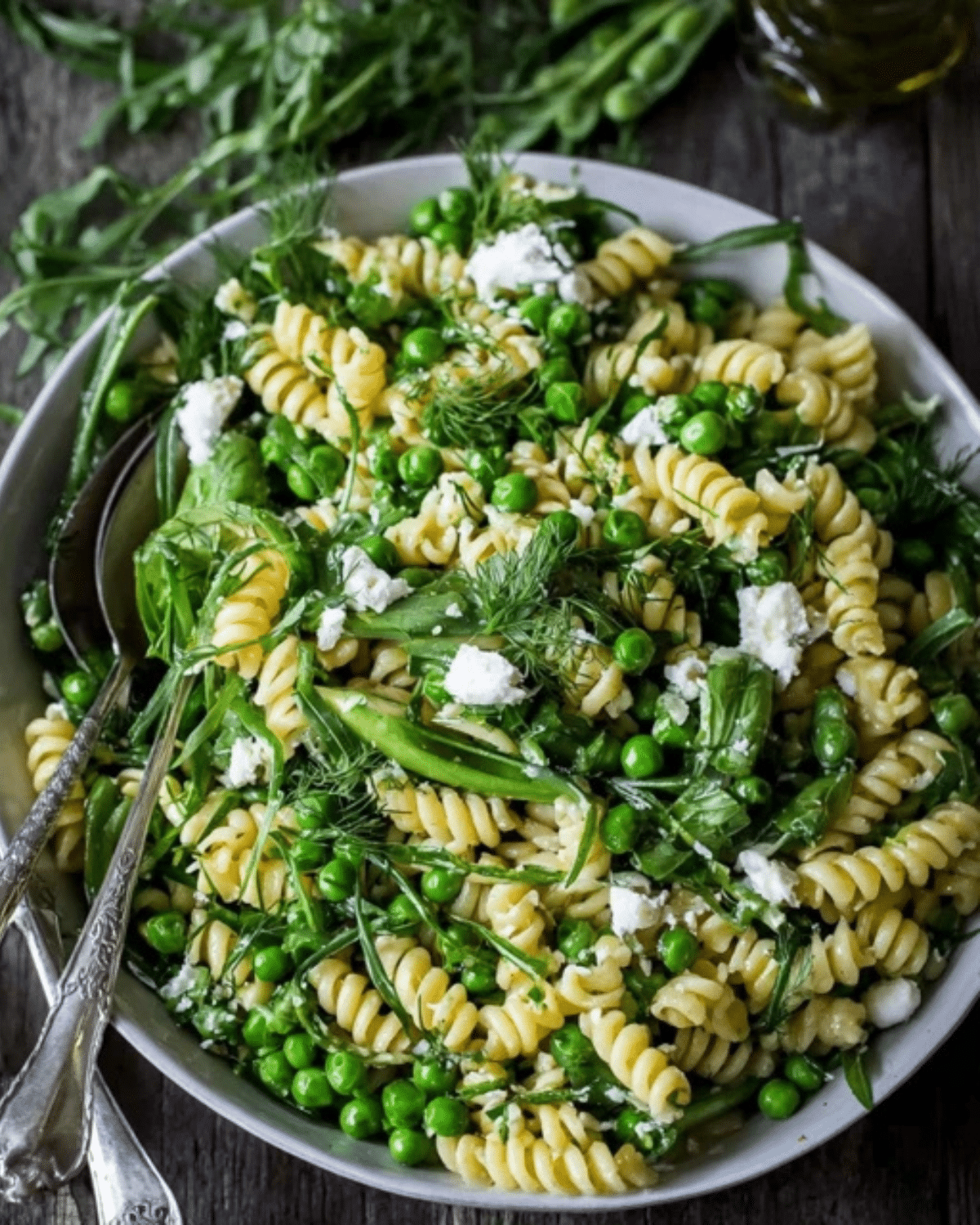
Spring Pea Pasta Salad is the kind of dish that captures the feeling of the season in every bite. Light, fresh, and full of bright flavors, this pasta salad combines tender pasta, sweet peas, and herbs with a zesty dressing that keeps everything balanced. It’s refreshing without being bland and satisfying without feeling heavy.
What makes spring pea pasta salad so appealing is its versatility. It works just as well for picnics and potlucks as it does for easy lunches or weeknight dinners. With minimal prep and ingredients that celebrate spring produce, this dish fits effortlessly into warm-weather cooking.
JUMP TO
Table of Contents
Why Spring Pea Pasta Salad Is the Perfect Seasonal Dish
What Makes Spring Pea Pasta Salad Different
Unlike heavier pasta salads loaded with mayonnaise or dense add-ins, spring pea pasta salad focuses on freshness. The flavors are clean and simple, allowing the natural sweetness of peas and the brightness of herbs to shine through.
Instead of rich sauces, this salad relies on a light dressing, often citrus-based, that coats the pasta without weighing it down. This approach makes the dish feel vibrant and well-suited for warmer days.
Why Peas Are Ideal for Spring Pasta Salads
Peas are a natural fit for spring recipes. They’re sweet, tender, and cook quickly, which makes them easy to incorporate into pasta salads. Whether fresh or frozen, peas add color, texture, and subtle sweetness.
In a spring pea pasta salad, peas balance the starchiness of pasta while pairing beautifully with lemon, mint, and olive oil. Their mild flavor allows other ingredients to shine without overpowering the dish.
When to Serve Spring Pea Pasta Salad
This pasta salad is incredibly versatile. It’s perfect for outdoor gatherings, barbecues, and picnics, yet light enough for everyday meals. Because it can be served chilled or at room temperature, it’s easy to transport and share.
It also works well as a make-ahead dish. The flavors often improve after a short rest, making spring pea pasta salad a reliable option when planning ahead.
Ingredients Needed for Spring Pea Pasta Salad
The beauty of spring pea pasta salad lies in its simplicity. Each ingredient adds freshness, texture, or balance, and together they create a dish that feels light yet satisfying. Using seasonal ingredients makes a noticeable difference, especially when the flavors are meant to stay bright and clean.

Best Pasta Shapes for Pasta Salad
Choosing the right pasta is essential because it affects how well the dressing clings and how the salad holds up over time. Short pasta shapes with ridges or curves work best since they trap the dressing and mix evenly with peas and herbs.
Great options include:
- Fusilli
- Farfalle (bowties)
- Orecchiette
- Penne
Cook the pasta just until al dente. Overcooked pasta absorbs too much dressing and becomes soft, which can make the salad feel heavy.
Fresh Peas and Seasonal Vegetables
Peas are the star of this dish. Fresh spring peas offer the sweetest flavor, but frozen peas are a reliable alternative and work beautifully when blanched briefly.
Supporting vegetables add crunch and color without overpowering the peas.
Common additions include:
- Thinly sliced radishes
- Asparagus, lightly blanched
- Green onions or scallions
- Baby spinach or arugula
Keeping vegetables lightly cooked or raw helps preserve the crisp texture that defines a good spring pasta salad.
Herbs, Cheese, and Flavor Enhancers
Fresh herbs bring the salad to life. Mint adds cooling freshness, while parsley or basil adds depth. Using a mix of herbs creates layers of flavor without complexity.
Cheese is optional but adds richness. Soft or crumbly cheeses work best.
Popular choices include:
- Feta
- Parmesan shavings
- Goat cheese
A small amount goes a long way, keeping the salad balanced rather than heavy.
Dressing Ingredients and Substitutions
The dressing should enhance, not dominate. A simple lemon-based dressing keeps the flavors light and seasonal.
Basic dressing components include:
| Ingredient | Purpose |
|---|---|
| Olive oil | Smooth richness |
| Lemon juice | Bright acidity |
| Lemon zest | Fresh aroma |
| Salt | Flavor balance |
| Black pepper | Gentle heat |
For deeper flavor, a few drops of truffle oil or a touch of Dijon mustard can be added, though restraint is key.
How to Make Spring Pea Pasta Salad Step by Step
This spring pea pasta salad recipe is straightforward and doesn’t require advanced cooking skills. The goal is to layer flavors while keeping textures fresh and distinct.
Cooking Pasta the Right Way
Bring a large pot of salted water to a boil. Add the pasta and cook according to package instructions until al dente. Proper seasoning at this stage ensures the pasta itself has flavor.
Once cooked, drain the pasta and rinse briefly with cool water. This stops the cooking process and prevents sticking, which is especially helpful for pasta salads.
Preparing Peas and Vegetables
While the pasta cooks, prepare the peas. Blanch fresh or frozen peas in boiling water for one to two minutes, then immediately transfer them to ice water. This preserves their bright color and tender texture.
Prepare any additional vegetables by slicing or chopping them finely. Lightly blanch asparagus if using, but keep it crisp to maintain contrast with the pasta.
Making the Lemon-Based Dressing
In a small bowl, whisk together olive oil, lemon juice, lemon zest, salt, and pepper. Taste and adjust as needed. The dressing should be tangy but balanced, not sharp.
If using truffle oil, add just a few drops. Its flavor is intense and should complement rather than overpower the peas and herbs.
Assembling the Pasta Salad
In a large bowl, combine the cooked pasta, peas, vegetables, herbs, and cheese. Pour the dressing over the mixture and toss gently until everything is evenly coated.
Let the salad rest for 10–15 minutes before serving. This short resting time allows the flavors to come together while keeping the salad fresh.
Tips for the Best Spring Pea Pasta Salad
A great spring pea pasta salad depends on balance. Because the ingredients are simple, small details make a big difference in the final result.
Preventing Soggy Pasta Salad
Soggy pasta salad usually comes from overcooked pasta or too much dressing. Always cook pasta until just al dente, then cool it quickly. This helps the pasta keep its structure instead of absorbing excess liquid.
When adding dressing, start with slightly less than you think you need. You can always add more, but too much at once can weigh the salad down and mute the fresh flavors.
Balancing Flavors and Textures
This salad shines when sweet peas, bright citrus, herbs, and pasta are evenly balanced. If the salad tastes flat, a pinch of salt or a squeeze of lemon juice often brings it back to life.
Texture matters just as much as flavor. Crisp vegetables, tender pasta, and soft cheese create contrast that keeps each bite interesting.
Make-Ahead and Meal Prep Tips
Spring pea pasta salad is a great make-ahead dish, but timing matters. You can prepare the pasta, peas, and vegetables in advance and store them separately.
For best results, toss everything together with the dressing shortly before serving. If making it a few hours ahead, reserve a small amount of dressing to refresh the salad just before serving.
Spring Pea Pasta Salad Variations
One of the best things about this dish is how easily it adapts. With a few small changes, you can tailor it to different diets and preferences.
Vegan Spring Pea Pasta Salad
To make a vegan version, simply omit the cheese or replace it with a dairy-free alternative. Nutritional yeast can also be added for a subtle savory note.
The lemon-based dressing, peas, and herbs already provide plenty of flavor, so the salad doesn’t feel like it’s missing anything.
Adding Protein to Pasta Salad
If you want to turn this salad into a complete meal, adding protein is an easy solution. Grilled chicken, shrimp, or salmon work well for non-vegetarian options.
For plant-based protein, chickpeas or white beans blend nicely with peas and pasta without overpowering the dish.
Creamy vs. Vinaigrette-Style Versions
While this recipe focuses on a light vinaigrette, you can create a creamier version by adding a spoonful of Greek yogurt or vegan yogurt to the dressing.
This variation works especially well if you’re serving the salad as a main dish rather than a side.
FAQs About Spring Pea Pasta Salad
Can I Use Frozen Peas?
Yes, frozen peas work very well. Just blanch them briefly and cool them quickly to preserve their bright color and sweet flavor.
How Long Does Pasta Salad Last?
When stored in an airtight container in the refrigerator, this salad lasts up to three days. The herbs may soften slightly, but the flavor remains fresh.
Can This Be Served Warm?
Yes, spring pea pasta salad can be served slightly warm or at room temperature. Serving it warm brings out the aroma of the herbs and lemon, while chilled versions feel more refreshing.
What Herbs Work Best?
Mint is especially popular, but parsley, basil, and dill also work beautifully. Using more than one herb adds depth without complicating the recipe.
Conclusion: A Fresh Spring Pea Pasta Salad You’ll Make Again
Spring Pea Pasta Salad is a celebration of seasonal simplicity. With tender pasta, sweet peas, fresh herbs, and a bright dressing, it delivers flavor without heaviness.
Whether you serve it at a picnic, bring it to a potluck, or enjoy it as a light meal, this salad fits effortlessly into spring and summer cooking. Once you try it, it’s likely to become a seasonal favorite you’ll come back to year after year.
PrintSpring Pea Pasta Salad – The Ultimate Seasonal Side

A light and refreshing spring pea pasta salad made with tender pasta, sweet peas, fresh herbs, and a bright lemon-based dressing, perfect for warm-weather meals.
- Prep Time: 15 minutes
- Cook Time: 15 minutes
- Total Time: 30 minutes
- Yield: 6 servings 1x
- Category: Salad
- Method: Boiling and Mixing
- Cuisine: Mediterranean
- Diet: Vegetarian
Ingredients
- 12 oz short pasta (fusilli, farfalle, or penne)
- 1 1/2 cups green peas (fresh or frozen)
- 1 cup asparagus, cut into small pieces (optional)
- 2 tablespoons olive oil
- 3 tablespoons fresh lemon juice
- 1 teaspoon lemon zest
- 1/2 teaspoon salt
- 1/4 teaspoon black pepper
- 1/3 cup crumbled feta or shaved Parmesan
- 1/4 cup fresh herbs (mint, parsley, or basil), chopped
- Optional: 1 teaspoon Dijon mustard or a few drops of truffle oil
Instructions
- Bring a large pot of salted water to a boil and cook the pasta until al dente according to package instructions.
- During the last 1–2 minutes of cooking, add the peas to the pasta water.
- Drain the pasta and peas and rinse briefly with cool water to stop cooking.
- If using asparagus, blanch it separately for 2 minutes and drain well.
- In a small bowl, whisk together olive oil, lemon juice, lemon zest, salt, pepper, and optional Dijon or truffle oil.
- In a large bowl, combine pasta, peas, asparagus, cheese, and fresh herbs.
- Pour the dressing over the salad and toss gently until evenly coated.
- Let rest for 10–15 minutes before serving to allow flavors to blend.
Notes
- Use pasta cooked just to al dente to prevent sogginess.
- Frozen peas work well when blanched briefly.
- Add dressing gradually to avoid overdressing.
- Store leftovers in an airtight container in the refrigerator.
Nutrition
- Serving Size: 1 serving
- Calories: 360
- Sugar: 4g
- Sodium: 420mg
- Fat: 12g
- Saturated Fat: 3g
- Unsaturated Fat: 8g
- Trans Fat: 0g
- Carbohydrates: 48g
- Fiber: 5g
- Protein: 12g
- Cholesterol: 15mg