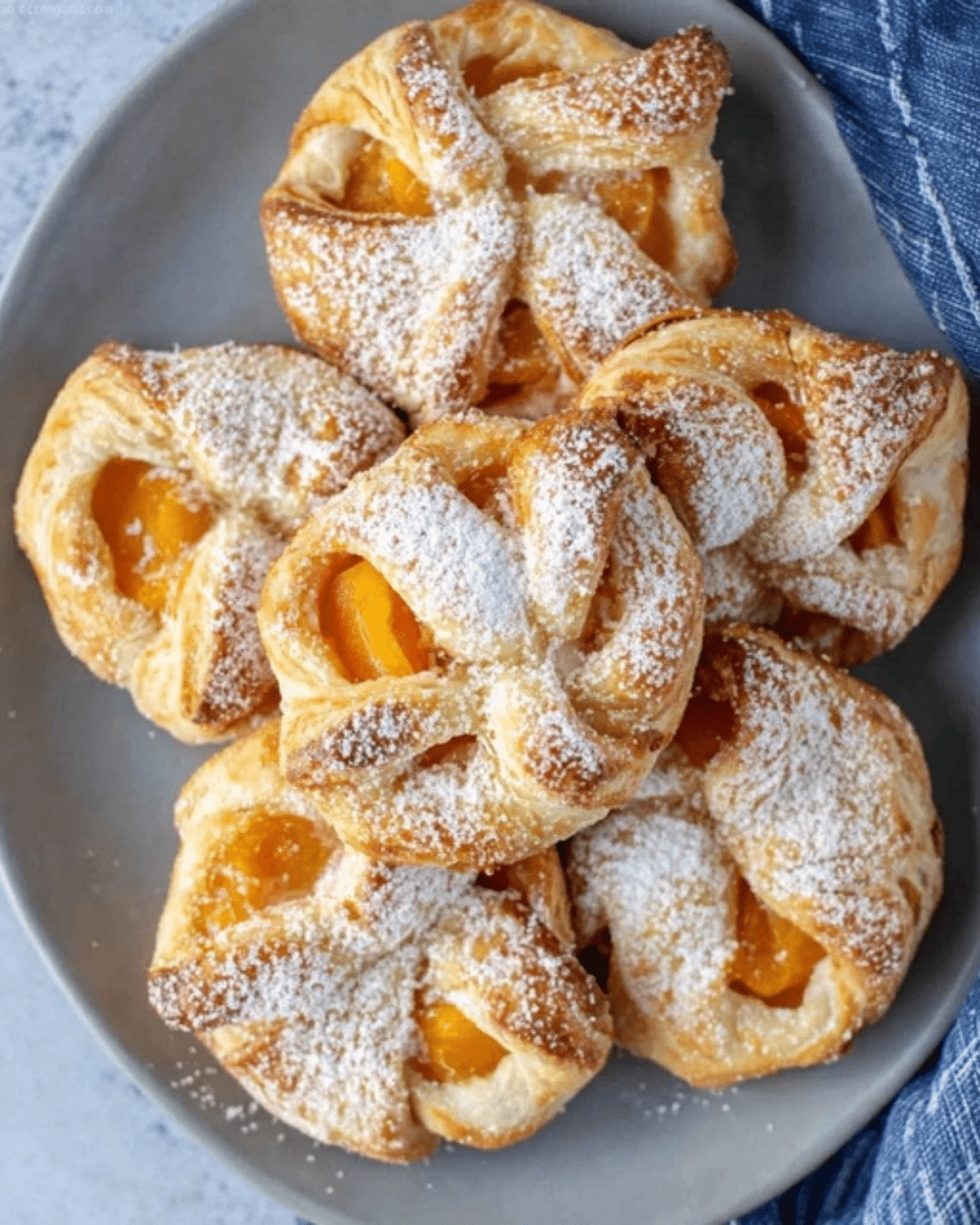
Apricot Danish is a classic pastry known for its flaky layers, buttery texture, and sweet fruit filling. This bakery-style treat combines delicate pastry dough with bright apricot flavor, creating a dessert that feels both elegant and comforting. Many people enjoy apricot Danish as a breakfast pastry, an afternoon snack, or a light dessert paired with coffee or tea.
One of the reasons apricot Danish remains so popular is its perfect balance of textures. The outer pastry becomes golden and crisp during baking, while the center stays soft and slightly sweet from the apricot filling. This contrast between flaky pastry and fruity filling makes every bite satisfying.
Another appealing feature of apricot Danish is its versatility. The pastry can be made with fresh apricots, apricot preserves, or a simple homemade apricot filling. It can also be shaped into various designs, from classic squares to elegant braided pastries.
In this guide, you will learn everything about making apricot Danish at home, including the ingredients needed, the step-by-step baking process, and helpful tips for achieving bakery-style results.
JUMP TO
Table of Contents
What Is Apricot Danish and Why It’s So Popular
Apricot Danish is a type of fruit-filled pastry made with buttery laminated dough that creates delicate layers during baking. The pastry is typically filled with sweet apricot jam or cooked apricots and sometimes topped with a light glaze.
Because of its crisp texture and sweet fruit center, apricot Danish has become a favorite pastry in bakeries around the world.
The Origins of Danish Pastries
Danish pastries originated from European baking traditions that emphasize laminated dough techniques. Laminated dough is created by folding butter into dough multiple times to form thin layers.
When baked, these layers expand and create a light, flaky texture that is characteristic of Danish pastries.
Over time, bakers began filling Danish pastries with fruit preserves, custards, or cream cheese. Fruit fillings became especially popular because they add sweetness and color to the pastry.
What Makes Apricot Danish Special
Among the many fruit-filled Danish pastries, apricot Danish stands out because of the unique flavor of apricots.
Apricots offer a natural balance of sweetness and mild tartness. This flavor complements the rich butteriness of the pastry without making the dessert overly sweet.
The bright orange color of apricot filling also makes the pastry visually appealing.
Flavor and Texture of Apricot Danish
Apricot Danish delivers several layers of flavor and texture.
The pastry itself is light and flaky, with thin buttery layers that crisp during baking. Inside, the apricot filling becomes soft and slightly jam-like.
Each bite usually includes:
• Crisp, flaky pastry layers
• Sweet and tangy apricot filling
• Light buttery flavor
• Optional glaze for added sweetness
This combination makes apricot Danish both comforting and refined.
Why Apricots Pair Perfectly With Danish Pastry
Apricots are an ideal fruit for pastry fillings because they maintain their flavor during baking.
Unlike some fruits that become watery when heated, apricots develop a thick, concentrated sweetness that works well in baked desserts.
Their gentle tartness also balances the richness of the buttery pastry.
Because of this flavor balance, apricot Danish remains one of the most popular fruit Danish varieties.
When to Serve Apricot Danish
Apricot Danish is a versatile pastry that can be served at many different times of the day.
Many people enjoy it as a breakfast pastry with coffee or tea. The light sweetness makes it suitable for morning meals.
It also works well as an afternoon snack or a dessert after dinner.
Common occasions for serving apricot Danish include:
• Weekend brunch
• Coffee breaks
• Family breakfasts
• Holiday gatherings
• Light desserts
Because it looks elegant yet feels comforting, apricot Danish fits both casual and special occasions.
Ingredients Needed
The success of apricot Danish depends on using the right ingredients to create both the flaky pastry and the flavorful filling.
Although the pastry may seem complex, the ingredient list is actually quite simple.

Essential Ingredients for Danish Pastry Dough
Traditional Danish dough contains ingredients that help produce the pastry’s signature flaky layers.
Typical ingredients include:
Ingredient | Purpose
Flour | Provides structure for the dough
Butter | Creates flaky layers
Milk | Adds moisture to the dough
Eggs | Improve richness and texture
Sugar | Adds mild sweetness
Yeast | Helps the dough rise
These ingredients combine to form a soft dough that can be layered with butter.
Ingredients for the Apricot Filling
The filling is one of the most important parts of apricot Danish.
Most recipes use a simple apricot mixture made from:
• Apricot jam or preserves
• Fresh apricots or cooked apricots
• A small amount of sugar if needed
• Lemon juice for brightness
This filling creates a sweet and slightly tangy center for the pastry.
Choosing the Best Apricots or Apricot Preserves
Fresh apricots can provide wonderful flavor when they are ripe and fragrant.
However, apricot preserves are often used because they provide consistent sweetness and a thick texture that works well in pastry.
When choosing preserves, look for products that contain a high percentage of fruit for the best flavor.
The Role of Butter in Flaky Danish Pastry
Butter plays a crucial role in creating the flaky texture of Danish pastry.
During the folding process, layers of butter are trapped between layers of dough. As the pastry bakes, the butter melts and creates steam that separates the dough into delicate layers.
High-quality butter often produces the best results.
Optional Toppings for Apricot Danish
Many bakers finish apricot Danish with a few simple toppings.
Popular options include:
• Light powdered sugar glaze
• Sliced almonds
• Powdered sugar dusting
These toppings add both flavor and visual appeal to the finished pastry.
Step-by-Step Guide to Making Apricot Danish
Making apricot Danish at home involves preparing the pastry dough, adding the apricot filling, shaping the pastries, and baking them until golden and flaky. Although Danish pastry may seem complex, following a clear step-by-step process makes the recipe manageable even for home bakers.
With the right techniques, the result is a bakery-style apricot Danish with crisp layers and a sweet fruit center.
Preparing the Danish Pastry Dough
The first step in making apricot Danish is preparing the dough that will create the pastry layers.
Begin by combining warm milk, yeast, and a small amount of sugar in a bowl. Allow the mixture to sit for about five minutes until it becomes slightly foamy. This step activates the yeast.
Next, mix flour, sugar, and eggs in a large bowl. Add the yeast mixture and stir until a soft dough begins to form.
Knead the dough gently for several minutes until it becomes smooth and elastic. Once kneaded, cover the dough and allow it to rise in a warm place for about 1 hour or until it doubles in size.
This rising period allows the yeast to develop flavor and create a soft pastry structure.
Making the Apricot Filling
While the dough is rising, the apricot filling can be prepared.
If using fresh apricots, wash them, remove the pits, and chop them into small pieces. Place the fruit in a small saucepan with a little sugar and cook gently for about 5 to 7 minutes until the fruit softens.
Stir the mixture occasionally to prevent sticking. A small splash of lemon juice can be added to brighten the flavor.
If apricot preserves are used instead of fresh fruit, they can be used directly without cooking.
The filling should be thick enough to stay in place when added to the pastry.
Shaping the Danish Pastries
Once the dough has risen, it can be rolled out and shaped.
Lightly flour a work surface and roll the dough into a large rectangle. Spread softened butter across the dough and fold it several times to create layers.
After folding, roll the dough again and cut it into squares or rectangles depending on the desired shape.
Place a small spoonful of apricot filling in the center of each piece of dough.
To form classic Danish shapes, the corners of the dough can be folded slightly toward the center while leaving the filling visible.
Baking the Danish to a Golden Finish
Preheat the oven to 375°F (190°C).
Place the shaped apricot Danish pastries on a baking sheet lined with parchment paper. Leave space between each pastry so they can expand during baking.
Bake the pastries for about 15 to 20 minutes until they turn golden brown and the pastry layers appear crisp.
During baking, the butter melts and creates steam that separates the layers, producing the flaky texture.
Adding the Final Glaze
After baking, the pastries can be finished with a light glaze.
A simple glaze can be made by mixing powdered sugar with a small amount of milk until smooth.
Drizzle the glaze lightly over the warm pastries. This adds a touch of sweetness and gives the apricot Danish a classic bakery-style appearance.
Allow the pastries to cool slightly before serving.
Tips for Baking Perfect Apricot Danish
Although apricot Danish is a rewarding pastry to make, a few helpful tips can improve the final result.
Common Mistakes to Avoid When Making Danish
One common mistake is adding too much filling. Excess filling can cause the pastry to become soggy or leak during baking.
Another mistake is rolling the dough too thin. Thin dough may lose its layered structure.
Maintaining a moderate thickness helps preserve the flaky layers.
How to Achieve Flaky Layers in Danish Pastry
The secret to flaky Danish pastry is the folding process.
Folding butter into the dough multiple times creates thin layers that separate during baking. This technique produces the delicate texture that defines Danish pastry.
Keeping the butter slightly chilled during folding helps maintain the layers.
Preventing Filling From Leaking During Baking
To prevent filling from spreading, use only a small amount in the center of each pastry.
Thick apricot preserves work well because they stay in place while baking.
If fresh apricot filling is used, it should be cooked until thick before adding to the dough.
Best Temperature and Baking Time for Danish
Baking at 375°F (190°C) usually produces the best results.
This temperature allows the pastry to rise and crisp while the filling warms and thickens.
The typical baking time is about 15 to 20 minutes, depending on the size of the pastries.
Expert Tips for Bakery-Style Results
Professional bakers often brush the pastry edges with beaten egg before baking.
This egg wash creates a glossy golden surface that makes the pastries look more appealing.
Another useful trick is allowing the shaped pastries to rest for about 10 minutes before baking so the dough can relax.
Delicious Variations of Apricot Danish
Apricot Danish can be customized with additional ingredients or flavor combinations.
Apricot Cream Cheese Danish
Adding a layer of cream cheese filling beneath the apricot preserves creates a richer pastry with a creamy center.
Almond Apricot Danish
Sprinkling sliced almonds over the pastry before baking adds crunch and a nutty flavor.
Apricot Berry Danish
Combining apricots with raspberries or blueberries creates a colorful pastry with a slightly tangy flavor.
Mini Apricot Danish Bites
Smaller Danish pastries can be made by cutting the dough into smaller pieces. These bite-sized pastries are ideal for brunch tables or parties.
Reduced Sugar Apricot Danish Option
For a lighter version, choose apricot preserves with lower sugar content or reduce the glaze.
How to Serve and Store Apricot Danish
Proper serving and storage help maintain the flavor and texture of apricot Danish.
Best Ways to Serve Apricot Danish Fresh
Apricot Danish tastes best when served slightly warm.
The flaky pastry layers are crisp, and the filling remains soft and flavorful.
Perfect Drinks to Pair With Danish Pastries
Apricot Danish pairs well with several beverages:
• Coffee
• Tea
• Milk
• Light fruit juices
These drinks complement the pastry without overpowering its flavor.
How to Store Leftover Apricot Danish
Leftover pastries should be stored in an airtight container at room temperature for up to 2 days.
Refrigeration can extend freshness slightly, although it may soften the pastry.
Can You Freeze Apricot Danish
Yes, apricot Danish can be frozen.
Allow the pastries to cool completely before wrapping them tightly. Frozen pastries can last for about 2 months.
Reheating Danish Without Losing Texture
To reheat apricot Danish, place it in a low oven for a few minutes. This restores the crisp pastry layers.
Avoid microwaving for too long, as it may soften the pastry.
Frequently Asked Questions About Apricot Danish
What is the difference between Danish pastry and puff pastry?
Danish pastry contains yeast and is slightly sweeter, while puff pastry is usually yeast-free and relies entirely on butter layers for rise.
Can you use apricot jam for Danish?
Yes. Apricot jam or preserves are commonly used because they provide consistent sweetness and thickness.
How do you keep Danish pastries flaky?
Keeping the butter cold and folding the dough carefully helps create the flaky layers.
Can apricot Danish be made ahead of time?
Yes. The dough and filling can be prepared in advance and assembled before baking.
Conclusion: Why Apricot Danish Is a Perfect Homemade Pastry
Apricot Danish is a classic pastry that combines flaky layers of buttery dough with a sweet and slightly tangy apricot filling. This balance of textures and flavors is what makes the pastry so enjoyable. The crisp, golden exterior contrasts beautifully with the soft fruit center, creating a treat that feels both comforting and elegant.
One of the reasons apricot Danish is so popular is its versatility. It can be served as a breakfast pastry, a brunch centerpiece, or a light dessert after a meal. Paired with coffee or tea, it becomes a simple yet satisfying treat that works well for everyday enjoyment or special gatherings.
Another advantage of apricot Danish is that it can be customized easily. Bakers can add toppings such as sliced almonds or a light glaze to enhance both flavor and presentation. The recipe can also be adjusted using fresh apricots or apricot preserves depending on availability.
Although Danish pastry may seem complicated, the process becomes manageable with practice and careful preparation. By using quality ingredients and following the right baking techniques, anyone can create delicious homemade apricot Danish.
In the end, apricot Danish remains a timeless pastry that delivers rich flavor, beautiful texture, and the satisfaction of freshly baked homemade treats.
PrintApricot Danish: Flaky and Sweet Bakery-Style Pastry

Apricot Danish is a flaky, buttery pastry filled with sweet apricot filling and baked until golden. This bakery-style treat is perfect for breakfast, brunch, or a light dessert.
- Prep Time: 25 minutes
- Cook Time: 20 minutes
- Total Time: 1 hour 45 minutes
- Yield: 8 pastries 1x
- Category: Dessert
Ingredients
- 2 cups all-purpose flour
- 1/4 cup granulated sugar
- 1 teaspoon instant yeast
- 1/2 teaspoon salt
- 1/2 cup warm milk
- 1 large egg
- 1/2 cup unsalted butter, softened
- 1/2 cup apricot preserves or apricot jam
- 1 egg (for egg wash)
- 1/2 cup powdered sugar
- 1–2 tablespoons milk (for glaze)
Instructions
- In a bowl, combine warm milk, yeast, and a small amount of sugar. Let it sit for about 5 minutes until foamy.
- In a mixing bowl, combine flour, remaining sugar, and salt.
- Add the yeast mixture and egg, then mix until a soft dough forms.
- Knead the dough for about 5–7 minutes until smooth.
- Cover the dough and allow it to rise for about 1 hour or until doubled in size.
- Roll the dough into a rectangle and spread softened butter over it.
- Fold the dough several times to create layers, then roll it out again.
- Cut the dough into squares and place a spoonful of apricot preserves in the center.
- Fold the corners slightly toward the center and place pastries on a lined baking sheet.
- Brush the edges with beaten egg.
- Bake at 375°F (190°C) for 15–20 minutes until golden brown.
- Mix powdered sugar with milk to create a glaze and drizzle over the pastries before serving.
Notes
- Use thick apricot preserves to prevent the filling from spreading during baking.
- Keep the butter slightly chilled while folding the dough to maintain flaky layers.
- Do not overfill the pastries to avoid leaking.
- Apricot Danish tastes best when served slightly warm.
- Store leftovers in an airtight container for up to 2 days.
Nutrition
- Serving Size: 1 pastry
- Calories: 280 kcal
- Sugar: 16 g
- Sodium: 180 mg
- Fat: 13 g
- Saturated Fat: 8 g
- Unsaturated Fat: 4 g
- Trans Fat: 0 g
- Carbohydrates: 35 g
- Fiber: 1 g
- Protein: 5 g
- Cholesterol: 55 mg