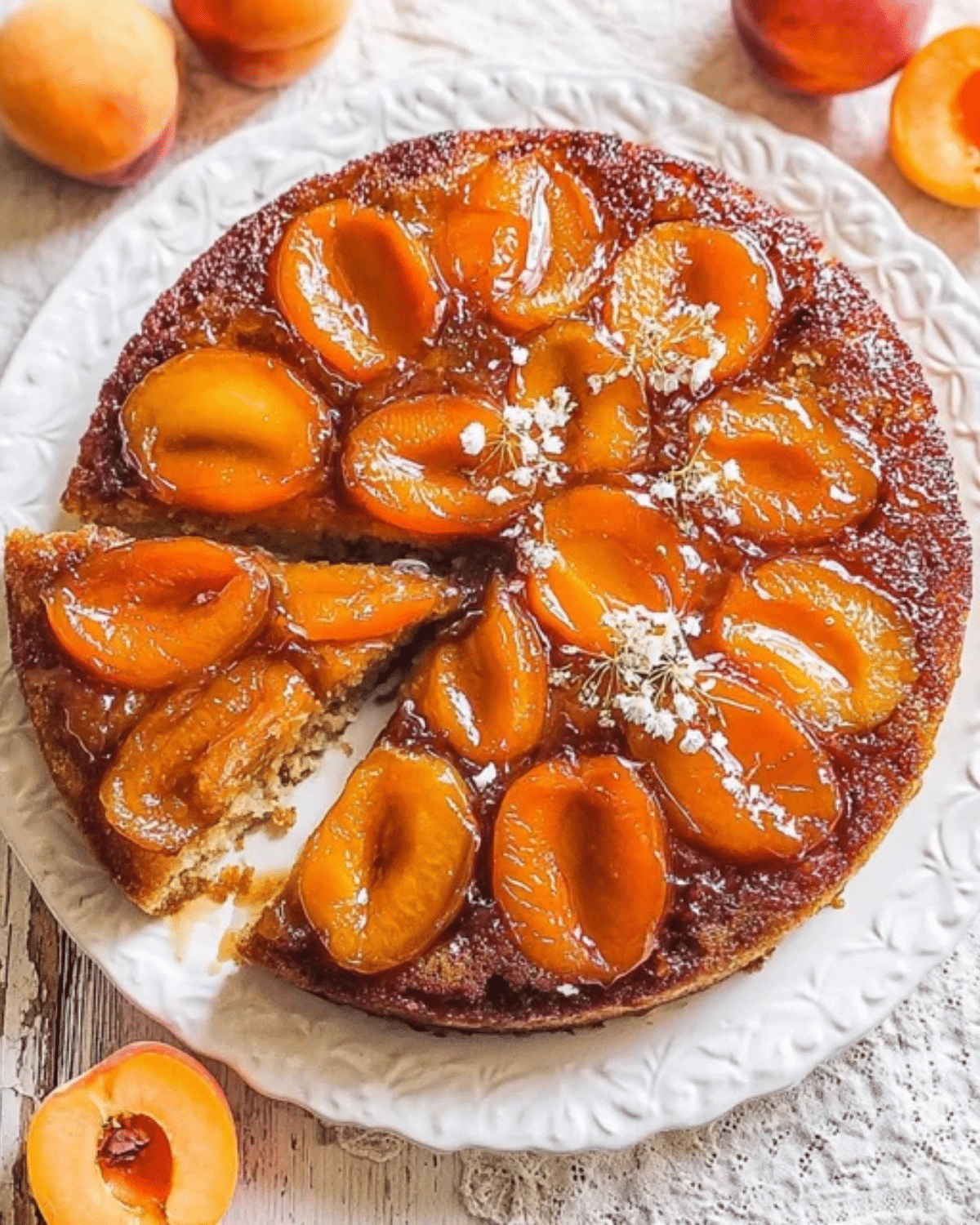
Caramelized Apricot Upside Down Cake is a beautiful homemade dessert that combines soft cake with a rich layer of caramelized fruit. The cake is baked with apricots and sugar at the bottom of the pan, then flipped after baking so the golden fruit topping appears on top. This simple technique creates a stunning dessert that looks impressive while remaining easy to prepare.
Many home bakers enjoy caramelized apricot upside down cake because it delivers both flavor and visual appeal. The apricots become tender and slightly sticky during baking, forming a glossy caramel layer that pairs perfectly with the soft cake underneath. Each slice offers a balance of buttery sweetness and gentle fruit tartness.Another reason this cake is popular is its versatility. It can be served warm as a comforting dessert or cooled and enjoyed with coffee or tea. Because apricots hold their shape well during baking, they create a vibrant topping that makes this cake stand out from many other fruit desserts.
In this guide, you will learn what makes caramelized apricot upside down cake special, the ingredients needed to bake it successfully, and helpful tips to achieve a perfectly caramelized topping. By the end, you will be ready to prepare a homemade cake that looks elegant and tastes delicious.
JUMP TO
Table of Contents
What Is Caramelized Apricot Upside Down Cake
Caramelized apricot upside down cake is a classic fruit dessert where the fruit is arranged at the bottom of the baking pan and covered with cake batter. After baking, the cake is inverted onto a plate, revealing a beautiful caramelized fruit topping.
This baking style creates a dessert that is both visually appealing and rich in flavor.
The Classic Idea Behind Upside Down Cakes
Upside down cakes have been a beloved baking tradition for many decades. The technique became especially popular in home kitchens because it allows fruit to become caramelized while the cake bakes.
The process usually begins by placing butter and sugar in the bottom of the pan. Fruit slices are arranged on top of the sugar mixture, and cake batter is poured over everything before baking.
As the cake bakes, the sugar melts and forms a caramel-like sauce around the fruit. When the cake is flipped after baking, the fruit topping becomes the centerpiece of the dessert.
Why Apricots Are Perfect for Caramelized Cakes
Apricots are an excellent fruit choice for upside down cakes. Their natural balance of sweetness and gentle tartness creates a flavor that pairs well with caramel.
During baking, apricots soften while maintaining their shape. This allows them to form an attractive pattern on top of the cake once it is inverted.
Their bright orange color also makes caramelized apricot upside down cake visually appealing. The glossy fruit topping contrasts beautifully with the golden cake beneath.
Flavor and Texture of Caramelized Apricot Upside Down Cake
The flavor profile of caramelized apricot upside down cake is both rich and refreshing.
The cake itself is soft and buttery, providing a smooth base for the dessert. Meanwhile, the apricot topping delivers a slightly tangy fruit flavor that balances the sweetness of the caramel.
Each bite typically includes:
• Soft and moist cake
• Sweet caramelized apricots
• Light buttery flavor
• A gentle fruity tang
This combination of textures and flavors is what makes the dessert so satisfying.
How This Dessert Became Popular in Home Baking
Upside down cakes gained popularity in home baking during the early twentieth century. They were appreciated because they required simple ingredients and minimal decoration.
Instead of frosting or elaborate toppings, the fruit itself became the decoration. This made the dessert both practical and attractive.
Over time, bakers began experimenting with different fruits. While pineapple upside down cake became famous, apricot versions also gained popularity because of their unique flavor and color.
Today, caramelized apricot upside down cake remains a favorite among bakers who enjoy classic fruit desserts.
When to Serve an Apricot Upside Down Cake
Caramelized apricot upside down cake can be served for many different occasions.
It works beautifully as a dessert after dinner, especially when served slightly warm. The caramelized fruit topping becomes even more flavorful when the cake is fresh from the oven.
However, the cake is also delicious when cooled and served with a hot drink. Many people enjoy it during afternoon gatherings or weekend brunch.
This cake is especially popular for:
• Family dinners
• Weekend baking projects
• Holiday gatherings
• Potluck desserts
• Afternoon coffee breaks
Because it is both elegant and simple, it fits many occasions.
Ingredients for the Best Caramelized Apricot Upside Down Cake
The success of caramelized apricot upside down cake depends on using the right combination of ingredients. Each ingredient contributes to the cake’s structure, flavor, and caramelized topping.
Fortunately, most of the ingredients are common baking staples that are easy to find.

Key Ingredients for the Cake Batter
The cake portion of caramelized apricot upside down cake is usually made with a soft butter-based batter.
Typical ingredients include:
Ingredient | Purpose
Flour | Provides structure for the cake
Butter | Adds richness and moisture
Sugar | Sweetens the batter
Eggs | Help bind ingredients together
Milk | Creates a smooth batter
Baking powder | Helps the cake rise
Vanilla extract | Enhances flavor
These ingredients combine to create a soft and fluffy cake that complements the caramelized fruit topping.
Ingredients Needed for the Caramelized Apricot Topping
The topping is the most distinctive part of this dessert. It is responsible for both the flavor and the appearance of the finished cake.
The topping usually includes:
• Butter
• Brown sugar or granulated sugar
• Fresh apricots
When baked together, these ingredients create a caramel layer that coats the fruit.
As the cake bakes, the sugar melts and blends with the butter, forming a glossy sauce that surrounds the apricots.
Choosing Fresh or Canned Apricots
Fresh apricots are often the best choice for caramelized apricot upside down cake because they have a firm texture and bright flavor.
However, canned apricots can also be used if fresh fruit is not available. When using canned fruit, it is important to drain it well to prevent excess moisture in the cake.
Frozen apricots can also work if they are thawed and dried before baking.
The Role of Butter, Sugar, and Eggs in the Cake
Butter, sugar, and eggs play a crucial role in the cake’s texture.
Butter provides moisture and richness, helping the cake remain tender. Sugar not only sweetens the cake but also helps it develop a golden color during baking.
Eggs act as a binding ingredient that holds the batter together while contributing to the cake’s soft crumb.
When these ingredients are mixed properly, they produce a light and fluffy cake structure.
Optional Flavor Additions That Enhance the Cake
Although caramelized apricot upside down cake is delicious on its own, a few additional flavors can enhance the dessert.
Popular additions include:
• Cinnamon for warmth
• Lemon zest for brightness
• Almond extract for a nutty aroma
These ingredients should be used lightly so they complement the apricot flavor rather than overpower it.
When the ingredients are balanced correctly, the result is a cake that highlights the natural sweetness and color of the fruit.
Next, the baking process becomes the key to achieving a perfect caramelized topping and a soft cake texture.
How to Make Caramelized Apricot Upside Down Cake Step by Step
Making caramelized apricot upside down cake involves three main steps: preparing the caramelized fruit layer, mixing the cake batter, and baking the cake until it turns golden and tender. When the cake is flipped after baking, the apricots form a glossy topping that gives the dessert its signature look.
Following the steps carefully helps ensure the cake remains soft while the fruit topping becomes perfectly caramelized.
Preparing the Caramelized Apricot Layer
The caramelized topping is prepared first because it sits at the bottom of the baking pan before the cake batter is added.
Start by preheating the oven to 350°F (175°C). Lightly grease a round cake pan to prevent sticking.
Next, melt butter directly in the pan or spread softened butter evenly across the bottom. Sprinkle brown sugar evenly over the butter to form the caramel base.
Arrange halved or sliced apricots over the sugar layer. The apricots can be placed in a circular pattern for an attractive design. During baking, the butter and sugar mixture melts and forms a caramel that coats the fruit.
This layer will eventually become the beautiful top of the cake.
Mixing the Soft Cake Batter
The cake batter should be smooth and light so it balances the rich fruit topping.
Begin by creaming softened butter and sugar together in a mixing bowl. This process helps create a soft cake texture by incorporating air into the mixture.
Add eggs one at a time and mix thoroughly after each addition. Then stir in vanilla extract to enhance the flavor.
In a separate bowl, combine the dry ingredients:
• All-purpose flour
• Baking powder
• A small pinch of salt
Gradually mix the dry ingredients into the butter mixture while alternating with milk. Continue mixing until the batter becomes smooth and thick.
The finished batter should spread easily without being too runny.
Assembling the Cake Before Baking
Once both components are prepared, it is time to assemble the cake.
Carefully pour the cake batter over the apricot layer in the pan. Use a spatula to spread the batter evenly across the fruit.
Make sure the batter covers all of the apricots. This helps the cake bake evenly and ensures the fruit stays in place when the cake is flipped.
The pan should now have three layers:
• Caramel mixture at the bottom
• Apricot slices arranged on top
• Cake batter covering the fruit
This layering technique creates the classic upside down cake effect.
Baking the Cake to a Perfect Golden Finish
Place the assembled cake into the preheated oven and bake for 35 to 40 minutes.
During baking, several things happen at once. The cake batter rises and forms a soft structure while the butter and sugar beneath the fruit melt into caramel.
As the apricots cook, they become tender and absorb some of the caramel flavor.
The cake is ready when the top becomes golden and a toothpick inserted into the center comes out clean.
Flipping the Cake Without Breaking It
Flipping the cake correctly is the final step in creating caramelized apricot upside down cake.
Allow the cake to cool in the pan for about 10 minutes after baking. This short resting time helps the caramel settle while preventing it from sticking to the pan.
Place a serving plate upside down on top of the cake pan. Carefully flip the pan and plate together so the cake releases onto the plate.
If any apricot slices remain in the pan, they can simply be placed back onto the cake.
The result is a beautiful cake with glossy caramelized apricots on top.
Tips for Baking the Perfect Apricot Upside Down Cake
Even though caramelized apricot upside down cake is relatively simple to make, a few helpful tips can improve the final result.
Common Mistakes to Avoid When Making Upside Down Cakes
One common mistake is using too much fruit. Excess fruit can release too much moisture and affect the cake texture.
Another issue occurs when the cake is flipped too early. If the cake is still very hot, the caramel may be too liquid and slide off.
Allowing the cake to rest briefly before flipping helps maintain the topping.
How to Prevent the Cake from Sticking to the Pan
Proper pan preparation is essential for upside down cakes.
Greasing the pan well helps prevent sticking. Some bakers also line the bottom of the pan with parchment paper for additional protection.
Non-stick cake pans are especially helpful for this type of dessert.
Achieving the Perfect Caramelized Apricot Topping
The caramel topping should be smooth and glossy.
Using brown sugar often produces deeper caramel flavor, while granulated sugar creates a lighter caramel taste. Either option can work depending on preference.
Ensuring the sugar layer spreads evenly across the pan helps the fruit caramelize uniformly.
The Best Baking Pan for Upside Down Cakes
A round cake pan about 9 inches in diameter works well for caramelized apricot upside down cake.
Heavy metal pans distribute heat evenly and help create a consistent bake.
Avoid very thin pans because they may cause uneven caramelization.
Expert Baking Tips for Moist Cake Texture
To maintain a moist cake, avoid overmixing the batter. Gentle mixing produces a lighter texture.
Using room-temperature ingredients also improves batter consistency and helps the cake rise properly.
These small details can significantly improve the finished cake.
Delicious Variations of Caramelized Apricot Upside Down Cake
Caramelized apricot upside down cake can easily be adapted with different flavors or ingredients.
Apricot Almond Upside Down Cake
Adding a small amount of almond extract or sprinkling sliced almonds over the apricots creates a nutty flavor that pairs well with the fruit.
Apricot Berry Upside Down Cake
Combining apricots with berries such as blueberries or raspberries adds color and a slight tartness that enhances the cake.
Cinnamon Apricot Upside Down Cake
A small amount of cinnamon mixed into the cake batter adds warmth and depth to the dessert.
Gluten-Free Apricot Upside Down Cake
Replacing regular flour with a gluten-free flour blend can create a gluten-free version of the cake while keeping the texture soft.
Reduced Sugar Apricot Cake Version
Because apricots already provide natural sweetness, slightly reducing the sugar in the batter can create a lighter dessert.
How to Serve and Store Caramelized Apricot Upside Down Cake
Proper serving and storage help maintain the cake’s texture and flavor.
Best Ways to Serve the Cake Warm or Cold
Caramelized apricot upside down cake is especially delicious when served slightly warm. The caramel topping becomes soft and aromatic.
However, the cake also tastes wonderful once completely cooled.
Toppings That Pair Perfectly With Apricot Cake
Simple toppings can enhance the dessert.
Common serving ideas include:
• Whipped cream
• Vanilla ice cream
• Light powdered sugar dusting
• Vanilla yogurt
How to Store Leftover Upside Down Cake
The cake can be stored in an airtight container at room temperature for about two days.
For longer storage, refrigerating the cake helps preserve freshness for up to five days.
Can You Freeze Apricot Upside Down Cake
Yes, this cake freezes well. Wrap individual slices or the whole cake tightly before placing it in the freezer.
It can be frozen for about two months.
Reheating Tips Without Drying the Cake
To reheat a slice, warm it in the microwave for about 15 seconds. This restores the soft texture without drying the cake.
Alternatively, warming the cake in a low oven works well.
Frequently Asked Questions About Apricot Upside Down Cake
Why is it called an upside down cake?
The cake is baked with fruit at the bottom of the pan and then flipped after baking, which turns the cake upside down and reveals the fruit topping.
Can you use canned apricots for upside down cake?
Yes. Canned apricots can be used if they are drained well before arranging them in the pan.
How do you keep the topping from sticking to the pan?
Greasing the pan well and allowing the cake to rest briefly before flipping helps prevent sticking.
Can apricot upside down cake be made ahead of time?
Yes. The cake can be baked a day in advance and stored covered until ready to serve.
Conclusion: Why Caramelized Apricot Upside Down Cake Is a Must-Try Dessert
Caramelized apricot upside down cake combines simple ingredients with an elegant presentation. The glossy fruit topping and soft cake texture make it both visually appealing and delicious.
Because the recipe is easy to follow and adaptable, it is perfect for both beginner and experienced bakers. Whether served warm after dinner or enjoyed with afternoon coffee, this cake always delivers comforting flavor and beautiful presentation.
PrintCaramelized Apricot Upside Down Cake – 5 Easy Steps for a Perfect Cake

Caramelized Apricot Upside Down Cake is a soft, buttery cake topped with glossy caramelized apricots. This classic fruit dessert features tender cake and sweet tangy apricots baked together and flipped to create a beautiful golden topping.
- Prep Time: 20 minutes
- Cook Time: 40 minutes
- Total Time: 1 hour
- Yield: 8 servings 1x
- Category: Dessert
Ingredients
- 2 cups fresh apricots, halved and pitted
- 1/4 cup unsalted butter (for topping)
- 1/2 cup brown sugar
- 1 1/2 cups all-purpose flour
- 1/2 cup unsalted butter, softened
- 3/4 cup granulated sugar
- 2 large eggs
- 1/2 cup milk
- 1 1/2 teaspoons baking powder
- 1/4 teaspoon salt
- 1 teaspoon vanilla extract
Instructions
- Preheat the oven to 350°F (175°C) and grease a 9-inch round cake pan.
- Melt 1/4 cup butter in the bottom of the pan and sprinkle brown sugar evenly over it.
- Arrange the apricot halves over the sugar layer in a single pattern.
- In a bowl, cream softened butter and granulated sugar until light and fluffy.
- Add eggs one at a time and mix well, then stir in vanilla extract.
- In another bowl, combine flour, baking powder, and salt.
- Gradually mix the dry ingredients into the batter while alternating with milk until smooth.
- Pour the batter evenly over the apricots in the pan.
- Bake for 35–40 minutes or until a toothpick inserted into the center comes out clean.
- Allow the cake to cool for 10 minutes, then carefully invert it onto a serving plate.
Notes
- Fresh ripe apricots provide the best flavor and texture.
- If using canned apricots, drain them well before placing them in the pan.
- Allow the cake to cool briefly before flipping to prevent breaking.
- Serve the cake warm for the best flavor.
- The cake can be stored in an airtight container for up to 3 days.
Nutrition
- Serving Size: 1 slice
- Calories: 320 kcal
- Sugar: 26 g
- Sodium: 170 mg
- Fat: 14 g
- Saturated Fat: 8 g
- Unsaturated Fat: 5 g
- Trans Fat: 0 g
- Carbohydrates: 44 g
- Fiber: 2 g
- Protein: 5 g
- Cholesterol: 65 mg