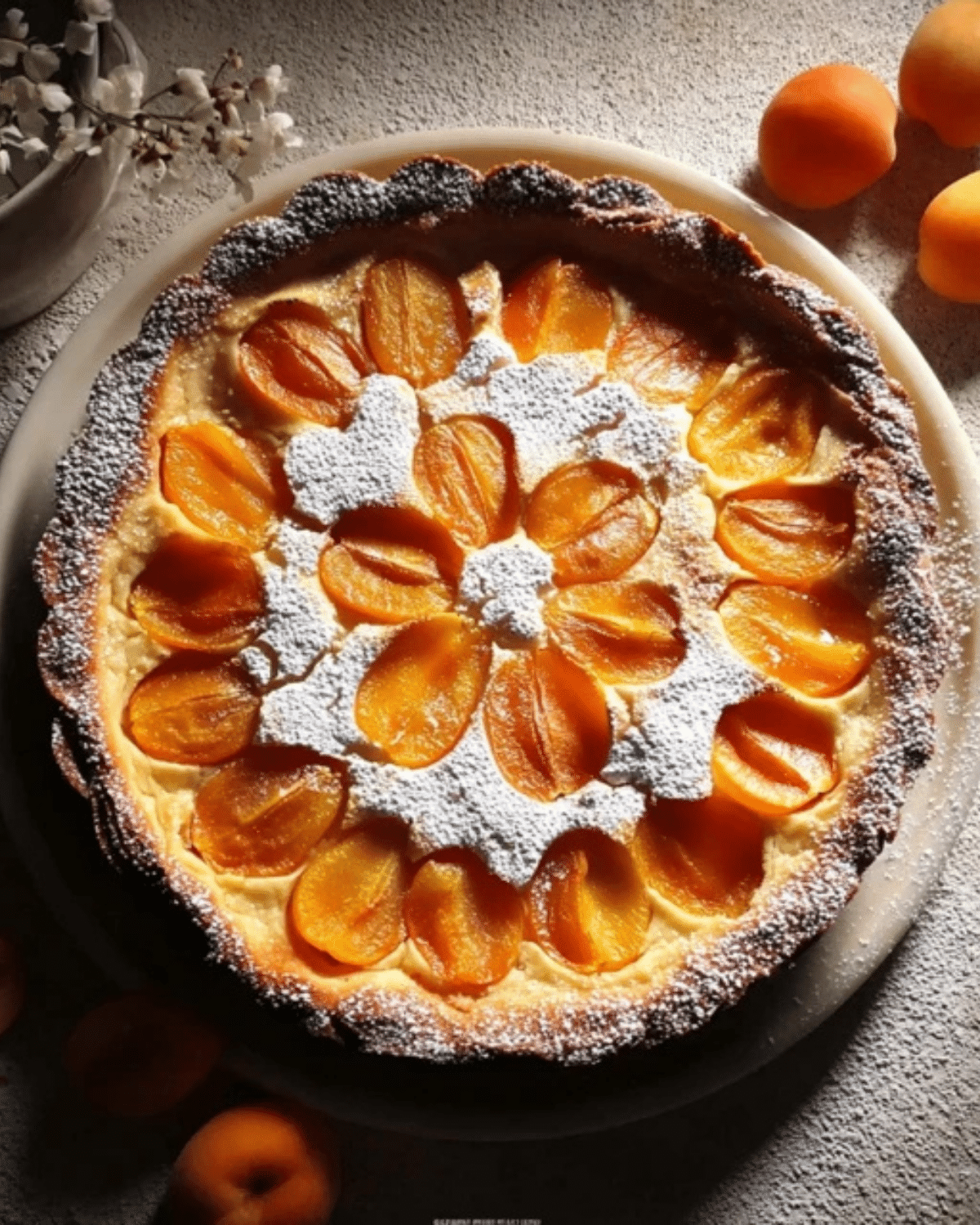
Apricot Flaugnarde is a classic French dessert that combines tender baked fruit with a soft custard-like batter. Often compared to a rustic fruit custard or baked pancake, this traditional dish is both elegant and simple to prepare. The dessert features fresh apricots baked in a lightly sweet batter that becomes soft and creamy in the center while slightly golden around the edges.
The beauty of Apricot Flaugnarde lies in its simplicity. With only a handful of ingredients, this dessert transforms fresh fruit into a comforting dish that can be served warm or at room temperature. Apricots bring a delicate balance of sweetness and mild tartness that pairs perfectly with the smooth custard texture of the batter.
Because it requires minimal preparation and simple ingredients, Apricot Flaugnarde is perfect for home bakers looking to create a classic French dessert without complicated techniques. Whether served after dinner, as a brunch treat, or as an afternoon dessert with tea, this dish delivers a unique and satisfying flavor.
In this guide, you will learn everything about preparing Apricot Flaugnarde from scratch. We will explore the history of the dessert, the ingredients needed, baking techniques, helpful tips, and serving suggestions that will help you create a perfect flaugnarde every time.
JUMP TO
Table of Contents
What Is Apricot Flaugnarde
Apricot Flaugnarde is a traditional baked fruit dessert from France. It is closely related to the well-known dessert clafoutis, which is usually made with cherries.
Difference Between Flaugnarde and Clafoutis
While clafoutis traditionally uses cherries, flaugnarde is the version made with other fruits. Apricots, apples, pears, and berries are common choices.
The batter used in both desserts is similar and resembles a light custard or pancake batter. When baked, the batter rises slightly around the fruit and becomes creamy in the center.
A Rustic French Dessert
Flaugnarde is often described as rustic because it is simple and home-style. Unlike many delicate pastries, this dessert does not require complicated decoration or precise shaping.
The fruit is simply arranged in a baking dish and covered with batter before baking. This straightforward preparation allows the natural fruit flavor to shine.
Why Apricots Work So Well
Apricots are one of the best fruits for flaugnarde because their flavor intensifies during baking. As the apricots cook, they become tender and release natural juices that blend with the custard batter.
This combination creates a dessert that is both fruity and creamy.
Why Apricot Flaugnarde Is So Popular
Apricot Flaugnarde has remained popular for many years because it offers both simplicity and elegance.
Easy Yet Elegant
Although it looks impressive when served, Apricot Flaugnarde is very easy to prepare. The ingredients are basic and the process requires only a few simple steps.
This makes it a great option for home cooks who want to create a dessert that feels special without spending hours in the kitchen.
Perfect Balance of Fruit and Custard
One of the highlights of Apricot Flaugnarde is the balance between fruit and batter. The apricots provide brightness and natural sweetness, while the custard batter adds richness and a soft texture.
Each bite combines the juicy fruit with the creamy baked batter.
Versatile Serving Options
Apricot Flaugnarde can be served in several ways depending on the occasion.
| Occasion | Serving Suggestion |
|---|---|
| Dessert | Serve warm after dinner |
| Brunch | Pair with fresh fruit |
| Afternoon tea | Serve with tea or coffee |
| Light treat | Dust with powdered sugar |
Because it tastes wonderful both warm and cool, it can easily fit into many meal settings.
Ingredients Needed for Apricot Flaugnarde
The ingredients for Apricot Flaugnarde are simple and commonly available.

Main Ingredients
| Ingredient | Purpose |
|---|---|
| Fresh apricots | Provide the fruit base |
| Eggs | Form the custard structure |
| Milk | Creates smooth batter |
| Sugar | Adds sweetness |
| All-purpose flour | Thickens the batter |
| Vanilla extract | Enhances flavor |
| Butter | Greases the baking dish |
| Salt | Balances sweetness |
These ingredients combine to create a smooth batter that bakes into a delicate custard texture.
Choosing the Best Apricots
Fresh apricots work best for this recipe. Look for apricots that are slightly soft and fragrant but not overly ripe.
Ripe apricots provide the best sweetness and flavor once baked.
If fresh apricots are not available, frozen apricots can also be used. They should be thawed and drained before baking.
Optional Flavor Additions
Although traditional Apricot Flaugnarde is simple, a few optional additions can enhance the flavor.
Some popular additions include:
• lemon zest
• almond extract
• cinnamon
• honey drizzle
These additions provide extra aroma while keeping the classic flavor profile.
Kitchen Tools You Will Need
Preparing Apricot Flaugnarde requires only a few basic kitchen tools.
Essential Baking Tools
| Tool | Purpose |
|---|---|
| Baking dish | Holds the dessert |
| Mixing bowl | Combine batter ingredients |
| Whisk | Mix the batter smoothly |
| Knife | Prepare the apricots |
| Cutting board | Slice fruit |
A medium-sized baking dish such as a 9-inch dish works well for this dessert.
Preparing the Baking Dish
Before adding the ingredients, lightly grease the baking dish with butter. This step prevents the flaugnarde from sticking and adds a slight buttery flavor to the edges.
How the Flaugnarde Batter Works
The batter is what gives Apricot Flaugnarde its unique custard-like texture.
Mixing the Batter
The batter is made by whisking eggs, sugar, milk, flour, vanilla extract, and a pinch of salt.
The mixture should be smooth and slightly thin, similar to pancake batter.
Creating the Custard Texture
As the batter bakes, the eggs help create structure while the milk keeps the center soft and creamy.
The result is a dessert that is slightly firm around the edges and custardy in the center.
Supporting the Fruit
The batter surrounds the apricots and holds them in place as the dessert bakes. This allows the fruit to remain evenly distributed throughout the dish.
Baking Apricot Flaugnarde
The baking process transforms the batter and fruit into a warm and comforting dessert.
Baking Temperature
Apricot Flaugnarde is typically baked at 350°F (175°C). This moderate temperature allows the custard to cook evenly.
Baking Time
The dessert usually bakes for 35 to 40 minutes. During this time, the edges become lightly golden while the center sets.
Checking for Doneness
The flaugnarde is ready when the center is set and the edges are slightly puffed. A knife inserted near the center should come out mostly clean.
Allow the dessert to cool slightly before serving.
Step-by-Step Apricot Flaugnarde Recipe
Ingredients
| Ingredient | Quantity |
|---|---|
| Fresh apricots | 2 cups, halved |
| Eggs | 3 |
| Milk | 1 cup |
| Sugar | ½ cup |
| All-purpose flour | ½ cup |
| Vanilla extract | 1 teaspoon |
| Butter | 1 tablespoon |
| Salt | ¼ teaspoon |
Instructions
- Preheat the oven to 350°F (175°C).
- Lightly butter a baking dish.
- Arrange the halved apricots evenly in the dish.
- In a bowl, whisk eggs and sugar until smooth.
- Add milk, flour, vanilla extract, and salt.
- Whisk until the batter becomes smooth.
- Pour the batter over the apricots.
- Bake for 35 to 40 minutes until the dessert is set and lightly golden.
- Allow it to cool slightly before serving.
Tips for the Best Apricot Flaugnarde
Use Ripe Fruit
Ripe apricots produce the best sweetness and aroma when baked.
Do Not Overmix the Batter
Overmixing may make the batter too dense. Whisk only until smooth.
Allow the Dessert to Rest
Letting the flaugnarde cool for about 10 minutes helps the custard set properly.
Serving Ideas for Apricot Flaugnarde
Apricot Flaugnarde can be served in several appealing ways.
Powdered Sugar Topping
A light dusting of powdered sugar adds sweetness and enhances presentation.
Fresh Fruit Garnish
Serve with extra fresh apricot slices or berries.
Light Cream or Yogurt
A spoonful of yogurt or light cream pairs well with the custard texture.
Brunch Dessert
Because it is not overly sweet, Apricot Flaugnarde works beautifully as part of a brunch menu.
How to Store Apricot Flaugnarde
Refrigeration
Store leftover flaugnarde in an airtight container in the refrigerator for up to three days.
Reheating
Reheat gently in the oven or microwave before serving.
Freezing
Although it can be frozen, the texture may become slightly softer after thawing.
Frequently Asked Questions About Apricot Flaugnarde
Can I use other fruits?
Yes, pears, apples, berries, or peaches can also be used.
Is this dessert similar to a custard?
Yes, the texture is similar to a baked custard with fruit.
Can I make it ahead of time?
Yes, Apricot Flaugnarde can be prepared earlier and reheated before serving.
Why is my flaugnarde dense?
This may happen if the batter is overmixed or if too much flour is added.
Conclusion
Apricot Flaugnarde is a classic French dessert that combines tender baked apricots with a smooth custard-like batter. Because it uses simple ingredients and easy preparation techniques, it is perfect for both beginner and experienced home bakers.
Whether served warm after dinner or enjoyed as part of a relaxed brunch, this rustic dessert highlights the natural sweetness of apricots and the comforting texture of baked custard.
PrintApricot Flaugnarde – Easy Classic French Dessert

Apricot Flaugnarde is a classic French baked dessert made with fresh apricots and a light custard-like batter. This rustic fruit dessert is soft, slightly sweet, and easy to prepare, making it perfect for brunch, afternoon tea, or a simple homemade dessert.
- Prep Time: 10 minutes
- Cook Time: 40 minutes
- Total Time: 50 minutes
- Yield: 6 servings 1x
Ingredients
- 2 cups fresh apricots, halved and pitted
- 3 large eggs
- 1 cup milk
- 1/2 cup granulated sugar
- 1/2 cup all-purpose flour
- 1 teaspoon vanilla extract
- 1 tablespoon butter (for greasing the baking dish)
- 1/4 teaspoon salt
Instructions
- Preheat the oven to 350°F (175°C).
- Lightly grease a baking dish with butter.
- Arrange the halved apricots evenly across the bottom of the dish.
- In a mixing bowl, whisk together the eggs and sugar until smooth.
- Add the milk, flour, vanilla extract, and salt, then whisk until a smooth batter forms.
- Pour the batter gently over the apricots.
- Bake for 35 to 40 minutes until the edges are golden and the center is set.
- Remove from the oven and allow the flaugnarde to cool slightly before serving.
Notes
- Use ripe apricots for the best flavor and natural sweetness.
- A light dusting of powdered sugar can be added before serving for extra sweetness.
- The dessert can be served warm or at room temperature.
- Allow the flaugnarde to rest for about 10 minutes after baking so the custard sets properly.
- Leftovers can be stored in the refrigerator for several days.
Nutrition
- Serving Size: 1 serving
- Calories: 210 kcal
- Sugar: 18 g
- Sodium: 90 mg
- Fat: 6 g
- Saturated Fat: 2 g
- Unsaturated Fat: 3 g
- Trans Fat: 0 g
- Carbohydrates: 32 g
- Fiber: 2 g
- Protein: 7 g
- Cholesterol: 95 mg