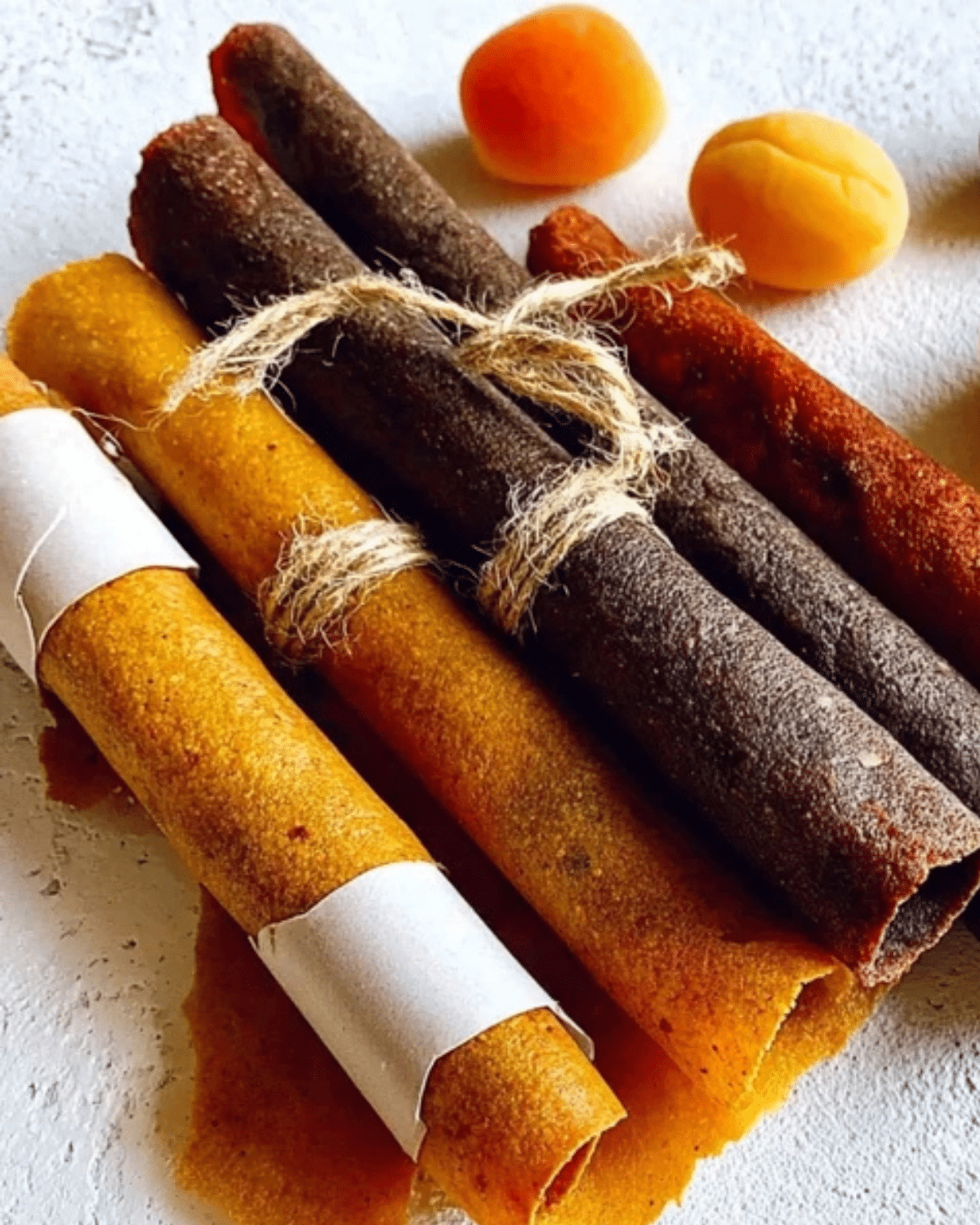
Apricot Fruit Leather is a simple, naturally sweet snack made by slowly drying pureed apricots until they form a flexible sheet of concentrated fruit flavor. This homemade treat is popular because it contains minimal ingredients while delivering the bright taste of fresh fruit. Many families enjoy making apricot fruit leather at home because it is healthier than many packaged snacks and easy to store for later use.
Unlike many processed fruit snacks, apricot fruit leather can be prepared with only apricots and optional natural sweeteners. The drying process removes moisture from the fruit puree, creating a chewy texture that is similar to traditional fruit roll snacks. Because the flavor becomes concentrated during drying, the final product has a rich and naturally sweet apricot taste.
Another reason apricot fruit leather is loved by home cooks is its versatility. It can be made using a standard oven or a food dehydrator, and the recipe can easily be adjusted by adding other fruits or mild spices. Whether packed in a lunchbox, enjoyed during travel, or eaten as an afternoon snack, apricot fruit leather is a practical and delicious option.
JUMP TO
Table of Contents
In this guide, you will learn everything about making apricot fruit leather at home, including the best ingredients, preparation techniques, drying methods, and helpful tips for achieving the perfect texture.
What Is Apricot Fruit Leather and Why It’s So Popular
Apricot fruit leather is a dried fruit snack created by spreading fruit puree into a thin layer and slowly removing the moisture through gentle heat. Once dried, the puree becomes a flexible sheet that can be cut into strips or rolled for easy storage.
Because of its simple preparation and natural ingredients, apricot fruit leather has become a favorite snack in many households.
The Traditional Origins of Fruit Leather
Fruit leather has been made for centuries as a method of preserving fruit. Long before refrigeration existed, people found ways to store fruit by drying it in the sun or near warm cooking areas.
By pureeing fruit and spreading it into thin layers, the drying process became faster and more efficient. Once dried, the fruit could be stored for long periods without spoiling.
This traditional preservation technique eventually evolved into the fruit leather snacks that many people enjoy today.
What Makes Apricot Fruit Leather Unique
Apricots are especially suitable for making fruit leather because of their natural balance between sweetness and gentle tartness.
When apricots are blended into a puree and dried, their flavor becomes deeper and more concentrated. The natural sugars in the fruit intensify, creating a sweet and slightly tangy taste that many people find appealing.
Apricots also have a smooth texture when blended, which helps produce an even fruit leather sheet.
Flavor and Texture of Homemade Apricot Fruit Leather
The flavor of apricot fruit leather is rich and fruity. Because most of the water has been removed, the apricot taste becomes more intense than fresh fruit.
The texture is soft, chewy, and slightly flexible. Properly prepared fruit leather should not be brittle or sticky. Instead, it should bend easily without breaking.
A well-made sheet of apricot fruit leather typically has:
• A smooth surface
• Bright fruit flavor
• Flexible texture
• Light natural sweetness
These qualities make it both enjoyable and convenient to eat.
Why Fruit Leather Is a Healthy Snack Option
Apricot fruit leather is often considered a healthier alternative to many packaged snacks.
Because it can be made using only fruit, it contains natural sugars instead of added sweeteners. Apricots also contain vitamins, minerals, and fiber, which contribute to the nutritional value of the snack.
Another advantage is the absence of artificial flavors or preservatives. Homemade apricot fruit leather allows you to control exactly what ingredients are used.
This makes it a popular option for families who prefer natural snack choices.
When to Enjoy Apricot Fruit Leather
Apricot fruit leather can be enjoyed in many different situations. Its portability and long shelf life make it an ideal snack for both children and adults.
Common occasions for eating apricot fruit leather include:
• School lunchboxes
• Road trips
• Hiking or outdoor activities
• Afternoon snacks
• Light desserts
Because it is lightweight and easy to store, many people keep fruit leather as a convenient snack for busy days.
Ingredients Needed to Make Apricot Fruit Leather
One of the biggest advantages of apricot fruit leather is that it requires very few ingredients. In many cases, the recipe can be made using only fresh apricots.

However, a few additional ingredients can sometimes improve flavor or texture.
Simple Ingredients for Homemade Fruit Leather
The most basic apricot fruit leather recipe includes only a small number of ingredients.
Ingredient | Purpose
Apricots | Provide flavor and natural sweetness
Lemon juice | Helps preserve color and brightness
Honey or natural sweetener (optional) | Adds extra sweetness if needed
These ingredients create a smooth fruit puree that dries into a chewy snack.
Choosing the Best Apricots for Fruit Leather
The quality of the apricots greatly affects the flavor of the final product.
Ripe apricots are the best choice because they are naturally sweet and flavorful. Soft, fragrant fruit usually produces the best fruit leather.
If the apricots are too firm or slightly tart, a small amount of natural sweetener can help balance the taste.
Fresh vs Dried Apricots for Fruit Leather
Fresh apricots are typically the preferred ingredient for fruit leather because they blend easily into a smooth puree.
However, dried apricots can also be used when fresh fruit is not available. In this case, the dried apricots should be soaked in warm water before blending. This softens the fruit and allows it to form a smooth puree.
Both options can produce delicious apricot fruit leather.
Natural Sweeteners That Can Be Added
Sometimes apricots may not be sweet enough on their own. In these situations, natural sweeteners can be added to the puree.
Common options include:
• Honey
• Maple syrup
• Date syrup
These ingredients enhance sweetness while maintaining the natural character of the fruit leather.
Optional Flavor Additions for Better Taste
Although apricot fruit leather tastes great on its own, small flavor additions can make it even more interesting.
Popular options include:
• Cinnamon for warmth
• Vanilla extract for gentle sweetness
• Lemon zest for brightness
These ingredients should be used lightly so the apricot flavor remains the focus.
Next, the drying process becomes the most important step in making perfect apricot fruit leather. Proper preparation and drying techniques help achieve the ideal chewy texture.
How to Make Apricot Fruit Leather Step by Step
Making apricot fruit leather at home is a straightforward process that mainly involves blending fruit and slowly drying the puree until it becomes a flexible sheet. Although the drying step takes time, the preparation itself is simple and requires minimal effort.
When done correctly, the result is a smooth, chewy snack with concentrated apricot flavor.
Preparing the Apricots for Blending
The first step in making apricot fruit leather is preparing the apricots properly.
Start by washing the apricots thoroughly to remove any dirt or residue. After washing, cut the apricots in half and remove the pits.
If the apricots are very ripe, they may already be soft enough to blend easily. However, if they are slightly firm, cooking them briefly can help soften the fruit.
Place the apricot halves in a saucepan with a small amount of water and heat gently for about 5 to 10 minutes. This softens the fruit and makes blending easier.
Once the apricots are soft, allow them to cool slightly before blending.
Making a Smooth Apricot Puree
The next step is blending the apricots into a smooth puree.
Place the prepared apricots in a blender or food processor. Blend until the mixture becomes smooth and free of lumps.
If the puree seems too thick, a small amount of water can be added to help the blending process. However, the puree should remain relatively thick so it spreads evenly when drying.
At this stage, optional ingredients such as lemon juice or natural sweeteners can be added to enhance the flavor.
Blend the mixture again until everything is fully combined.
Spreading the Puree for Even Drying
Once the puree is ready, it must be spread into a thin layer for drying.
Line a baking tray with parchment paper or a silicone baking mat. Pour the apricot puree onto the lined tray and use a spatula to spread it evenly.
The puree should be about 1/8 inch thick. If the layer is too thick, the fruit leather will take longer to dry. If it is too thin, the finished leather may become brittle.
A smooth and even layer helps the fruit dry consistently across the entire tray.
Oven Method for Making Fruit Leather
One common way to make apricot fruit leather is using a regular kitchen oven.
Preheat the oven to a very low temperature, typically 140°F to 170°F (60°C to 75°C). Low heat allows the fruit to dry slowly without cooking.
Place the tray in the oven and allow the puree to dry for 6 to 8 hours. The exact time depends on the thickness of the puree and the moisture content of the fruit.
During drying, the moisture gradually evaporates, leaving behind a flexible fruit sheet.
To help moisture escape, the oven door can be opened slightly.
Dehydrator Method for Perfect Fruit Leather
A food dehydrator is another excellent tool for making apricot fruit leather.
To use this method, spread the puree on dehydrator trays lined with non-stick sheets. Set the dehydrator temperature to about 135°F (57°C).
Allow the fruit leather to dry for 6 to 10 hours depending on the thickness of the puree.
Dehydrators are often preferred because they maintain a consistent low temperature and provide even airflow, which helps the fruit dry uniformly.
How to Know When Fruit Leather Is Ready
Apricot fruit leather is ready when the surface feels dry but slightly flexible.
The leather should peel away from the parchment paper without sticking. It should bend easily without cracking or breaking.
If the surface still feels sticky in some areas, additional drying time may be required.
Once fully dried, allow the fruit leather to cool before cutting it into strips.
Tips for Perfect Apricot Fruit Leather
Although fruit leather is simple to prepare, a few helpful tips can make the process easier and improve the final result.
Common Mistakes to Avoid When Making Fruit Leather
One common mistake is spreading the puree too thickly. Thick layers take much longer to dry and may remain sticky.
Another mistake is using high heat. Temperatures that are too high can cook the fruit rather than dry it.
Keeping the heat low and the layer thin produces better fruit leather.
How to Get the Right Texture and Thickness
The ideal apricot fruit leather should be smooth, flexible, and easy to roll.
Maintaining a consistent thickness during spreading is essential. Uneven layers can cause some areas to dry faster than others.
Using a spatula to smooth the puree helps achieve a uniform thickness.
Preventing Fruit Leather from Sticking
Using parchment paper or silicone baking mats helps prevent sticking.
After drying, the fruit leather should peel off easily. If it sticks slightly, allowing it to cool completely can make removal easier.
Best Temperature for Drying Fruit Leather
Low temperatures are important for making fruit leather.
Drying at around 135°F to 170°F helps preserve the fruit’s natural flavor while removing moisture slowly.
Higher temperatures may cause the fruit to cook instead of drying properly.
How to Know When Fruit Leather Is Ready
Finished fruit leather should feel dry to the touch but still flexible.
If the fruit leather bends without cracking and does not stick to the fingers, it is ready.
Properly dried fruit leather can be rolled or folded easily.
Delicious Variations of Apricot Fruit Leather
One of the most enjoyable aspects of making fruit leather is experimenting with different fruit combinations.
Apricot Strawberry Fruit Leather
Blending apricots with strawberries creates a bright and slightly tangy fruit leather. The strawberry flavor complements the sweetness of the apricots.
Apricot Mango Fruit Leather
Mango adds a tropical sweetness that pairs well with apricots. The result is a smooth fruit leather with rich flavor.
Apricot Berry Fruit Leather
Blueberries or raspberries can be blended with apricots for a colorful fruit snack with a balanced sweet and tart taste.
No Sugar Apricot Fruit Leather
For a completely natural snack, fruit leather can be made without any added sweeteners. Ripe apricots usually provide enough natural sweetness on their own.
Spiced Apricot Fruit Leather
Adding a small amount of cinnamon or vanilla can give the fruit leather a warm and comforting flavor.
How to Store and Serve Apricot Fruit Leather
Proper storage helps maintain the texture and freshness of homemade apricot fruit leather.
Best Ways to Cut and Roll Fruit Leather
Once the fruit leather has cooled completely, it can be cut into strips using scissors or a sharp knife.
Many people roll the strips with parchment paper so they remain easy to handle.
How to Store Fruit Leather for Long Shelf Life
Fruit leather should be stored in an airtight container or sealed bag.
When stored properly in a cool, dry place, apricot fruit leather can last for several weeks.
Can You Freeze Fruit Leather
Yes, fruit leather can be frozen for longer storage.
Wrap the rolls tightly and place them in a freezer-safe container. Frozen fruit leather can last for several months.
Packing Fruit Leather for Lunch or Travel
Because fruit leather is lightweight and compact, it is ideal for travel or packed lunches.
The rolled strips can easily fit into snack containers or small bags.
Shelf Life of Homemade Fruit Leather
When stored properly, apricot fruit leather usually lasts 2 to 3 weeks at room temperature and even longer if refrigerated.
Frequently Asked Questions About Apricot Fruit Leather
Is apricot fruit leather healthy?
Yes. Apricot fruit leather is often considered a healthy snack because it can be made with only fruit and contains natural nutrients and fiber.
How long does homemade fruit leather last?
When stored in an airtight container, fruit leather typically lasts two to three weeks at room temperature.
Can fruit leather be made without sugar?
Yes. Many recipes use only fruit without additional sweeteners, especially when ripe fruit is used.
Why is my fruit leather sticky?
Sticky fruit leather usually means it needs more drying time or the puree layer was too thick.
Conclusion: Why Apricot Fruit Leather Is a Great Homemade Snack
Apricot fruit leather is a simple and flavorful snack made from pure fruit. Its chewy texture, bright flavor, and long shelf life make it a practical option for homemade snacking.
Because the recipe requires only a few ingredients and minimal preparation, it is an excellent project for anyone interested in natural food preservation.
PrintApricot Fruit Leather: Easy Healthy Homemade Snack

Apricot Fruit Leather is a naturally sweet homemade snack made by drying smooth apricot puree into chewy, flexible sheets. This healthy fruit treat requires simple ingredients and creates a portable snack perfect for lunchboxes, travel, or everyday snacking.
- Prep Time: 15 minutes
- Cook Time: 8 hours
- Total Time: 8 hours 15 minutes
- Yield: 10 fruit leather strips 1x
- Category: Snack
- Method: Dehydrating
Ingredients
- 4 cups fresh apricots, pitted and chopped
- 1 tablespoon lemon juice
- 1–2 tablespoons honey or maple syrup (optional)
- 2–3 tablespoons water (if needed for blending)
Instructions
- Preheat the oven to 140°F–170°F (60–75°C) or prepare a food dehydrator.
- Wash the apricots, remove the pits, and cut them into halves or quarters.
- Place the apricots in a blender or food processor and blend until smooth.
- Add lemon juice and optional honey or maple syrup, then blend again until fully combined.
- If the mixture is too thick, add a small amount of water to help create a smooth puree.
- Line a baking tray with parchment paper or a silicone mat.
- Pour the apricot puree onto the tray and spread evenly to about 1/8 inch thickness.
- Place the tray in the oven and dry for 6–8 hours, or until the fruit leather is dry but still flexible.
- Alternatively, dry in a dehydrator at 135°F (57°C) for 6–10 hours.
- Once dried, allow the fruit leather to cool completely.
- Cut the sheet into strips and roll them in parchment paper for easy storage.
Notes
- Use ripe apricots for the best natural sweetness and flavor.
- Spread the puree evenly to ensure consistent drying.
- If the fruit leather feels sticky, allow additional drying time.
- Store rolled fruit leather in an airtight container.
- The fruit leather can also be frozen for longer storage.
Nutrition
- Serving Size: 1 strip
- Calories: 45 kcal
- Sugar: 9 g
- Sodium: 2 mg
- Fat: 0 g
- Saturated Fat: 0 g
- Unsaturated Fat: 0 g
- Trans Fat: 0 g
- Carbohydrates: 11 g
- Fiber: 1 g
- Protein: 0.5 g
- Cholesterol: 0 mg