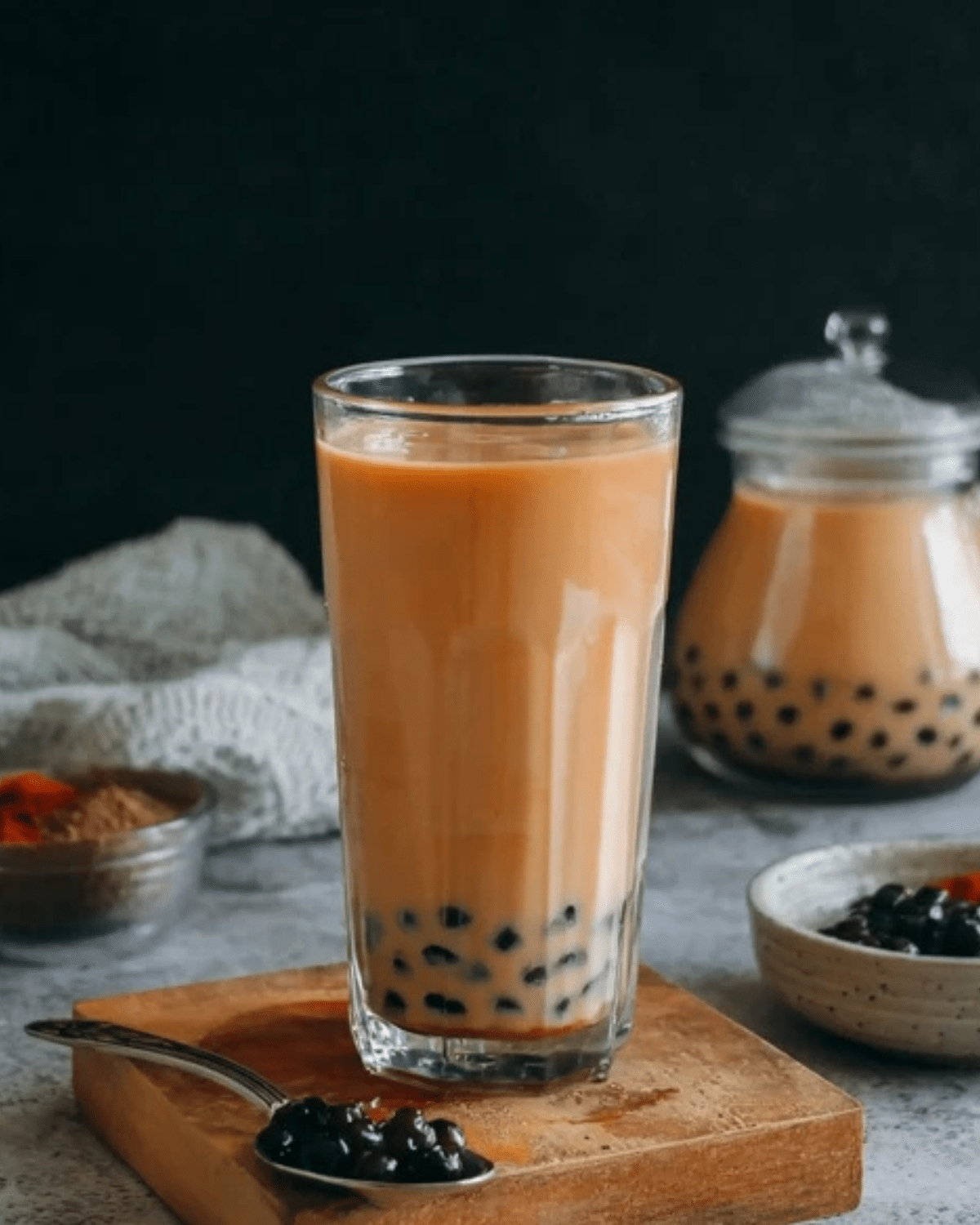
A good boba tea recipe brings together chewy tapioca pearls, freshly brewed tea, and a creamy or fruity base that feels both refreshing and comforting. While bubble tea is often associated with cafés and specialty shops, making it at home is far easier than most people expect. With the right technique and a little patience, you can recreate the same texture and flavor you love, while also controlling sweetness and ingredients. In this guide, you’ll learn what makes boba tea special, where it comes from, and how to start building a homemade version that tastes just as satisfying as the store-bought kind
JUMP TO
Table of Contents
What Is Boba Tea and Why It’s So Popular
Boba tea, also known as bubble tea, is a drink that combines tea, milk or fruit flavoring, sweetener, and chewy tapioca pearls. What sets it apart from regular iced tea or milk tea is the texture. Each sip delivers both liquid and soft, springy pearls, which makes drinking it more interactive and fun.
Origins of Boba Tea and Bubble Tea Culture
Boba tea originated in Taiwan during the 1980s, when tea shops began experimenting with cold milk tea and added toppings. Tapioca pearls quickly became the most popular addition because of their chewy bite and neutral flavor. Over time, the drink evolved into countless variations, spreading throughout Asia and eventually across the world. Today, boba tea culture is closely tied to creativity, customization, and social experiences.
Why Boba Tea Became a Global Trend
The global rise of bubble tea happened for several reasons. First, it’s visually appealing, which made it perfect for social media. Second, it’s customizable, allowing people to choose sweetness levels, milk types, and flavors. Finally, it offers something different from traditional drinks. Because of this combination, the boba tea recipe became popular not only with tea lovers, but also with people looking for a dessert-like beverage.
Boba Tea vs Bubble Tea Explained
Many people wonder whether there’s a difference between boba tea and bubble tea. In practice, the terms are used interchangeably. “Boba” refers to the tapioca pearls, while “bubble” can describe either the pearls or the foam created when the drink is shaken. Regardless of the name, the core elements remain the same: tea, sweetness, and chewy pearls.
Ingredients Needed for a Homemade Boba Tea Recipe
A successful boba tea recipe starts with understanding the ingredients. While there are many variations, the base components stay consistent. Choosing good-quality ingredients helps ensure the final drink tastes balanced and fresh.
Tapioca Pearls Explained
Tapioca pearls are made from tapioca starch, which comes from cassava root. When cooked properly, they become soft and chewy rather than hard or gummy. Dry black tapioca pearls are the most common type used in classic milk tea. They may look intimidating at first, but once cooked correctly, they’re the highlight of the drink.
Best Tea Bases for Boba Tea
Black tea is the most traditional base, especially for milk tea. It has a strong flavor that stands up well to milk and sugar. Green tea offers a lighter, fresher taste, while oolong tea adds complexity and depth. When making a boba tea recipe at home, brewing the tea strong is important, since ice and milk can dilute the flavor.
Sweeteners and Milk Options
Sweeteners vary depending on preference. White sugar, brown sugar, and honey are all common choices. Brown sugar, in particular, pairs well with tapioca pearls because of its caramel-like flavor. For milk, whole milk creates a rich texture, while alternatives like almond milk or oat milk work well for dairy-free versions. Adjusting these components allows you to tailor the drink exactly to your taste.
How to Make Boba Tea Recipe Step by Step
Once the ingredients are ready, the process becomes straightforward. While timing matters, especially for the pearls, the steps themselves are simple and repeatable.
Cooking Tapioca Pearls Properly
Cooking the pearls correctly is the most important step in any boba tea recipe. Bring a large pot of water to a rolling boil, then add the pearls and stir gently to prevent sticking. As they cook, they’ll float to the surface and gradually soften. After simmering, the pearls need time to rest in hot water, which finishes the cooking process and creates the ideal chewy texture.

Preparing the Tea Base
While the pearls cook, brew the tea. Use hot water and steep the tea longer than usual to create a concentrated flavor. Once brewed, let it cool slightly before refrigerating. Chilling the tea ensures the final drink stays refreshing and balanced.
Sweetening and Flavoring the Drink
After the pearls are cooked, they’re usually soaked in a sweet syrup, often made with brown sugar. This step adds flavor and keeps them from sticking together. When assembling the drink, combine tea, milk or fruit flavoring, and sweetener, then add ice and pearls. Stir or shake well so everything blends smoothly.
Types of Boba Tea You Can Make at Home
One of the biggest advantages of learning a solid boba tea recipe is flexibility. Once you understand the basics, you can create dozens of variations using the same core method. Each style offers a different balance of sweetness, creaminess, and flavor.
Classic Milk Tea Boba Recipe
Classic milk tea is the version most people picture first. It uses strong black tea, milk, and sweetened tapioca pearls. The richness of the milk balances the bold tea flavor, while the pearls add texture. This version is ideal for beginners because it highlights the fundamentals without extra complexity.
Fruit-Based Boba Tea Variations
Fruit boba tea swaps milk for fruit juice or puree. Mango, strawberry, peach, and lychee are popular choices. These drinks feel lighter and more refreshing, especially in warm weather. Green tea often works best as a base because it doesn’t overpower the fruit flavors. This variation is also a good option for those avoiding dairy.
Brown Sugar Boba Tea
Brown sugar boba tea focuses on the pearls themselves. After cooking, the tapioca pearls are simmered in a thick brown sugar syrup until glossy. Milk is then poured over the pearls, creating dramatic swirls and a deep caramel flavor. This version is sweeter and richer, making it feel closer to a dessert than a drink.
Common Mistakes to Avoid When Making Boba Tea
Even a simple boba tea recipe can go wrong without a few precautions. Understanding common mistakes helps you get consistent results every time.
Overcooking or Undercooking Tapioca Pearls
Undercooked pearls have a hard center, while overcooked ones turn mushy. Timing matters, but resting the pearls after boiling is just as important. Skipping the resting step often causes texture issues, even if boiling time seems correct.
Using the Wrong Sweetener Ratios
Too much sweetener can overpower the tea, while too little makes the drink taste flat. Because pearls are already sweetened, it’s best to sweeten the tea lightly and adjust gradually. Tasting as you go prevents imbalance.
Assembling Boba Tea Too Early
Cooked pearls are best used the same day. If left too long, they harden and lose chewiness. For the best texture, assemble your drink shortly before serving rather than hours ahead.
How to Customize Your Boba Tea Recipe
Customization is a big part of bubble tea’s appeal. Small adjustments can make the drink fit different tastes and dietary needs.
Dairy-Free and Vegan Options
Plant-based milks like oat, almond, and soy work well in boba tea. Oat milk, in particular, adds creaminess similar to dairy milk. Using brown sugar or agave syrup instead of honey keeps the drink fully vegan.
Adjusting Sweetness and Ice Levels
One benefit of making boba tea at home is control. You can reduce sugar, use less ice, or even serve it warm. These adjustments make the drink more personal and enjoyable.
Flavor Add-Ins and Toppings
Beyond tapioca pearls, toppings like grass jelly, aloe vera, or fruit jellies add variety. Flavor extracts, matcha, or cocoa powder can also be blended into the tea for unique twists.
Health Notes and Nutrition of Boba Tea
While boba tea is often treated as an indulgence, understanding its nutrition helps you enjoy it mindfully.
Calorie Considerations
Calories mainly come from sugar, milk, and pearls. Reducing sugar or using lighter milk alternatives can significantly lower calorie content without sacrificing flavor.
Is Boba Tea Healthy in Moderation
Enjoyed occasionally, boba tea can fit into a balanced lifestyle. Tea itself provides antioxidants, and homemade versions avoid preservatives found in some commercial drinks.
Ways to Make a Lighter Boba Tea
Using unsweetened tea, smaller portions of pearls, and plant-based milk creates a lighter drink. Fruit-based versions also tend to be lower in fat.
How to Store Tapioca Pearls and Tea
Storage plays a key role in maintaining quality, especially when preparing components ahead of time.
Can You Store Cooked Boba
Cooked pearls are best consumed within a few hours. If necessary, they can be kept at room temperature in syrup for a short time, but refrigeration makes them hard.
Best Way to Store Brewed Tea
Brewed tea can be refrigerated for up to two days. Storing it unsweetened helps preserve freshness and prevents off flavors.
Frequently Asked Questions About Boba Tea Recipe
Why Are My Boba Pearls Hard in the Center
This usually means the pearls didn’t rest long enough after boiling. Resting allows heat to finish cooking the center.
Can I Make Boba Tea Without Milk
Yes, fruit teas and plain sweetened teas work well without milk and still pair nicely with pearls.
How Long Does Homemade Boba Tea Last
For best quality, it should be consumed the same day it’s made.
Can I Use Instant Boba Pearls
Instant pearls cook faster and are convenient, though texture may differ slightly from traditional pearls.
Final Thoughts on Making the Best Boba Tea Recipe
Learning a reliable boba tea recipe opens the door to endless creativity. With fresh tea, properly cooked pearls, and balanced sweetness, homemade bubble tea can rival café versions while offering more control and flexibility. Whether you prefer classic milk tea or fruity variations, making boba at home turns a popular drink into a fun, rewarding experience.
PrintBoba Tea Recipe That Tastes Better Than Store-Bought Drinks

A homemade boba tea recipe made with freshly brewed tea, chewy tapioca pearls, and milk or fruit flavors. This easy bubble tea guide helps you recreate café-style drinks at home with full control over sweetness and texture.
- Prep Time: 10 minutes
- Cook Time: 30 minutes
- Total Time: 40 minutes
- Yield: 2 servings
- Category: Beverage
- Method: Stovetop
- Cuisine: Asian
- Diet: Vegetarian
Ingredients
- 1/2 cup dried black tapioca pearls
- 4 cups water (for cooking pearls)
- 2 cups water (for brewing tea)
- 2 black tea bags or 2 teaspoons loose-leaf tea
- 1/2 cup milk or plant-based milk
- 2–3 tablespoons brown sugar (for syrup)
- 1–2 tablespoons white sugar or honey (to taste)
- Ice cubes (as needed)
Instructions
- Bring 4 cups of water to a rolling boil in a pot.
- Add tapioca pearls and stir gently to prevent sticking.
- Boil for 20–25 minutes, then remove from heat and let pearls rest in hot water for 10 minutes.
- Drain pearls and transfer to a bowl with brown sugar syrup to sweeten.
- Brew black tea in 2 cups of hot water until strong, then let it cool.
- In a glass, add cooked pearls, ice, brewed tea, milk, and additional sweetener if desired.
- Stir well and serve immediately.
Notes
- Use pearls the same day for best texture.
- Adjust sweetness gradually to avoid overpowering the tea.
- Oat milk works well for a creamy dairy-free option.
- Fruit teas can be used instead of milk tea for lighter versions.