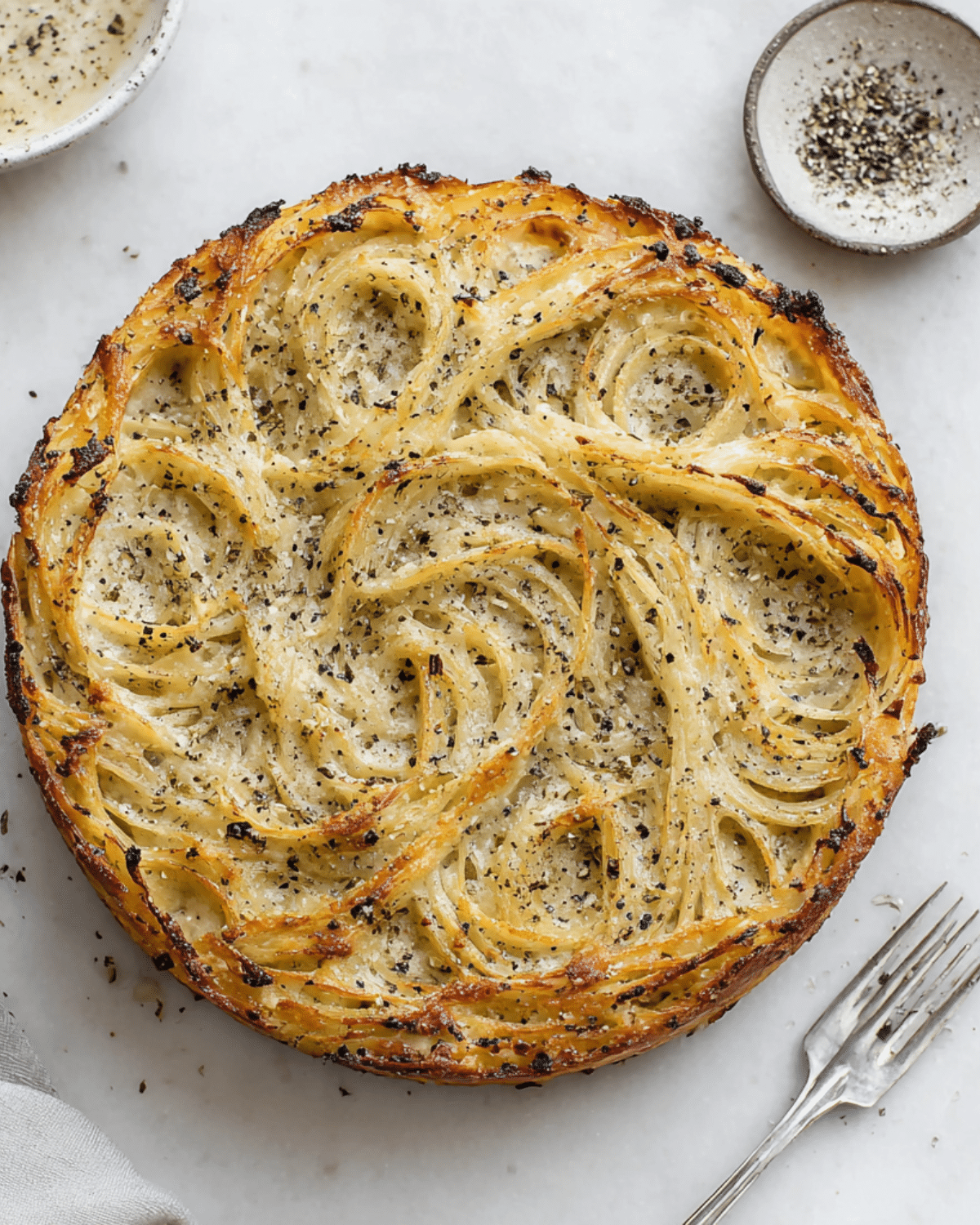
Looking for a dish that’s as showstopping as it is satisfying? This cacio e pepe pie is a savory twist on the beloved Roman pasta classic, baked into a crisp, golden pie you can slice and serve. It’s cheesy, peppery, and downright irresistible. Whether you’re planning a cozy family dinner or want to impress guests with something unexpected, this pasta pie brings a perfect balance of comfort and sophistication.
In this article, we’ll walk you through the magic behind this crowd-pleasing recipe—from its Italian inspiration to must-know cooking tips, serving ideas, and answers to popular questions. You’ll also find trusted pairing suggestions and insider tricks to ensure your pie comes out bubbly and crisp every time. Check out our creamy pasta ideas like creamy roasted garlic butternut squash pasta if you’re into rich, comforting meals.
JUMP TO
Table of Contents
What Is Cacio e Pepe Pie and Why Everyone’s Obsessed With It
The Italian roots of cacio e pepe
“Cacio e pepe” translates to “cheese and pepper”—and that’s exactly what this classic Roman pasta dish is all about. Traditionally made with just pasta, pecorino cheese, and black pepper, its simplicity is its genius. Over centuries, Italians have turned this humble combo into an iconic comfort food, proving you don’t need a long list of ingredients to deliver bold flavor.
Turning a classic pasta into a stunning savory pie
So, where does the cacio e pepe pie come in? Imagine the creamy, peppery flavor of cacio e pepe baked into a sliceable, fork-friendly pasta pie. It takes the familiar flavors of the pasta and bakes them into a firm yet creamy form using eggs and cheese as binding agents. The result? A textural masterpiece—crispy on the edges, cheesy and luscious on the inside. Don’t miss our chicken pot pie if you love creative comfort food takes.
Unlike traditional casseroles, the pie format lets you cut clean wedges that hold their shape, making it ideal for gatherings or prep-ahead meals. It’s basically pasta night in a new outfit—fancier, but still approachable.
Why this pie is perfect for brunch, dinner, or holiday feasts
What makes this dish so versatile is its ability to cross meal boundaries. It’s perfect for:
- Brunch: Serve it alongside a leafy salad and sparkling wine
- Dinner: Pair it with roasted veggies and crusty bread
- Holiday gatherings: A unique vegetarian centerpiece that stands out from the usual suspects
Plus, it reheats beautifully, meaning leftovers won’t go to waste. Looking for inspiration? Try our garlic sesame noodles for another comforting twist.
What’s more, because the pie holds its shape so well, it’s easy to transport. Take it to a potluck, bring it on a picnic, or just bake ahead and enjoy leftovers throughout the week.
Key Ingredients That Make Cacio e Pepe Pie Irresistible

Bucatini – the pasta that holds it all together
One of the defining elements of this cacio e pepe pie is the use of bucatini, a thick, spaghetti-like pasta with a hollow center. Why bucatini? Because it gives the pie structure while soaking up all the cheesy, peppery goodness. The tubular shape helps it lock in flavor and moisture, making every bite flavorful and textured.
When slightly undercooked before baking, bucatini keeps its bite and doesn’t go mushy in the oven. This pasta is more than just a base—it’s the backbone of the dish. If you’ve never cooked with bucatini before, this pie is the perfect intro. And if you love pasta-based bakes, don’t miss our chicken ramen stir fry for a quick noodle fix.
The cheese trio: Parmigiano-Reggiano, mozzarella, provolone
Cacio e pepe might be all about “cheese and pepper,” but this pie adds dimension by using three cheeses:
- Parmigiano-Reggiano: The salty, nutty base that defines the dish.
- Provolone: Adds stretch and sharpness without overpowering.
- Mozzarella: For that gooey melt and creamy texture.
This trio melts beautifully together, giving you that golden, bubbling top and tender middle. Plus, sprinkling extra cheese before baking creates those crave-worthy crispy edges.
Want to explore more cheesy comfort food recipes? Check out our southern baked macaroni and cheese—it’s another crowd-pleaser that cheese lovers can’t resist.
Seasoning secrets – black pepper, garlic, and more
Let’s talk about the heart of cacio e pepe: black pepper. This isn’t just any spice in this dish—it’s the star. Use freshly ground pepper for the boldest kick. You’ll need at least 2.5 teaspoons to get that signature warmth and flavor.
Garlic adds another layer of depth, while kosher salt and whole milk bring balance and creaminess to the custard base. Eggs help bind everything together, ensuring the pie slices clean and holds firm without becoming dry.
For extra flavor, you can even add a pinch of nutmeg or swap provolone for aged pecorino. But the traditional mix already delivers major punch without overcomplicating the dish.
Discover great ideas like our creamy chicken noodle soup for recipes that balance richness and spice just right.
Step-by-Step Guide: How to Make Cacio e Pepe Pie
Cooking and prepping the bucatini properly
Your cacio e pepe pie starts with the pasta, and how you cook it makes a big difference. You’ll want to cook 1 pound of bucatini just shy of al dente—about 1 to 2 minutes less than the package instructions. This keeps it from getting mushy when baked. After draining, toss it with a tiny drizzle of olive oil to prevent sticking while you prep the rest.
If you’ve only used bucatini for sauces, this will change the way you see it. It gives the pie a structure that spaghetti or fettuccine just can’t replicate. Looking for another pasta idea? Try our one-pot creamy Cajun chicken pasta for a flavorful weeknight hit.
Mixing the custard: cheese, milk, eggs, and seasonings
Next, you’ll mix the “custard” that binds the pie. In a large bowl, whisk together:
- 1½ cups whole milk
- 1 cup grated Parmigiano-Reggiano
- 3 large eggs, lightly beaten
- 2 garlic cloves, minced
- 2½ teaspoons black pepper
- 1 teaspoon kosher salt
- 1 cup grated provolone
- ½ the mozzarella (2 oz)
This rich mixture should be thick, creamy, and packed with flavor. Once combined, add your cooked bucatini and toss it all together until evenly coated. The mixture might look a little loose—that’s perfect. The eggs and cheese will firm it up in the oven.
Want to make your dish extra comforting? Don’t miss our Doritos cheesy chicken casserole—it’s a bold and satisfying family favorite.
Baking to perfection and getting that crispy edge
Spray a 9-inch springform pan generously with nonstick spray. For extra protection against leaks, wrap the bottom with foil. Pour the pasta mixture into the pan and level it gently. Then, sprinkle the remaining provolone and mozzarella on top for that golden, bubbling crust.
Bake at 425°F for 35 to 45 minutes, until the top is golden brown and the center is fully set. Once out of the oven, let it cool for at least 10 minutes before slicing. This helps it hold together and lets the flavors settle.
The edges should be crisp—almost caramelized. That’s where the magic is. Some folks even fight over those crunchy pieces!
Looking for inspiration? Try our garlic butter chicken bites if you want a protein side that complements this pie beautifully.
Pro Tips for the Best Cacio e Pepe Pie Every Time
How to prevent dryness and keep it creamy inside
The key to a moist, creamy interior lies in the ratio of milk to cheese to eggs. Stick to the recipe proportions, and don’t overbake. If the pie looks done around the 35-minute mark but you’re unsure, check the center with a knife—it should come out mostly clean but not bone dry. Also, letting the pie rest after baking helps the custard set without drying out.
If you’re storing leftovers, wrap slices tightly and refrigerate. Reheat in the oven at 350°F for 10 minutes with foil to keep the edges crisp and the inside moist.
The right pan to use and why a springform works best
While you could use a deep cake pan, a springform pan is the gold standard. It allows for easy release without mangling your pie. The height helps the custard and pasta cook evenly, and wrapping the bottom in foil prevents any leakage.
No springform? Use a well-oiled pie dish—but know the edges might not get quite as crispy.
Make-ahead and reheating tips for leftovers
Yes, this pie is perfect for make-ahead prep. You can fully assemble it, wrap it in foil, and refrigerate up to 24 hours before baking. Just let it sit at room temperature for 20–30 minutes before going into the oven.
Already baked it? Great! This pie is just as good the next day. It holds shape and flavor, making it ideal for meal prep, brunch leftovers, or packed lunches.
Want more smart meal ideas? Check out our chicken and stuffing casserole for another baked option that keeps well and feeds a crowd.
FAQs About Cacio e Pepe Pie
Can you use other types of pasta instead of bucatini?
Yes, but with care. Rigatoni or ziti can work, though they may change the texture. Avoid thin pastas like spaghetti—they won’t hold the structure as well. Bucatini’s thickness and hollow center make it ideal.
What’s the best cheese alternative if I don’t have provolone?
If provolone isn’t available, sharp white cheddar or Fontina are great substitutes. You want something that melts well but still has a punch of flavor to balance the milder mozzarella.
Can this dish be made gluten-free or dairy-free?
Yes—with modifications. Use gluten-free bucatini or similar pasta, and replace milk and cheeses with high-quality dairy-free alternatives (like cashew cheese and unsweetened almond milk). Just note the texture may vary slightly.
Conclusion: Why Cacio e Pepe Pie Deserves a Spot in Your Recipe Book
This cacio e pepe pie isn’t just another pasta dish—it’s a creative spin on a Roman favorite, reimagined into a cheesy, sliceable masterpiece. With its crispy edges, rich custard center, and bold black pepper flavor, this dish brings comfort and class to your table. Whether you serve it for brunch, a cozy dinner, or the holidays, it’s bound to impress.
It’s easy to make, fun to serve, and delicious to the last bite. Add it to your rotation and watch how quickly it becomes a family favorite.
Don’t miss our creamy wild rice chicken soup for another hearty, oven-friendly dinner idea that’s just as satisfying.
PrintCacio e Pepe Pie

This cacio e pepe pie is a baked pasta dish made with bucatini, three cheeses, and bold black pepper, offering crispy edges and a creamy interior—perfect for brunch, dinner, or holiday gatherings.
- Prep Time: 20 minutes
- Cook Time: 50 minutes
- Total Time: 1 hour 10 minutes
- Yield: 6 to 8 servings 1x
- Category: Main Course
- Method: Baking
- Cuisine: Italian-American
- Diet: Vegetarian
Ingredients
- 1 pound bucatini pasta
- 1 1/2 cups whole milk
- 1 cup grated Parmigiano-Reggiano cheese, plus extra for sprinkling
- 3 large eggs, lightly beaten
- 2 garlic cloves, minced
- 2 1/2 teaspoons ground black pepper
- 1 teaspoon kosher salt
- 8 ounces provolone cheese, freshly grated
- 4 ounces mozzarella cheese, freshly grated
- Nonstick cooking spray (for pan)
Instructions
- Preheat oven to 425°F and spray a 9-inch springform pan with nonstick spray. Wrap the bottom in foil to prevent leaks.
- Cook bucatini pasta 1–2 minutes less than package instructions for al dente. Drain and lightly toss with olive oil to prevent sticking.
- In a large bowl, whisk together milk, Parmigiano-Reggiano, eggs, garlic, black pepper, salt, 1 cup of provolone, and half the mozzarella.
- Add cooked bucatini to the bowl and toss until well combined and coated.
- Transfer the mixture into the prepared springform pan and sprinkle remaining provolone and mozzarella on top.
- Bake for 35 to 45 minutes, or until the top is golden and bubbly and the center is set.
- Remove from oven and let it cool for 10–15 minutes before slicing and serving.
Notes
- Use a springform pan for easy release and clean slices.
- Don’t overcook the pasta—keep it al dente before baking.
- Let the pie cool slightly before cutting to help it set properly.
- Reheat leftovers in the oven at 350°F with foil to keep edges crisp.
- Can be prepped ahead and refrigerated up to 24 hours before baking.
Nutrition
- Serving Size: 1 slice
- Calories: 450
- Sugar: 2g
- Sodium: 620mg
- Fat: 22g
- Saturated Fat: 12g
- Unsaturated Fat: 8g
- Trans Fat: 0g
- Carbohydrates: 45g
- Fiber: 2g
- Protein: 20g
- Cholesterol: 95mg