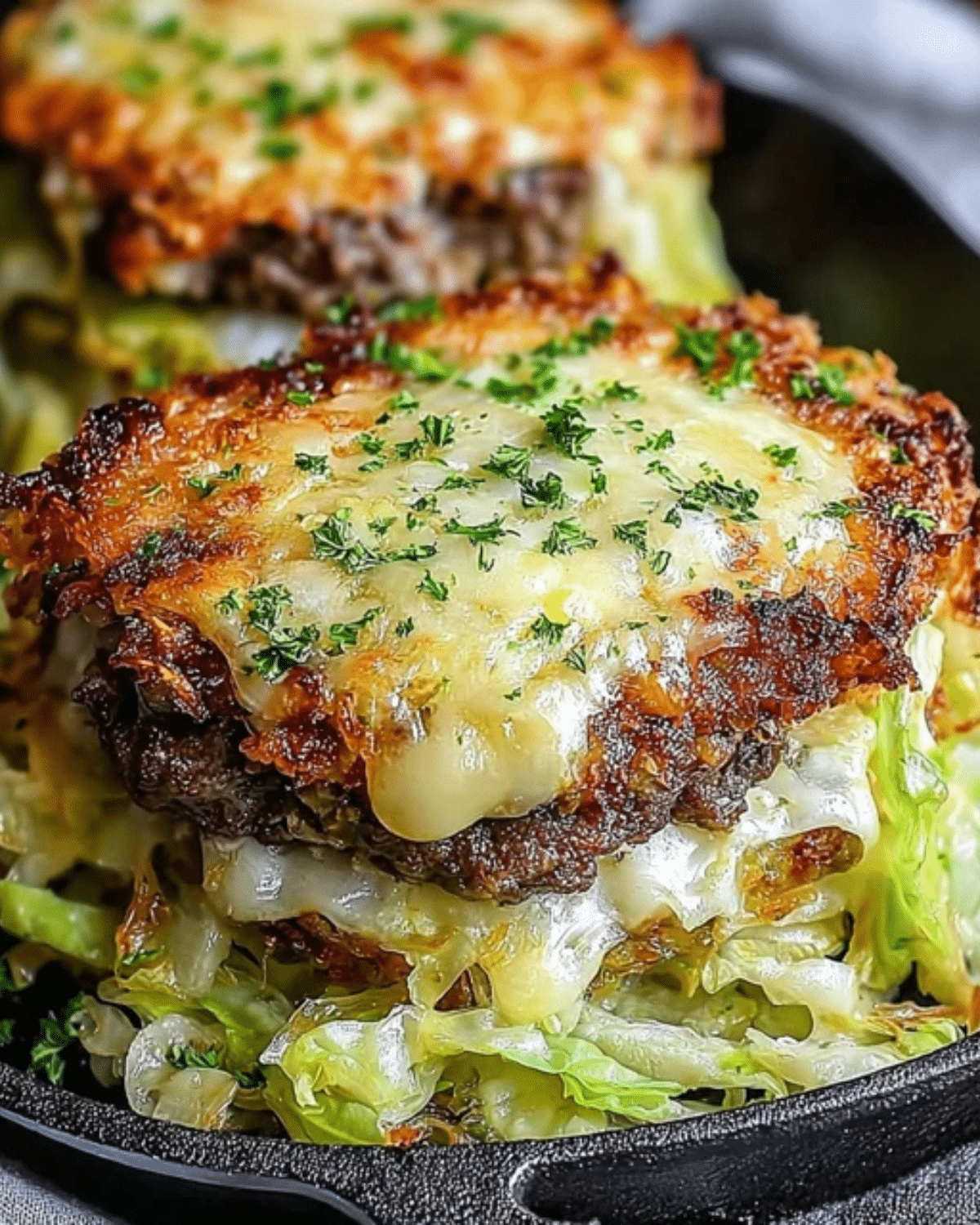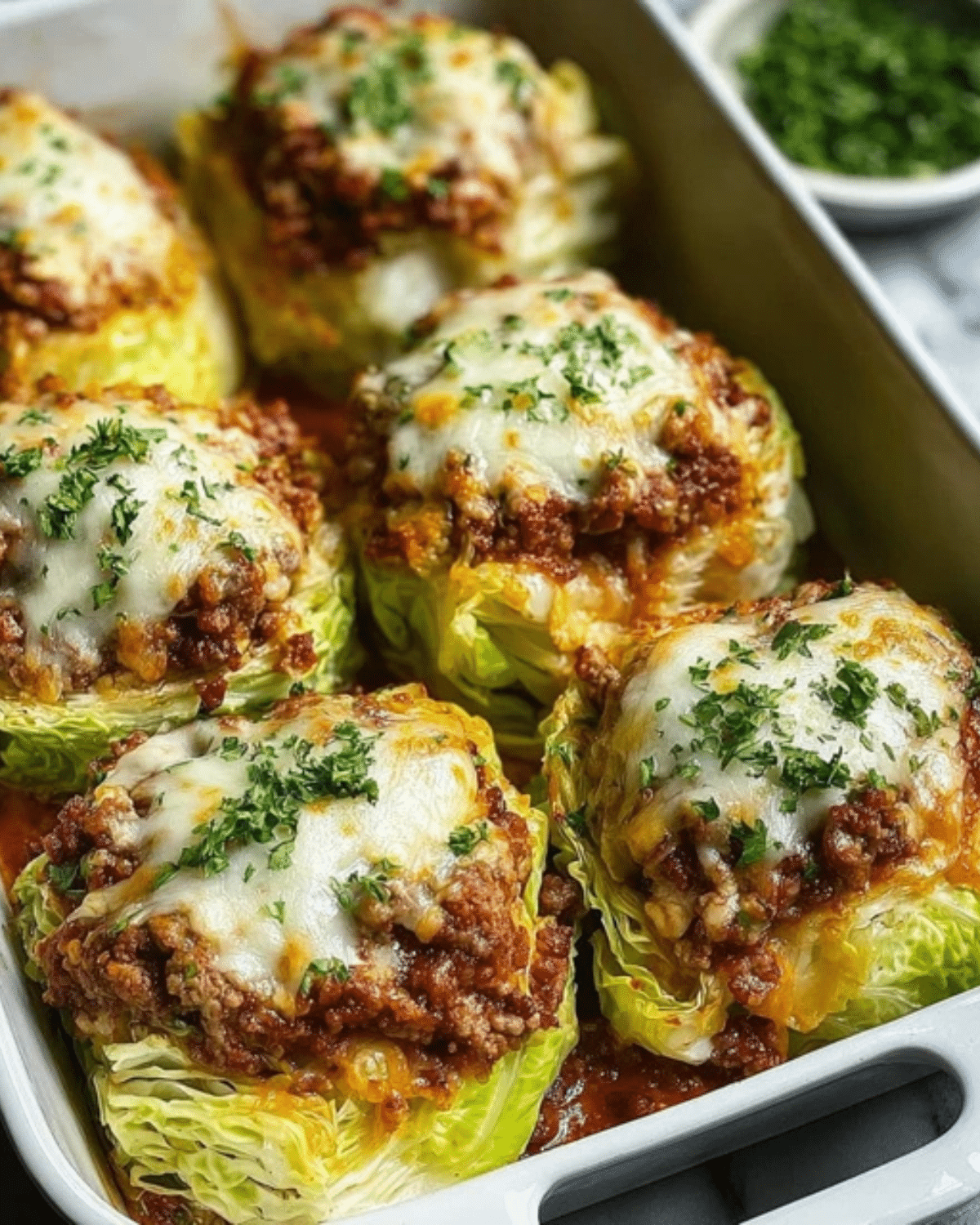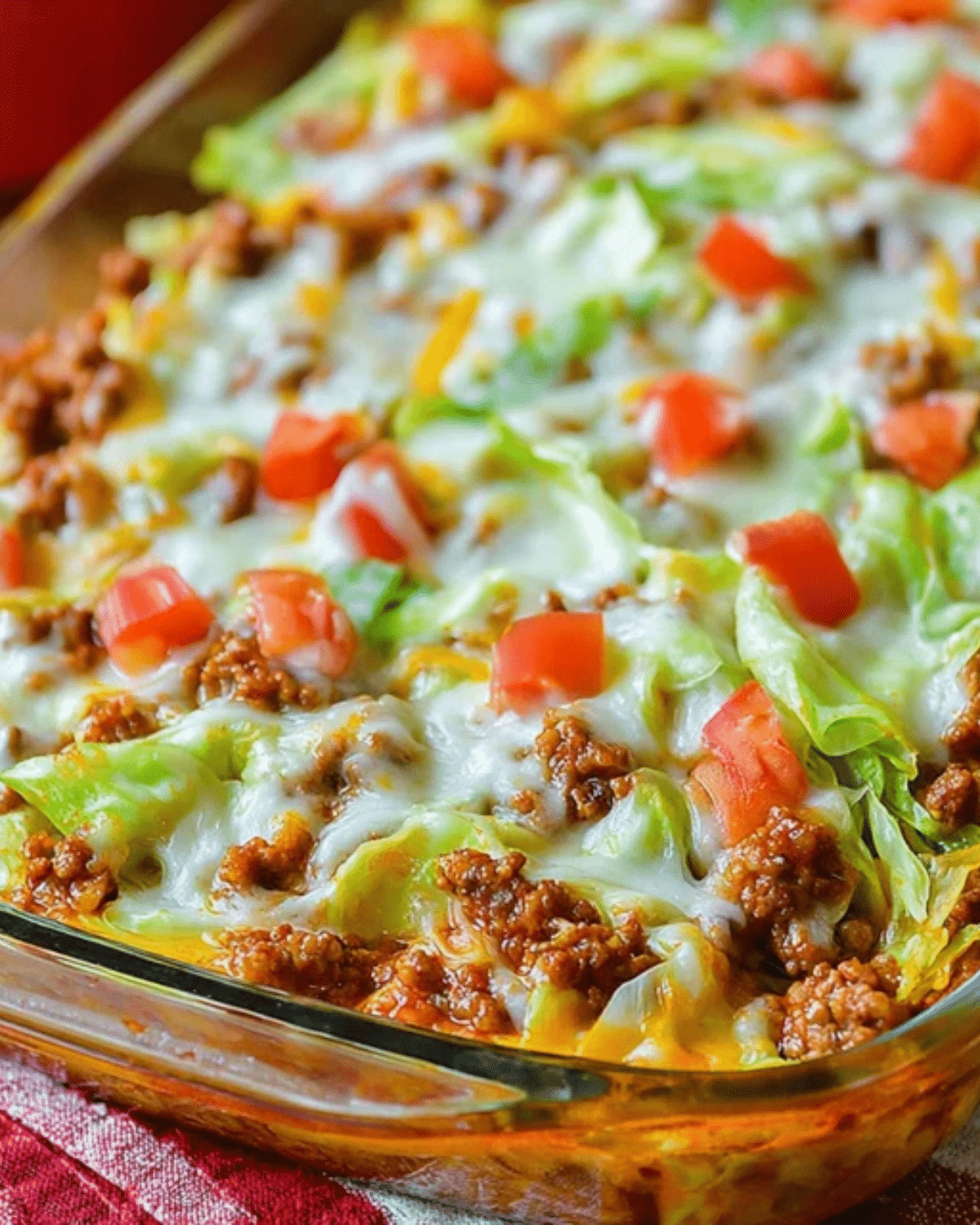
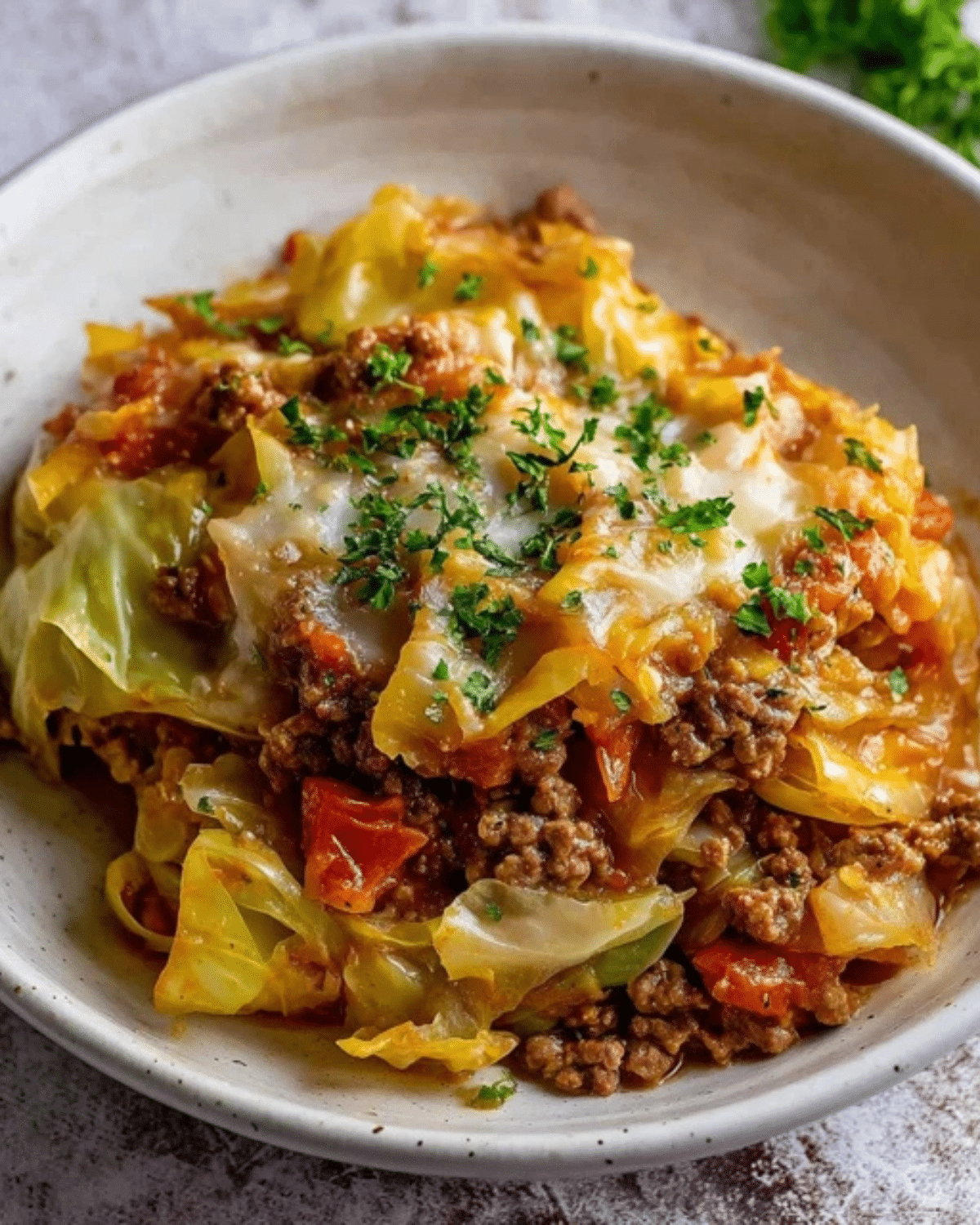
Lazy unstuffed cabbage casserole is a simple, comforting dish inspired by classic cabbage rolls but made without the time-consuming wrapping and rolling. Instead of stuffing cabbage leaves one by one, this casserole layers tender cabbage, seasoned ground beef, and a savory sauce into one easy-to-bake dish. The result is all the familiar flavor of cabbage rolls with far less effort, making it an ideal recipe for busy weeknights.
Because everything cooks together in one pan, lazy unstuffed cabbage casserole allows flavors to blend naturally while saving time and cleanup. Cabbage softens as it bakes, ground beef becomes tender and flavorful, and the casserole develops a rich, comforting texture that feels hearty without being complicated. This article explains why this dish is so popular, how it differs from traditional cabbage rolls, and how to prepare it successfully at home.
JUMP TO
Table of Contents
What Is Lazy Unstuffed Cabbage Casserole and Why It’s So Popular
Lazy unstuffed cabbage casserole takes the essential elements of traditional cabbage rolls and simplifies the process. Instead of rolling filling into cabbage leaves, all the ingredients are cooked together, creating a dish that is easier to prepare while still delivering the same comforting taste.
How Unstuffed Cabbage Casserole Differs From Classic Cabbage Rolls
Traditional cabbage rolls require several steps, including blanching cabbage leaves, preparing the filling, rolling each portion, and arranging everything carefully before baking. While delicious, that process can be time-consuming.
Lazy unstuffed cabbage casserole removes those extra steps. The cabbage is chopped instead of left whole, and the filling is mixed or layered directly into the baking dish. Because everything cooks together, the flavors still blend beautifully, but preparation time is significantly reduced.
Why the Lazy Version Saves Time Without Losing Flavor
The key to this recipe’s success is how the ingredients interact during cooking. Chopped cabbage softens evenly and absorbs seasoning from the beef and sauce. Ground beef releases flavor as it cooks, which spreads throughout the dish rather than staying inside individual rolls.
Because the casserole bakes slowly, the flavors have time to develop. This means the dish tastes rich and well-balanced, even though it requires far less hands-on work than traditional cabbage rolls.
Why This Dish Works for Busy Home Cooks
Lazy unstuffed cabbage casserole is popular because it fits easily into everyday cooking. It uses simple ingredients, requires minimal preparation, and cooks in one pan. This makes it ideal for families, meal prep, or anyone looking for a reliable comfort-food recipe without a long cooking process.
The casserole also reheats well, which adds to its practicality. Many home cooks find that the flavors deepen after resting, making leftovers just as satisfying as the first serving.
Ingredients and Preparation for Lazy Unstuffed Cabbage Casserole
The strength of lazy unstuffed cabbage casserole comes from how simple ingredients are prepared and combined. While the recipe does not require complicated techniques, paying attention to preparation ensures the casserole cooks evenly and develops the rich, comforting flavor it is known for.
Core Ingredients for Unstuffed Cabbage Casserole
Ground beef is the primary protein in lazy unstuffed cabbage casserole. A blend with moderate fat content works best because it provides flavor and moisture as the casserole bakes. Very lean beef can be used, although it benefits from added moisture through sauce or vegetables to prevent dryness.
Green cabbage is the heart of the dish. When chopped into bite-sized pieces, cabbage softens evenly and absorbs flavor from the beef and sauce. Its natural sweetness becomes more pronounced as it bakes, which balances the savory elements of the casserole.
Onion and garlic are commonly used to build a flavorful base. They release aroma and depth when cooked with the beef. Crushed or diced tomatoes form the foundation of the sauce, adding acidity that balances the richness of the meat. Salt, black pepper, and mild spices complete the seasoning without overpowering the cabbage.
Choosing the Best Cabbage for Casseroles
Fresh green cabbage is the best option for lazy unstuffed cabbage casserole. It should feel heavy for its size and have tightly packed leaves. Older cabbage tends to release more water, which can make the casserole overly soft.
Before chopping, remove the tough outer leaves and cut out the core. Slice the cabbage into evenly sized pieces so it cooks at the same rate throughout the dish. Uniform pieces help avoid sections that are undercooked or overly soft.
Preparing Ingredients for Even Cooking
Preparation begins by browning the ground beef in a skillet. Cooking the beef first allows excess fat to be drained, which keeps the casserole from becoming greasy. Adding onion and garlic during this step helps build flavor early.
While the beef cooks, the cabbage can be chopped and lightly seasoned. Some cooks prefer to sauté the cabbage briefly, although this step is optional. Baking will soften the cabbage fully, so pre-cooking is not required as long as the pieces are cut evenly.
Once the ingredients are prepared, they are ready to be layered or mixed in the baking dish. Combining everything evenly ensures that each serving contains a balance of cabbage, beef, and sauce.
How to Cook Lazy Unstuffed Cabbage Casserole Step by Step
Cooking lazy unstuffed cabbage casserole is where all the preparation comes together. Because this dish relies on slow, even cooking, following a clear process helps ensure the cabbage becomes tender, the ground beef stays juicy, and the flavors blend into a comforting, cohesive casserole.
Browning the Ground Beef Correctly
The first cooking step is browning the ground beef. This step is important because it develops flavor and removes excess fat. Heat a large skillet over medium heat, then add the ground beef and break it into small pieces as it cooks. Stir occasionally so it browns evenly rather than steaming.
Once the beef is mostly cooked, add chopped onion and garlic. Cooking them together allows the onion to soften and release sweetness while the garlic adds aroma. When the beef is fully browned, drain any excess fat to prevent the casserole from becoming greasy.
Season the beef mixture lightly with salt and black pepper at this stage. Early seasoning helps distribute flavor evenly throughout the dish instead of concentrating it on the surface.
Layering and Assembling the Casserole
After browning the beef, preheat the oven to 350°F and lightly grease a baking dish. Assembly can be done either by layering or gently mixing the ingredients, depending on preference. Both methods work well as long as the ingredients are distributed evenly.
Start with a layer of chopped cabbage on the bottom of the dish. Add a portion of the beef mixture, then spoon some of the tomato sauce over the top. Continue layering until all ingredients are used, finishing with sauce on top. This layering method allows the cabbage to soften evenly while absorbing flavor from the beef and sauce.
If preferred, the cabbage, beef, and sauce can be mixed together before transferring to the baking dish. This creates a more uniform texture, where every bite tastes the same. Either approach results in a satisfying lazy unstuffed cabbage casserole.
Baking Time and Temperature Tips
Cover the baking dish loosely with foil and place it on the center rack of the oven. Baking covered during the first portion of cooking traps steam, which helps soften the cabbage. After about 30 minutes, remove the foil to allow excess moisture to evaporate and the top to firm up slightly.
Lazy unstuffed cabbage casserole typically bakes for 45 to 60 minutes, depending on the size of the dish and the amount of cabbage used. The casserole is ready when the cabbage is tender and the sauce has thickened slightly.
Once removed from the oven, let the casserole rest for about 10 minutes. This resting period allows the flavors to settle and makes the dish easier to serve.

Tips, Variations, Storage, FAQs, and Final Thoughts on Lazy Unstuffed Cabbage Casserole
Lazy unstuffed cabbage casserole is designed to be forgiving, flexible, and reliable. While the basic method delivers excellent results, a few practical tips and thoughtful variations can help you tailor the dish to your preferences and schedule. This section also covers storage, reheating, frequently asked questions, and a clear wrap-up so you can cook and serve this casserole with confidence.
Practical Tips for the Best Results Every Time
One of the most effective ways to improve the final texture is to manage moisture. Cabbage releases water as it cooks, which is helpful early on to soften it, but too much liquid can thin the sauce. Covering the casserole during the first stage of baking helps the cabbage steam and soften. Uncovering it later allows excess moisture to evaporate and the sauce to thicken.
Seasoning in layers also matters. Lightly seasoning the beef as it browns builds a savory base, while adjusting seasoning again before baking ensures balance. Because cabbage absorbs flavor as it cooks, evenly distributing salt and pepper prevents bland spots.
Cut size plays a role as well. Chopping cabbage into uniform, bite-sized pieces ensures even cooking throughout the casserole. Larger chunks may remain firm while smaller pieces become overly soft. Consistency helps the dish bake evenly and look more appealing when served.
Finally, resting the casserole after baking is essential. A brief rest allows the sauce to settle and the layers to hold together better when scooped. Skipping this step often results in a looser texture that improves only after cooling.
Variations That Still Keep It Lazy and Comforting
One of the reasons lazy unstuffed cabbage casserole is so popular is how easily it adapts. Small changes can suit different tastes without complicating the recipe.
For a lighter approach, reducing the amount of sauce slightly and increasing the proportion of cabbage creates a fresher, vegetable-forward dish. Using leaner ground beef also lowers richness while keeping the casserole satisfying.
If you prefer a creamier texture, a small amount of dairy can be stirred into the sauce before baking. This softens acidity and adds richness, although it should be used sparingly so the dish remains balanced rather than heavy.
Spice levels can be adjusted gently. Mild spices such as paprika or dried herbs add warmth without overpowering the cabbage. Because the dish bakes for a long time, bold spices should be used cautiously to avoid dominating the final flavor.
For those avoiding rice or grains, this casserole naturally works as a low-carb option when prepared without added fillers. The cabbage provides volume and texture on its own, making the dish filling without extra ingredients.
Common Mistakes to Avoid
Overcrowding the baking dish is a common mistake. When the casserole is packed too tightly, moisture has nowhere to go, which can result in a watery texture. Using a dish with enough surface area helps excess liquid evaporate during baking.
Another mistake is under-seasoning. Because cabbage is mild, it needs proper seasoning to shine. Tasting the beef mixture before assembling, when possible, helps ensure the final dish is well balanced.
Overbaking can also reduce quality. While the casserole should bake long enough for the cabbage to become tender, excessive baking can cause the vegetables to lose structure and the sauce to become overly thick. Checking doneness near the end of the recommended time helps prevent this issue.
How to Store and Reheat Lazy Unstuffed Cabbage Casserole
Lazy unstuffed cabbage casserole stores very well, which makes it a strong option for leftovers and meal prep. Once cooled, it should be transferred to an airtight container and refrigerated. Properly stored, it remains fresh for up to four days.
Reheating in the oven produces the best results. Covering the casserole lightly and warming it at a moderate temperature allows it to heat evenly without drying out. Stirring gently halfway through reheating helps distribute heat and restore texture.
Microwaving is faster and convenient for individual portions. Using short intervals and stirring between them prevents hot spots and keeps the casserole from drying out.
Freezing is possible, although the cabbage may soften slightly after thawing. If freezing, allow the casserole to cool completely, then portion it into freezer-safe containers. Thawing overnight in the refrigerator before reheating helps maintain quality.
Frequently Asked Questions About Lazy Unstuffed Cabbage Casserole
Can lazy unstuffed cabbage casserole be made ahead of time?
Yes, it can be assembled a day in advance and refrigerated before baking. This makes it ideal for busy schedules or planned meals.
Why is my casserole watery?
This usually happens when the casserole remains covered for too long or when the cabbage releases more moisture than expected. Uncovering during the final baking stage helps thicken the sauce.
Does the cabbage need to be pre-cooked?
Pre-cooking is not required if the cabbage is chopped evenly. Baking provides enough time for it to soften fully.
Is lazy unstuffed cabbage casserole filling on its own?
Yes, the combination of ground beef, cabbage, and sauce creates a hearty dish that works well as a complete meal.
Conclusion: Why Lazy Unstuffed Cabbage Casserole Deserves a Place in Your Rotation
Lazy unstuffed cabbage casserole delivers everything people love about classic cabbage rolls without the time and effort traditionally required. By simplifying preparation and letting the oven do the work, this dish offers rich flavor, comforting texture, and dependable results. It fits easily into everyday cooking because it is flexible, forgiving, and made with familiar ingredients.
Whether you are looking for a practical weeknight dinner, a make-ahead meal, or a comforting casserole that reheats well, lazy unstuffed cabbage casserole is a reliable choice. Its lasting popularity proves that comfort food does not need to be complicated to be satisfying.
PrintLazy Unstuffed Cabbage Casserole – Easy One-Pan Recipe

Lazy unstuffed cabbage casserole is a simplified version of classic cabbage rolls, combining tender baked cabbage, seasoned ground beef, and savory tomato sauce in an easy one-pan comfort meal.
- Prep Time: 20 minutes
- Cook Time: 55 minutes
- Total Time: 1 hour 15 minutes
- Yield: 6 servings 1x
- Category: Main Dish
- Method: Baking
- Cuisine: American
- Diet: Low Carb
Ingredients
- 1 medium green cabbage, chopped (about 6 cups)
- 1 ½ pounds ground beef
- 1 medium onion, chopped
- 2 cloves garlic, minced
- 1 can (15 oz) diced tomatoes
- 1 can (8 oz) tomato sauce
- 1 teaspoon salt
- ½ teaspoon black pepper
- ½ teaspoon paprika (optional)
- 1 tablespoon olive oil
Instructions
- Preheat the oven to 350°F (175°C) and lightly grease a baking dish.
- Heat olive oil in a skillet over medium heat and brown the ground beef, breaking it into small pieces.
- Add chopped onion and garlic to the skillet and cook until softened and fragrant.
- Drain excess fat from the beef mixture and season with salt, pepper, and paprika if using.
- Spread half of the chopped cabbage evenly in the prepared baking dish.
- Top with half of the beef mixture, then pour half of the diced tomatoes and tomato sauce over it.
- Repeat the layers with remaining cabbage, beef, and sauce.
- Cover the dish loosely with foil and bake for 30 minutes.
- Remove foil and continue baking for 20 to 30 minutes until cabbage is tender and sauce thickens.
- Remove from oven and let rest for 10 minutes before serving.
Notes
- Chop cabbage evenly to ensure uniform cooking.
- Uncovering the casserole near the end helps reduce excess liquid.
- This dish tastes even better after resting or the next day.
- Leftovers reheat well for easy meals.
Nutrition
- Serving Size: 1 serving
- Calories: 330 kcal
- Sugar: 8 g
- Sodium: 540 mg
- Fat: 20 g
- Saturated Fat: 8 g
- Unsaturated Fat: 11 g
- Trans Fat: 0 g
- Carbohydrates: 14 g
- Fiber: 4 g
- Protein: 25 g
- Cholesterol: 95 mg