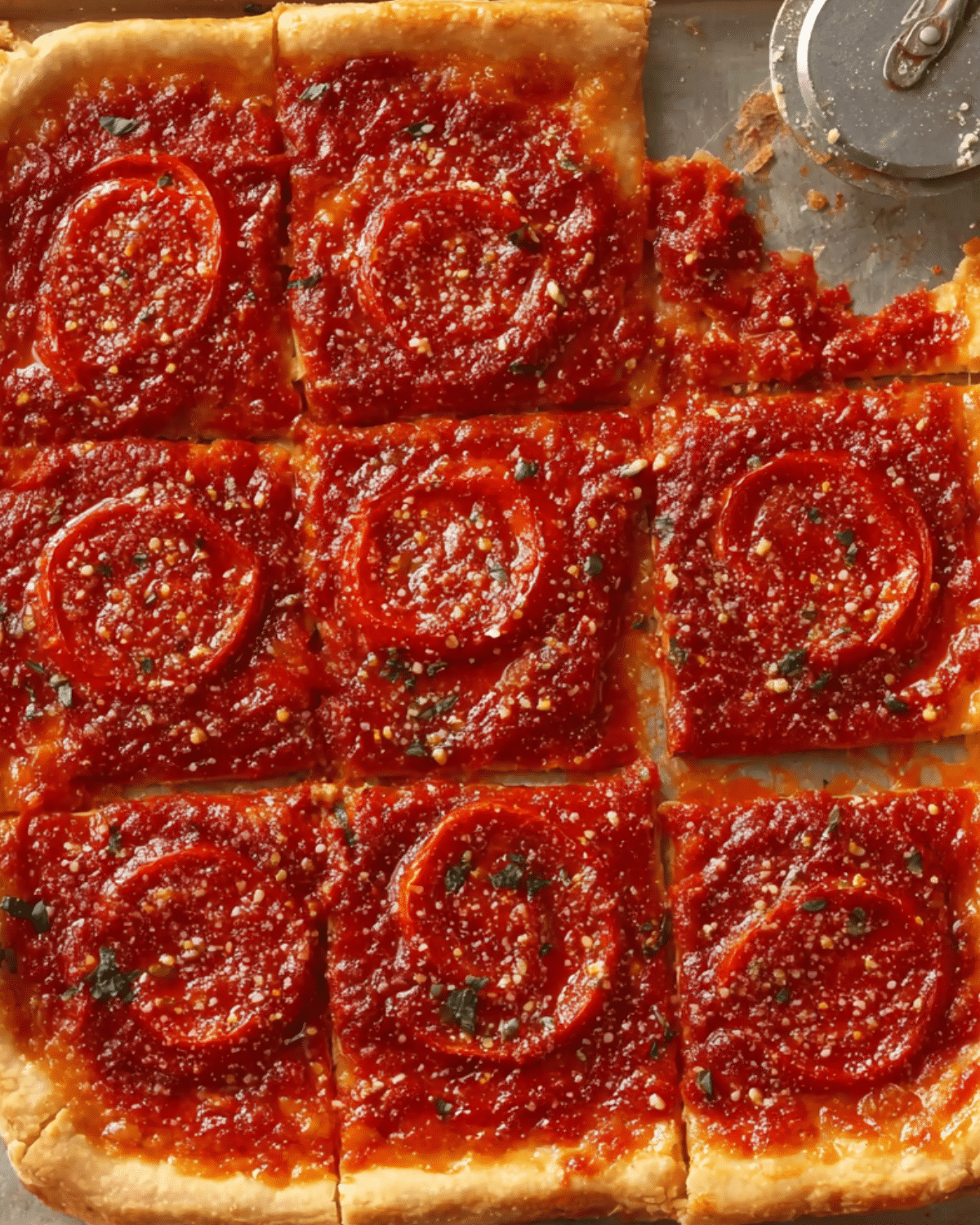
Philly Tomato Pie is one of the most iconic foods to come out of Philadelphia’s rich Italian-American culinary tradition. Known for its thick, airy crust, robust tomato sauce, and unique serving style, Philly Tomato Pie has been a beloved bakery staple for generations. Unlike traditional pizza, this regional favorite focuses on the rich flavor of seasoned tomato sauce rather than layers of melted cheese, creating a simple yet incredibly satisfying dish that continues to win over new fans every year.
At first glance, Philly Tomato Pie may resemble pizza, but one bite quickly reveals that it is something entirely different. The crust is thicker, softer, and more bread-like, often compared to focaccia. The sauce is spread generously across the top and is typically served without mozzarella cheese. Most importantly, Philly Tomato Pie is traditionally enjoyed at room temperature, making it perfect for parties, family gatherings, potlucks, picnics, and holiday celebrations.
For many Philadelphia families, tomato pie is more than just a meal. It’s a tradition passed down through generations. Bakeries throughout the city display large rectangular trays of tomato pie in their windows, selling slices to customers who grew up enjoying this local specialty. Its simplicity allows the quality of the ingredients to shine, proving that some of the best recipes are also the most straightforward.
Whether you’re discovering this regional classic for the first time or recreating a nostalgic favorite from childhood, this authentic Philly Tomato Pie recipe captures everything that makes this dish so special.
JUMP TO
Table of Contents
What Is Philly Tomato Pie?
Philly Tomato Pie is a rectangular Italian-American baked bread topped with a thick layer of seasoned tomato sauce.
Unlike conventional pizza, it features:
- Thick focaccia-style crust
- Rich tomato sauce
- Little or no mozzarella cheese
- Room-temperature serving
- Bakery-style presentation
The emphasis is on the bread and sauce rather than cheese, allowing the tomato flavor to take center stage.
The History of Philly Tomato Pie
The roots of Philly Tomato Pie can be traced back to Southern Italy.
Italian immigrants brought their baking traditions to Philadelphia during the late nineteenth and early twentieth centuries. Many settled in South Philadelphia, where they established bakeries, markets, and restaurants that became community gathering places.
These bakeries developed tomato pie as a practical and affordable food. Large trays of bread were topped with tomato sauce and sold by the slice. Because it could be eaten at room temperature, it was ideal for workers, families, and community events.
Over time, tomato pie became deeply woven into Philadelphia culture. Today, it remains one of the city’s most cherished regional foods.
Why Philly Tomato Pie Is Different from Pizza
Many people mistakenly think tomato pie is simply pizza without cheese.
In reality, several key differences set it apart.
| Feature | Philly Tomato Pie | Traditional Pizza |
|---|---|---|
| Crust | Thick and airy | Thin to medium |
| Sauce | Thick layer on top | Under cheese |
| Cheese | Minimal or none | Generous amount |
| Serving Temperature | Room temperature | Hot |
| Shape | Rectangular | Usually round |
| Texture | Bread-like | Pizza-like |
These differences give tomato pie its own unique identity.
Why Philadelphia Loves Tomato Pie
Philadelphia residents have embraced tomato pie for generations because it offers:
Incredible Flavor
The tomato sauce is rich and deeply seasoned.
Convenience
Can be eaten hot, warm, or room temperature.
Portability
Easy to transport to events.
Tradition
A strong connection to local culture.
Affordability
Simple ingredients keep costs low.
Versatility
Works as a snack, appetizer, lunch, or dinner.
The Secret Behind Great Philly Tomato Pie
The best tomato pies focus on three essential components:
The Dough
Soft, airy, and chewy.
The Sauce
Rich, concentrated, and flavorful.
The Bake
Creates crisp edges and a tender interior.
Mastering these three elements results in an exceptional tomato pie.
Ingredients for Authentic Philly Tomato Pie

For the Dough
- 4 cups bread flour
- 2 teaspoons instant yeast
- 2 teaspoons kosher salt
- 1½ cups warm water
- 3 tablespoons olive oil
For the Tomato Sauce
- 1 can (28 ounces) crushed tomatoes
- 2 tablespoons olive oil
- 3 cloves garlic, minced
- 1 teaspoon dried oregano
- 1 teaspoon dried basil
- ½ teaspoon sugar
- Salt to taste
- Black pepper to taste
Optional Garnishes
- Grated Parmesan cheese
- Fresh basil
- Red pepper flakes
- Extra virgin olive oil
Understanding the Ingredients
Bread Flour
Creates structure and chewiness.
Yeast
Provides rise and flavor development.
Olive Oil
Adds richness and helps create a tender crumb.
Tomatoes
The star ingredient.
Garlic
Adds depth and aroma.
Herbs
Create classic Italian flavor.
Why Bread Flour Matters
Many recipes call for all-purpose flour, but bread flour produces superior results.
Benefits include:
- Stronger gluten development
- Better chew
- Improved rise
- Bakery-style texture
This creates the signature crust that Philly Tomato Pie is known for.
Choosing the Best Tomatoes
Because the sauce is the main attraction, tomato quality matters.
Look for:
Crushed Tomatoes
Provide ideal consistency.
San Marzano Tomatoes
Known for sweetness and low acidity.
Vine-Ripened Tomatoes
Offer robust flavor.
Quality Brands
Can dramatically improve results.
Avoid watery tomatoes that may create a soggy crust.
How to Make Philly Tomato Pie
Step 1: Mix the Dough
Combine flour, yeast, and salt.
Step 2: Add Water and Oil
Mix until a shaggy dough forms.
Step 3: Knead
Knead until smooth and elastic.
Step 4: First Rise
Allow dough to double in size.
Step 5: Prepare the Sauce
Combine tomatoes, olive oil, garlic, herbs, and seasonings.
Simmer until slightly thickened.
Step 6: Prepare the Pan
Grease a large rectangular baking sheet.
Step 7: Shape the Dough
Press dough into the pan.
Step 8: Second Rise
Allow dough to rest and rise again.
Step 9: Pre-Bake
Bake briefly to strengthen the crust.
Step 10: Add Sauce
Spread evenly across the surface.
Step 11: Finish Baking
Bake until golden and crisp.
Step 12: Cool
Allow to cool before slicing.
Step 13: Garnish
Add Parmesan or basil if desired.
Step 14: Serve
Enjoy at room temperature.
Tips for Perfect Philly Tomato Pie
Use Bread Flour
Creates authentic texture.
Allow Full Rising Time
Develops flavor and structure.
Don’t Overload the Sauce
Too much sauce can create sogginess.
Use High-Quality Tomatoes
The sauce is the star.
Cool Before Serving
Traditional tomato pie is served at room temperature.
Use Olive Oil Generously
Enhances flavor and texture.
Why Room Temperature Serving Matters
One of the most unique aspects of Philly Tomato Pie is how it’s served.
Serving at room temperature:
- Enhances sauce flavor
- Improves texture
- Makes transportation easier
- Reflects authentic bakery tradition
Many locals actually prefer it after it has cooled completely.
Regional Variations of Tomato Pie
Although Philadelphia’s version is iconic, other regions have developed their own styles.
Philadelphia Style
Thick crust and room-temperature serving.
Trenton Tomato Pie
Cheese first, sauce on top.
Utica Tomato Pie
Often includes Romano cheese.
Sicilian Tomato Pie
Closer to focaccia bread.
Philadelphia’s version remains among the most distinctive.
Best Occasions to Serve Philly Tomato Pie
Family Gatherings
Feeds large groups easily.
Potlucks
Travels exceptionally well.
Game Day Parties
Easy finger food.
Holiday Celebrations
A crowd-pleasing favorite.
Lunch Buffets
Simple and satisfying.
Picnics
Perfect at room temperature.
What to Serve with Philly Tomato Pie
Salads
- Caesar salad
- Garden salad
- Italian salad
Soups
- Tomato soup
- Minestrone
- Vegetable soup
Side Dishes
- Roasted vegetables
- Antipasto platter
- Garlic knots
Drinks
- Sparkling water
- Lemonade
- Iced tea
Delicious Variations
Classic Bakery Style
Traditional sauce-only topping.
Parmesan Tomato Pie
Light cheese garnish.
Garlic Tomato Pie
Extra garlic flavor.
Spicy Tomato Pie
Red pepper flakes added.
Herb Tomato Pie
Fresh basil and oregano.
Whole Wheat Tomato Pie
Healthier variation.
Why Homemade Philly Tomato Pie Is Better
Making tomato pie at home allows you to:
- Use premium ingredients
- Control seasoning
- Customize thickness
- Adjust sauce flavor
- Enjoy fresh-baked bread
The result often surpasses store-bought versions.
Storage Instructions
Refrigerator
Store for up to 5 days.
Freezer
Freeze slices individually.
Reheating
Serve room temperature or warm lightly.
Common Mistakes to Avoid
Underproofing the Dough
Creates dense crust.
Overproofing
Can weaken structure.
Using Thin Sauce
May create sogginess.
Skipping Pre-Bake
Reduces crust quality.
Overbaking
Can dry the bread.Can I use pizza dough?
Frequently Asked Questions
Is Philly Tomato Pie pizza?
No, although similar, it is a distinct regional specialty.
Why is it served cold?
Traditionally it is served at room temperature to enhance flavor and convenience.
Does it contain mozzarella?
Usually little or none.
Can I use pizza dough?
Yes, though authentic dough is thicker.
Conclusion
Philly Tomato Pie is much more than pizza without cheese. It is a beloved Philadelphia tradition that showcases the incredible flavor of simple ingredients. Featuring a thick bakery-style crust, rich seasoned tomato sauce, and a unique room-temperature serving style, this Italian-American classic has earned its place as one of the most distinctive regional foods in the United States. Whether you’re making it for a family gathering, party, holiday celebration, or simply to experience a true Philadelphia favorite, Philly Tomato Pie delivers authentic flavor and timeless appeal in every bite.
PrintPhilly Tomato Pie: Best Authentic Philadelphia Bakery Recipe

Philly Tomato Pie is a classic Philadelphia bakery specialty featuring thick focaccia-like crust topped with rich seasoned tomato sauce and traditionally served at room temperature.
- Prep Time: 30 minutes
- Cook Time: 35 minutes
- Total Time: 2 hours 45 minutes
- Yield: 12 servings 1x
Ingredients
- 4 cups bread flour
- 2 teaspoons instant yeast
- 2 teaspoons kosher salt
- 1 1/2 cups warm water
- 3 tablespoons olive oil
- 1 can (28 ounces) crushed tomatoes
- 2 tablespoons olive oil
- 3 cloves garlic, minced
- 1 teaspoon dried oregano
- 1 teaspoon dried basil
- 1/2 teaspoon sugar
- Salt and black pepper to taste
- Grated Parmesan cheese (optional)
- Fresh basil (optional)
Instructions
- Combine bread flour, yeast, and salt in a large bowl.
- Add warm water and olive oil.
- Mix until a dough forms.
- Knead until smooth and elastic.
- Allow dough to rise until doubled.
- Prepare sauce by simmering tomatoes, garlic, olive oil, herbs, sugar, salt, and pepper.
- Grease a large rectangular baking sheet.
- Press dough evenly into the pan.
- Allow dough to rise again.
- Partially bake the crust.
- Spread sauce evenly over the crust.
- Return to oven and bake until golden brown.
- Cool to room temperature.
- Garnish with Parmesan and basil if desired.
- Slice into squares and serve.
Notes
- Use bread flour for authentic texture.
- Allow adequate proofing time for the best rise.
- High-quality tomatoes greatly improve flavor.
- Traditional Philly Tomato Pie is served at room temperature.
- Do not overload with sauce.
- Store leftovers refrigerated for up to 5 days.
- Freeze slices individually for longer storage.
- Add red pepper flakes for extra heat.
- A light Parmesan garnish is traditional in some bakeries.
Nutrition
- Serving Size: 1 slice
- Calories: 290 kcal
- Sugar: 3 g
- Sodium: 490 mg
- Fat: 7 g
- Saturated Fat: 1 g
- Unsaturated Fat: 5 g
- Trans Fat: 0 g
- Carbohydrates: 48 g
- Fiber: 2 g
- Protein: 8 g
- Cholesterol: 0 mg