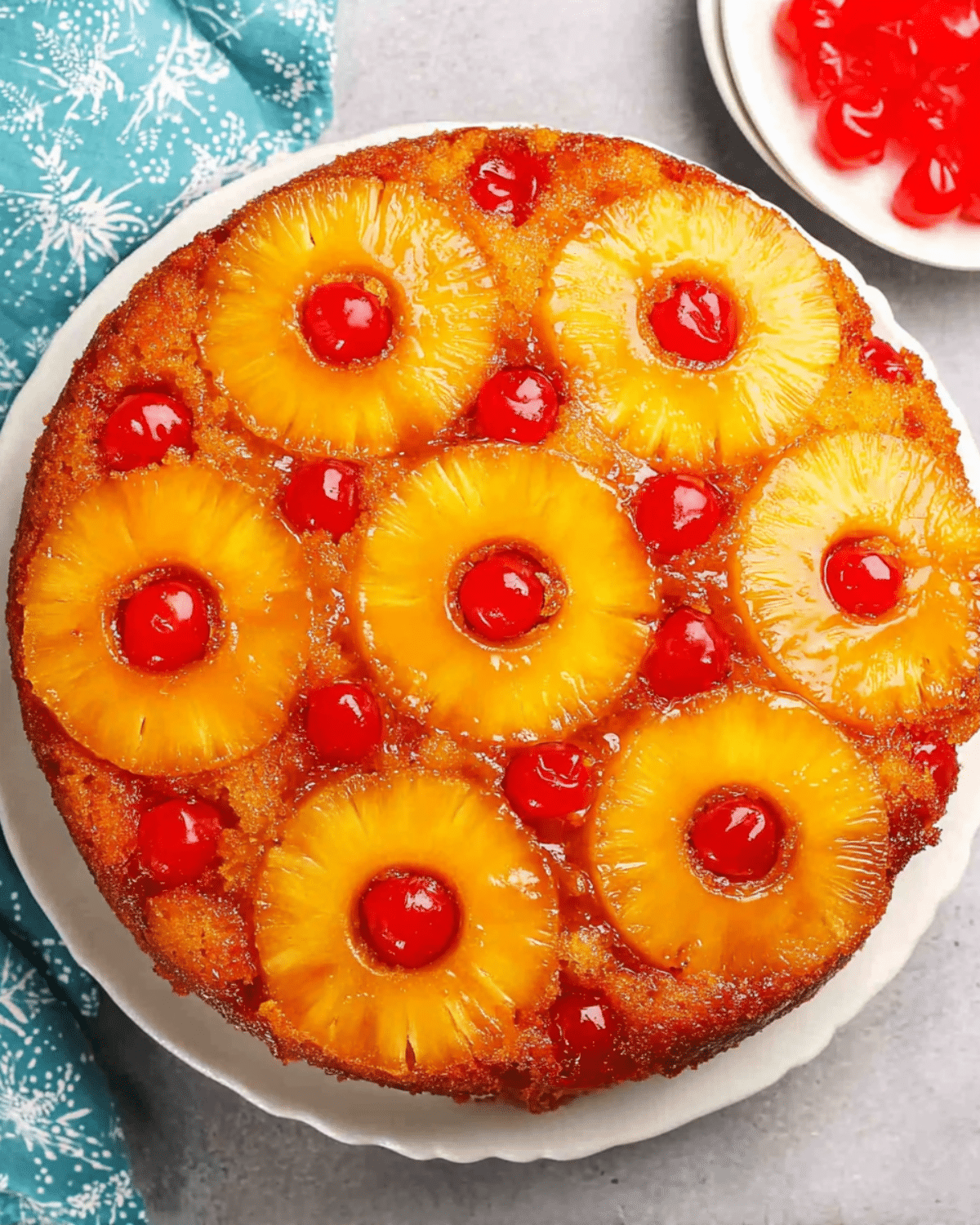
There’s something undeniably nostalgic about a Pineapple Upside Down Cake. With its golden caramelized pineapple topping and buttery, tender crumb, it’s a dessert that has graced American tables for nearly a century. Whether served at a summer barbecue or as the centerpiece for a holiday dinner, this retro classic never seems to lose its charm. In this guide, we’ll explore its origins, walk through a foolproof recipe, and share expert tips so your cake turns out picture-perfect every time. Looking for inspiration? Try our Pineapple Stuffing Recipe for another tropical twist.
JUMP TO
Table of Contents
The Story Behind Pineapple Upside Down Cake
Origins and Early Popularity
The pineapple upside down cake can trace its roots back to early skillet cakes, where cooks would layer fruit and sugar in cast iron pans, pour batter over the top, and bake directly over a fire. Once flipped, the caramelized fruit topping created a naturally beautiful presentation. But it wasn’t until the early 1900s, when James Dole revolutionized canned pineapple production, that this dessert truly took off. Recipes began appearing in magazines and community cookbooks across the United States, quickly turning it into a beloved home-baked treat.
Why It’s Still a Favorite Today
From its stunning pineapple “crown” to the satisfying moment of flipping it out of the pan, this cake blends taste and theatre in equal measure. It’s a dessert that looks like you’ve spent hours in the kitchen, but in reality, the process is surprisingly simple. Plus, the flavor combination of tangy-sweet pineapple, rich brown sugar, and tender vanilla cake is universally appealing—whether you stick to the classic or add your own creative twists.
How to Make the Best Pineapple Upside Down Cake
The key to an outstanding pineapple upside down cake lies in balancing a moist, flavorful crumb with a perfectly caramelized fruit topping. Let’s break down the essential steps for success.
Choosing Your Pineapple
When it comes to the star ingredient, you have two great options:
- Fresh pineapple: Delivers a slightly tart, more complex flavor. Best for bakers willing to put in a little extra prep work cutting the fruit.
- Canned pineapple: Consistent in size, texture, and sweetness. Ideal for perfect ring arrangements and quicker prep.
Both options work beautifully—choose based on your time and taste preferences.
Essential Ingredients for Success
Here’s what you’ll need for a classic pineapple upside down cake:
| Ingredient | Purpose | Notes |
|---|---|---|
| Pineapple rings | Main flavor | Fresh or canned |
| Brown sugar | Caramel topping | Light or dark, depending on depth of flavor desired |
| Butter | Richness & texture | Unsalted preferred |
| Cake flour | Tender crumb | All-purpose works if sifted well |
| Dairy (milk, sour cream, or buttermilk) | Moisture | Adds slight tang and richness |
| Maraschino cherries | Decoration | Adds a pop of color and hint of almond flavor |
Step-by-Step Recipe (Based on Recipetineats Method)
1. Prepare the Pineapple Topping:
Melt butter and sprinkle brown sugar evenly into your cake pan. Arrange pineapple rings over the sugar, tucking maraschino cherries into the centers.
2. Make the Cake Batter:
Cream butter and sugar until light and fluffy. Add eggs one at a time, beating well. Mix in vanilla, then alternate adding sifted cake flour and milk until just combined.
3. Assemble and Bake:
Pour batter over the pineapple layer, spreading evenly. Bake in a preheated oven at 350°F (175°C) for 35–40 minutes, or until a toothpick inserted in the center comes out clean.
4. The Flip:
Let the cake rest for 5–10 minutes before inverting onto a plate. This short cooling time helps the topping set slightly without sticking.
Don’t miss our Better Than Sex Cake for another retro dessert that’s big on drama and flavor.
Expert Tips for a Perfect Cake Every Time
Perfecting a pineapple upside down cake isn’t about complicated techniques—it’s about small details that make a big difference.
Pan Selection and Preparation
A 9-inch metal cake pan is ideal because it ensures even baking and better caramelization. Glass pans often result in less browning, while nonstick pans can work well but require careful handling when flipping. Greasing isn’t strictly necessary due to the butter-rich topping, but a light coating can add peace of mind.
Preventing Soggy or Dry Cake
Soggy cake often comes from excess pineapple juice. Blot each ring with paper towels before arranging them. On the flip side, dry cake can be caused by overbaking or an imbalanced topping-to-cake ratio. Keep an eye on the clock—once a toothpick comes out clean, remove the cake from the oven.
Flavor Boosters
While the classic recipe shines on its own, a few subtle additions can elevate the flavor:
- Vanilla bean or extract for a deeper aroma.
- Light spices like cinnamon or nutmeg for warmth.
- Citrus zest (lemon or orange) for brightness.
Check out our A Lemon Cake to Die For for more ideas on using citrus in baking.
Popular Variations Worth Trying
Spiced Pineapple Upside Down Cake
Incorporate cinnamon, nutmeg, or cardamom into the batter for a comforting twist, perfect for autumn or holiday gatherings.
Tropical Fusion
Swap part of the dairy with coconut milk, or mix in shredded coconut for a tropical punch. For an adults-only version, a splash of dark rum in the topping adds complexity without overpowering the pineapple.
Mini Pineapple Upside Down Cakes
Use a muffin tin for adorable, single-serving cakes. Not only do they bake faster, but they also make for easy portion control and beautiful presentation. Discover great ideas like our Birthday Cake Banana Bread if you love individual desserts.

FAQs About Pineapple Upside Down Cake
Can I make pineapple upside down cake ahead of time?
Yes. You can bake the cake a day in advance, cover it tightly, and store it at room temperature. For longer storage, refrigerate for up to three days, but bring it to room temperature before serving to restore its soft texture.
What’s the best way to store leftovers?
Cover the cake with plastic wrap or place it in an airtight container. Store in the fridge for up to three days. To refresh, warm slices in the microwave for 10–15 seconds.
Can I substitute other fruits for pineapple?
Absolutely. Peaches, pears, plums, and even mango work beautifully in this style of cake. Keep in mind that softer fruits may require less baking time.
How do I prevent the topping from sticking?
The butter and sugar topping typically prevents sticking, but letting the cake rest for 5–10 minutes after baking before flipping will help it release cleanly. Using a metal pan also improves results.
Conclusion
From its origins in the early 1900s to its status as a beloved home-baked treat, pineapple upside down cake has proven to be both timeless and adaptable. Whether you prefer the classic presentation or a creative variation, the combination of sweet pineapple, rich caramel, and tender cake never disappoints. It’s the kind of dessert that wins hearts at potlucks, family dinners, and holiday gatherings alike. Learn more about baking classics in our Black People’s Pound Cake Recipe.
PrintPineapple Upside Down Cake

A classic Pineapple Upside Down Cake with golden caramelized pineapple topping, maraschino cherries, and a moist, tender vanilla cake base. Perfect for gatherings and special occasions.
- Prep Time: 20 minutes
- Cook Time: 40 minutes
- Total Time: 1 hour
- Yield: 8 servings 1x
- Category: Dessert
- Method: Baking
- Cuisine: American
- Diet: Vegetarian
Ingredients
- 1/4 cup unsalted butter (for topping)
- 1/2 cup packed brown sugar
- 8–10 pineapple rings (fresh or canned, blotted dry)
- 8–10 maraschino cherries
- 1 1/2 cups cake flour (sifted)
- 1 1/2 tsp baking powder
- 1/4 tsp salt
- 1/2 cup unsalted butter (for batter), softened
- 1 cup granulated sugar
- 2 large eggs
- 1 tsp vanilla extract
- 1/2 cup milk or buttermilk
Instructions
- Preheat oven to 350°F (175°C). Melt 1/4 cup butter and pour into a 9-inch metal cake pan. Sprinkle evenly with brown sugar.
- Arrange pineapple rings over the sugar mixture, placing a maraschino cherry in the center of each ring.
- In a bowl, whisk together cake flour, baking powder, and salt.
- In a large mixing bowl, cream 1/2 cup butter and granulated sugar until light and fluffy. Add eggs one at a time, beating well after each addition. Mix in vanilla.
- Alternate adding dry ingredients and milk to the creamed mixture, beginning and ending with the dry ingredients. Mix just until combined.
- Spread batter evenly over the pineapple layer.
- Bake for 35–40 minutes or until a toothpick inserted in the center comes out clean.
- Let the cake rest for 5–10 minutes, then invert onto a serving plate. Serve warm or at room temperature.
Notes
- Blot pineapple rings with paper towels to avoid excess moisture.
- Use a 9-inch metal pan for best caramelization.
- Fresh pineapple adds a slightly tart flavor; canned is more consistent.
- Do not overmix the batter to keep the crumb tender.
- Allow cake to rest before flipping for a clean release.
Nutrition
- Serving Size: 1 slice
- Calories: 320
- Sugar: 35g
- Sodium: 170mg
- Fat: 14g
- Saturated Fat: 9g
- Unsaturated Fat: 4g
- Trans Fat: 0g
- Carbohydrates: 46g
- Fiber: 1g
- Protein: 4g
- Cholesterol: 70mg