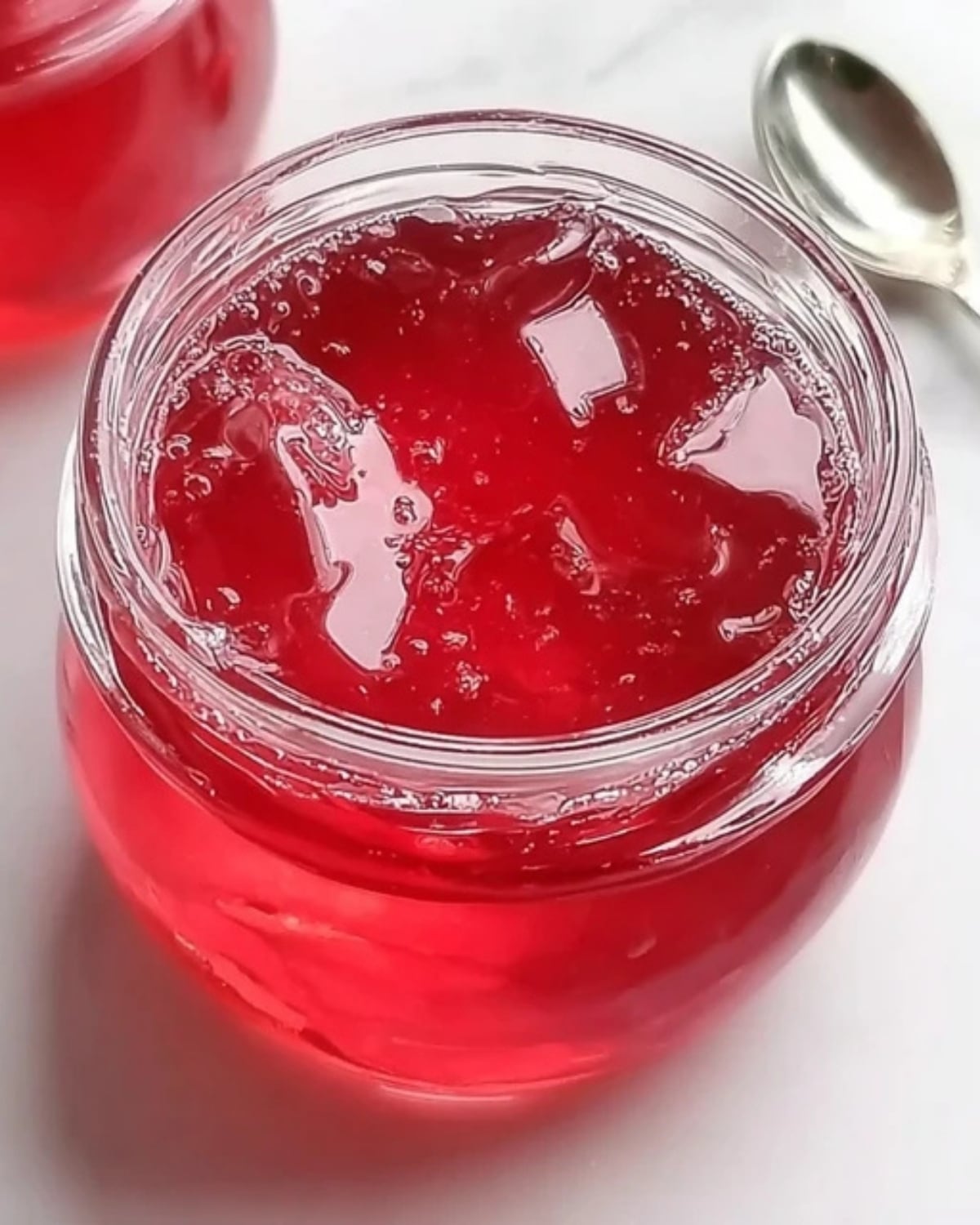
Rhubarb Vanilla Bean Jelly is a beautifully clear, jewel-toned preserve that combines the bright tang of rhubarb with the delicate floral warmth of real vanilla bean. From the very first spoonful, this rhubarb vanilla bean jelly delivers a smooth texture, balanced sweetness, and a refined aroma that feels both classic and luxurious.
Unlike chunky jams, rhubarb vanilla bean jelly is strained to create a crystal-clear finish. As a result, it spreads effortlessly on toast, melts into warm biscuits, and pairs wonderfully with both sweet and savory dishes. Because it uses simple ingredients and straightforward techniques, it’s surprisingly easy to make at home.
In this complete guide, you’ll learn how to prepare rhubarb vanilla bean jelly step by step, discover expert tips for clarity and consistency, and explore creative serving ideas. Whether you’re new to jelly making or already love homemade preserves, this recipe will help you achieve beautiful results every time.
JUMP TO
Table of Contents
Why Rhubarb Vanilla Bean Jelly Is So Special
The Difference Between Jelly and Jam
Before diving in, it’s important to understand what makes rhubarb vanilla bean jelly different from jam. Jam contains crushed fruit, resulting in a thicker, textured spread. Jelly, on the other hand, uses strained fruit juice only.
Because rhubarb vanilla bean jelly relies on extracted juice, it produces a smooth, translucent finish. The absence of pulp creates a refined look and lighter mouthfeel.
The Bright Flavor of Fresh Rhubarb
Rhubarb is naturally tart, which makes it ideal for jelly. When simmered gently and combined with sugar, the sharp acidity softens into a balanced sweet-tart profile.
According to the USDA FoodData Central , rhubarb provides vitamin K, fiber, and beneficial plant compounds. While jelly is certainly a treat, using fresh rhubarb adds seasonal freshness and vibrant flavor.
Because rhubarb juice has a naturally rosy hue, rhubarb vanilla bean jelly often turns out beautifully pink without artificial coloring.
How Real Vanilla Bean Elevates the Jelly
Vanilla bean adds more than sweetness. It introduces depth, warmth, and subtle floral notes that complement rhubarb’s tang.
Unlike vanilla extract alone, whole vanilla bean seeds infuse directly into the jelly. Tiny specks of vanilla remain suspended in the clear spread, creating both visual appeal and layered flavor.
Therefore, rhubarb vanilla bean jelly feels more gourmet than traditional fruit preserves.
Seasonal Benefits of Making Homemade Jelly
Rhubarb is harvested primarily in spring and early summer. Making rhubarb vanilla bean jelly during peak season ensures maximum flavor.
Additionally, preserving rhubarb allows you to enjoy its brightness long after the season ends. Homemade jelly also avoids artificial additives commonly found in store-bought versions.
Ingredients and Tools for Perfect Rhubarb Vanilla Bean Jelly
Before you begin, gather everything you need. Jelly making requires precision, but the ingredient list remains simple.

Core Ingredients for a Clear, Flavorful Jelly
| Ingredient | Purpose |
|---|---|
| Fresh rhubarb, chopped | Juice base |
| Granulated sugar | Sweetness and preservation |
| Fresh lemon juice | Acidity and pectin support |
| Vanilla bean pod | Flavor infusion |
| Powdered pectin (optional) | Helps ensure proper set |
Because rhubarb is naturally low in pectin compared to some fruits, adding powdered pectin can help guarantee firm results.
Choosing the Best Rhubarb Stalks
Look for firm, crisp stalks with no wilting. Color ranges from red to green, and both work well. Avoid soft or rubbery stalks.
Always discard leaves completely, as they are not safe for consumption.
Why Vanilla Bean Is Better Than Extract
While extract works in a pinch, whole vanilla bean delivers richer flavor. Split the pod lengthwise and scrape out the seeds. Both seeds and pod can simmer with the rhubarb juice for deeper infusion.
Essential Equipment for Safe Jelly Making
To prepare rhubarb vanilla bean jelly properly, you’ll need:
- Large saucepan
- Fine mesh strainer or cheesecloth
- Candy thermometer
- Sterilized glass jars with lids
- Ladle
Step-by-Step Guide to Making Rhubarb Vanilla Bean Jelly
Now that your ingredients and tools are ready, it’s time to transform fresh stalks into smooth, glowing rhubarb vanilla bean jelly. Although the process requires patience, each step is straightforward when followed carefully.
Extracting Rhubarb Juice Properly
First, wash and chop about 4 pounds of fresh rhubarb into 1-inch pieces. Place the chopped rhubarb into a large saucepan and add just enough water to barely cover the fruit, usually about 4 cups.
Bring the mixture to a gentle boil over medium heat. Then reduce to a simmer and cook for 20–25 minutes, stirring occasionally. During this time, the rhubarb breaks down and releases its juice.
Next, strain the mixture through a fine mesh sieve lined with cheesecloth into a large bowl. Let it drip naturally for at least 1–2 hours. Do not press or squeeze the pulp, because doing so can cause cloudy rhubarb vanilla bean jelly. Clear juice is the key to a beautiful finished product.
You should end up with approximately 4 cups of rhubarb juice.
Cooking the Jelly to the Right Temperature
Pour the strained rhubarb juice back into a clean saucepan. Add 3 ½ to 4 cups of granulated sugar (depending on how sweet you prefer), 2 tablespoons of fresh lemon juice, and the seeds from one split vanilla bean pod. You may also add the scraped pod for deeper infusion.
If using powdered pectin, whisk it in according to package instructions before bringing the mixture to a boil.
Bring everything to a rolling boil over medium-high heat, stirring constantly. Continue boiling until the temperature reaches 220°F on a candy thermometer. This is the gel point where rhubarb vanilla bean jelly will properly set.
Because temperature matters, avoid guessing. Reaching 220°F ensures a firm but spreadable consistency.
Testing for the Perfect Set
If you do not have a thermometer, you can perform the chilled plate test. Before cooking, place a small plate in the freezer. When you think the jelly is ready, spoon a small amount onto the cold plate.
Wait 30 seconds, then push it gently with your finger. If it wrinkles and holds shape, the rhubarb vanilla bean jelly is ready. If it runs, continue boiling for another 2–3 minutes and test again.
Timing may vary slightly depending on humidity and altitude.
Safe Canning and Storage Methods
Once the jelly reaches the proper set, remove it from heat and skim off any foam from the surface. Carefully ladle the hot rhubarb vanilla bean jelly into sterilized jars, leaving ¼ inch headspace.
Wipe the rims clean, apply lids, and process jars in a boiling water bath for 10 minutes to create a proper seal.
After cooling, check seals by pressing the center of each lid. If it does not pop back, the jar is sealed correctly.
Properly canned rhubarb vanilla bean jelly can last up to one year in a cool, dark pantry. Once opened, refrigerate and use within three weeks.
Expert Tips for Crystal Clear Jelly
Even though rhubarb vanilla bean jelly is simple to prepare, clarity and texture require attention to detail.
Avoiding Cloudy Jelly
Cloudiness often results from squeezing the fruit pulp during straining. Therefore, always allow juice to drip naturally.
Additionally, avoid stirring the jelly excessively once it reaches a boil. Gentle, consistent stirring prevents bubbles while maintaining clarity.
Balancing Sweetness and Tartness
Because rhubarb is naturally tart, sugar is necessary for balance. However, too much sugar can mask the fruit’s brightness.
Start with the lower end of the sugar range and adjust gradually. The addition of lemon juice enhances flavor while supporting proper gel formation.
Troubleshooting Runny Jelly
If your rhubarb vanilla bean jelly turns out too soft, it may not have reached 220°F. You can reheat it gently, add additional pectin if needed, and bring it back to the gel point.
On the other hand, if it becomes too firm, slightly reducing cooking time during the next batch will correct the issue.
Creative Ways to Use Rhubarb Vanilla Bean Jelly
One of the best things about rhubarb vanilla bean jelly is its versatility. Because it’s smooth and refined, it works beautifully in many dishes.
Breakfast and Brunch Ideas
Spread it over:
- Toast or English muffins
- Warm buttermilk biscuits
- Croissants
- Pancakes or waffles
Additionally, swirl rhubarb vanilla bean jelly into plain yogurt or oatmeal for a bright morning boost.
Dessert Pairings
This jelly pairs wonderfully with desserts. For example:
- Spoon it over vanilla ice cream
- Use it as a cake filling
- Glaze fruit tarts
- Layer it inside thumbprint cookies
Because of the vanilla infusion, it complements creamy desserts especially well.
Savory Serving Suggestions
Although primarily sweet, rhubarb vanilla bean jelly also works with savory dishes. Try serving it alongside roasted chicken or turkey. Its sweet-tart balance cuts through rich flavors beautifully.
It also pairs well with soft cheeses like brie or goat cheese on a charcuterie board.
Common Mistakes to Avoid
Even experienced home cooks can make small errors. Fortunately, these are easy to prevent.
- Using overripe or wilted rhubarb
- Skipping the straining step
- Boiling at too low temperature
- Not measuring sugar accurately
- Ignoring proper canning safety
Because precision matters in jelly making, following each step carefully ensures consistent results.
FAQs About Rhubarb Vanilla Bean Jelly
Does rhubarb vanilla bean jelly need added pectin?
It depends. Rhubarb is lower in natural pectin than some fruits. Adding powdered pectin increases reliability, but careful cooking and lemon juice can also help achieve a proper set.
Why is my jelly cloudy?
Cloudy jelly usually results from pressing the fruit pulp during straining. Allow juice to drip naturally for best clarity.
Can I use vanilla extract instead of vanilla bean?
Yes, but add it after removing the jelly from heat. However, whole vanilla bean provides deeper flavor and visible specks.
How long does rhubarb vanilla bean jelly last?
Properly canned jelly can last up to one year. Refrigerate after opening and use within three weeks.
Conclusion: Why You’ll Love This Rhubarb Vanilla Bean Jelly
Rhubarb vanilla bean jelly offers the perfect blend of bright fruit flavor and delicate warmth. Because it’s smooth, elegant, and incredibly versatile, it feels special yet remains simple to prepare.
From breakfast spreads to dessert glazes, this homemade preserve adds seasonal charm to countless dishes. Once you master the technique, making rhubarb vanilla bean jelly can easily become a yearly tradition.
PrintRhubarb Vanilla Bean Jelly – Sweet and Elegant Homemade Preserve

Rhubarb Vanilla Bean Jelly is a smooth, crystal-clear preserve that blends sweet-tart rhubarb with the warm, floral notes of real vanilla bean. This elegant homemade jelly is perfect for toast, desserts, and seasonal gifting.
- Prep Time: 30 minutes
- Cook Time: 35 minutes
- Total Time: 1 hour 5 minutes (plus straining time)
- Yield: 6 half-pint jars 1x
- Category: Jam & Preserves
- Method: Stovetop and Water Bath Canning
- Cuisine: American
- Diet: Vegetarian
Ingredients
- 4 pounds fresh rhubarb, chopped
- 4 cups water (enough to barely cover rhubarb)
- 4 cups granulated sugar
- 2 tablespoons fresh lemon juice
- 1 whole vanilla bean pod, split and seeds scraped
- 1 package (1.75 oz) powdered fruit pectin (optional, for firmer set)
Instructions
- Wash and chop rhubarb into 1-inch pieces. Place in a large saucepan and add enough water to barely cover.
- Bring to a gentle boil, then reduce heat and simmer for 20–25 minutes until rhubarb softens and releases juice.
- Strain mixture through a fine mesh sieve lined with cheesecloth. Let drip naturally for 1–2 hours without pressing to keep juice clear.
- Measure 4 cups of strained rhubarb juice and return it to a clean saucepan.
- Add sugar, lemon juice, vanilla bean seeds, and pod. If using pectin, whisk it in according to package instructions.
- Bring to a rolling boil over medium-high heat, stirring constantly, until temperature reaches 220°F.
- Test for set using the chilled plate method. If it wrinkles and holds shape, it is ready.
- Remove from heat and skim off foam if needed.
- Ladle hot jelly into sterilized jars, leaving 1/4 inch headspace. Wipe rims clean and seal with lids.
- Process jars in a boiling water bath for 10 minutes. Allow to cool completely and check seals before storing.
Notes
- Do not squeeze the pulp while straining, as this can cause cloudy jelly.
- Use a candy thermometer to ensure accurate gel point at 220°F.
- If jelly is too soft, reheat and boil a few minutes longer or add additional pectin.
- Remove vanilla bean pod before jarring for a smoother texture if desired.
- Store sealed jars in a cool, dark place for up to 1 year. Refrigerate after opening.
Nutrition
- Serving Size: 1 tablespoon
- Calories: 50
- Sugar: 12g
- Sodium: 5mg
- Fat: 0g
- Saturated Fat: 0g
- Unsaturated Fat: 0g
- Trans Fat: 0g
- Carbohydrates: 13g
- Fiber: 0g
- Protein: 0g
- Cholesterol: 0mg