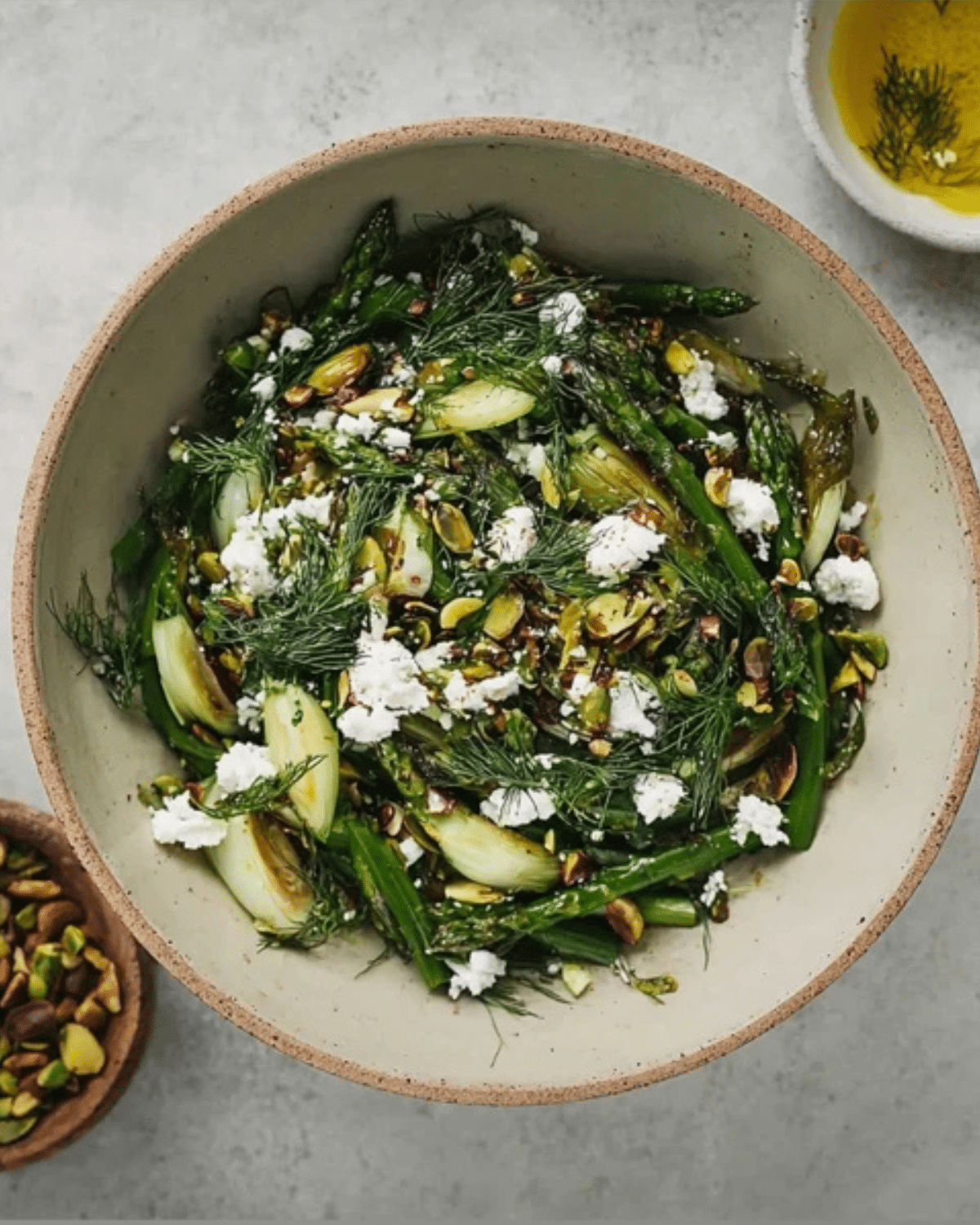
Celebrate the season’s best produce with this Sautéed Spring Vegetable Salad — a vibrant, nourishing dish that’s as beautiful as it is delicious. Featuring crisp-tender asparagus, zucchini, peas, and radishes tossed in a zesty lemon dressing, this salad is the perfect blend of freshness, texture, and bright flavor.
Unlike traditional cold salads, this version combines lightly sautéed vegetables with a warm, citrusy dressing that enhances their natural sweetness while keeping them crisp. It’s quick to make, full of nutrients, and easily customizable to whatever’s in your fridge.
Serve it warm as a side, at room temperature for picnics, or chilled for an easy make-ahead lunch. No matter how you enjoy it, this Sautéed Spring Vegetable Salad delivers the fresh, sunny flavors of spring in every bite.
JUMP TO
Table of Contents
Why You’ll Love This Sautéed Spring Vegetable Salad
Fresh and Seasonal Ingredients
This recipe highlights everything we love about spring produce — tender asparagus, sweet peas, zucchini ribbons, and crisp radishes. When sautéed lightly, they retain their bright color and crunch, making this salad both stunning and satisfying.
Quick and Easy to Make
From start to finish, this dish takes less than 20 minutes to prepare. It’s perfect for busy weeknights, light lunches, or even as a colorful side for dinner parties. Minimal prep, maximum flavor — that’s what makes this salad so irresistible.
Healthy, Light, and Delicious
Loaded with fiber, vitamins, and healthy fats, this Sautéed Spring Vegetable Salad is as good for you as it tastes. The lemon-Dijon dressing adds a fresh, tangy note that ties everything together — no heavy sauces, just pure, wholesome flavor.
Ingredients You’ll Need for Sautéed Spring Vegetable Salad
The beauty of this Sautéed Spring Vegetable Salad lies in its simplicity — fresh, seasonal ingredients sautéed just long enough to bring out their natural sweetness while keeping that satisfying crunch.

| Ingredient | Purpose in Recipe | Notes / Substitutions |
|---|---|---|
| 2 tablespoons olive oil | For sautéing the vegetables | Use extra virgin for richer flavor |
| 1 bunch asparagus, trimmed and chopped | Adds crisp texture and bright flavor | Broccolini or green beans also work |
| 1 zucchini, sliced into thin ribbons or half-moons | Adds lightness and color | Can substitute yellow squash |
| 1 cup sugar snap peas or green peas | Adds natural sweetness | Fresh or frozen peas are fine |
| ½ cup sliced radishes | Adds peppery crunch and vibrant color | Optional but recommended |
| 1 cup baby spinach or arugula | Adds leafy greens and texture | Kale or chard can also be used |
| 2 cloves garlic, minced | Adds savory depth | Optional but highly recommended |
| Salt and pepper, to taste | Enhances overall flavor | Adjust to your liking |
| 1 teaspoon lemon zest | Adds brightness | Optional but gives a citrus lift |
For the Lemon-Dijon Dressing
| Ingredient | Purpose |
|---|---|
| 3 tablespoons olive oil | Smooth, rich base for the dressing |
| 2 tablespoons fresh lemon juice | Adds freshness and tang |
| 1 teaspoon Dijon mustard | Brings a bit of sharpness and creaminess |
| 1 teaspoon honey or maple syrup | Balances acidity with a touch of sweetness |
| Salt and black pepper, to taste | To season the dressing perfectly |
Optional Add-Ons
Want to make your salad even more filling and flavorful? Try adding:
- Crumbled feta or goat cheese for a creamy, tangy note.
- Toasted almonds, walnuts, or pine nuts for extra crunch.
- Avocado slices for richness.
- Cooked quinoa or couscous for a hearty meal option.
How to Make Sautéed Spring Vegetable Salad (Step-by-Step Guide)
This salad is as easy as it gets — no complicated steps or fancy equipment required. Here’s how to make it perfectly every time.
Step 1 – Prepare the Vegetables
Wash and trim all your vegetables. Cut the asparagus into 2-inch pieces, slice the zucchini thinly, and prepare the radishes. If you’re using peas, blanch them for 1 minute in boiling water, then transfer to ice water to keep their bright green color.
Step 2 – Sauté the Vegetables
In a large skillet, heat 2 tablespoons of olive oil over medium heat.
Add asparagus and zucchini, cooking for about 3–4 minutes, until they begin to soften but are still crisp.
Add peas, radishes, and garlic and cook for another 2–3 minutes, stirring frequently.
Season with salt, pepper, and lemon zest, then remove from heat. The vegetables should be bright, tender, and slightly caramelized around the edges.
Step 3 – Make the Lemon-Dijon Dressing
In a small bowl, whisk together olive oil, lemon juice, Dijon mustard, honey (or maple syrup), salt, and pepper until emulsified and creamy. Taste and adjust seasoning as needed.
Step 4 – Toss and Serve
Place the sautéed vegetables in a large bowl and toss them gently with baby spinach or arugula.
Drizzle the lemon-Dijon dressing over the top and mix lightly to coat every piece.
Top with feta, nuts, or avocado if desired. Serve warm for a cozy side dish, or chill it for a refreshing salad.
Pro Tips for the Perfect Sautéed Spring Vegetable Salad
Don’t Overcook the Vegetables
The secret to this salad’s irresistible texture is keeping the vegetables crisp-tender. Sauté them just until they’re bright and slightly softened — you want them to retain their snap and color.
Use Fresh Lemon Juice
Bottled lemon juice won’t do this salad justice. Fresh lemon juice brings vibrant acidity and perfectly balances the sweetness of the veggies and honey in the dressing.
Add Texture and Variety
To keep every bite interesting, mix in ingredients that offer contrast — think toasted nuts, creamy cheese, or silky avocado. A variety of textures makes the salad more satisfying.
Make It Ahead
This salad can be enjoyed warm, at room temperature, or chilled. If you’re meal-prepping, store the sautéed vegetables and dressing separately. Toss them together just before serving for the freshest taste.
Customize for the Season
When spring ends, simply swap in what’s fresh — summer zucchini, bell peppers, or cherry tomatoes work beautifully too.
Serving Ideas for Sautéed Spring Vegetable Salad
Pair with Protein
This salad pairs perfectly with grilled chicken, salmon, shrimp, or tofu for a light, balanced meal.
Serve Warm or Cold
Enjoy it warm for dinner or chilled for a refreshing lunch. It’s also perfect for picnics and potlucks since it holds up well at room temperature.
Make It a Main Dish
Turn this salad into a complete meal by adding cooked quinoa, farro, or lentils for extra protein and heartiness.
FAQs About Sautéed Spring Vegetable Salad
Can I use frozen vegetables?
Yes, you can! Just make sure to thaw and drain them well before sautéing to prevent excess water.
How long will this salad last in the fridge?
It will stay fresh for up to 3 days in an airtight container. For best texture, store the dressing separately and toss just before serving.
Can I make it vegan or gluten-free?
Absolutely! Use maple syrup instead of honey for a vegan version, and ensure your Dijon mustard and other ingredients are gluten-free.
What other vegetables can I use?
This salad is versatile — broccoli, green beans, cherry tomatoes, or even corn make great additions or substitutions.
Conclusion – A Fresh Taste of Spring in Every Bite
Light, colorful, and full of flavor, this Sautéed Spring Vegetable Salad is everything you want in a seasonal dish. With bright lemon dressing, crisp veggies, and endless ways to customize, it’s a salad that celebrates the freshness of spring in the most delicious way.
It’s quick enough for a weekday meal but elegant enough for entertaining — and it proves that healthy eating can be simple, satisfying, and bursting with flavor.
So grab your skillet, gather your favorite vegetables, and bring a little spring sunshine to your table — one sauté at a time!
PrintSautéed Spring Vegetable Salad – Fresh, Easy & Packed with Flavor

Sautéed Spring Vegetable Salad is a vibrant, healthy dish made with fresh asparagus, zucchini, peas, and radishes tossed in a zesty lemon-Dijon dressing. It’s light, colorful, and bursting with seasonal flavor — perfect as a side or main meal.
- Prep Time: 10 minutes
- Cook Time: 10 minutes
- Total Time: 20 minutes
- Yield: 4 servings 1x
- Category: Salad, Side Dish
- Method: Sautéing
- Cuisine: American / Seasonal
- Diet: Vegetarian
Ingredients
- 2 tablespoons olive oil
- 1 bunch asparagus, trimmed and chopped
- 1 zucchini, sliced into ribbons or half-moons
- 1 cup sugar snap peas or green peas
- 1/2 cup sliced radishes
- 1 cup baby spinach or arugula
- 2 cloves garlic, minced
- Salt and pepper, to taste
- 1 teaspoon lemon zest
For the Lemon-Dijon Dressing:
- 3 tablespoons olive oil
- 2 tablespoons fresh lemon juice
- 1 teaspoon Dijon mustard
- 1 teaspoon honey or maple syrup
- Salt and black pepper, to taste
Instructions
- Wash and trim all vegetables. Cut asparagus into 2-inch pieces and slice zucchini into thin ribbons or half-moons. Blanch peas for 1 minute, then cool in ice water to retain color.
- Heat 2 tablespoons olive oil in a large skillet over medium heat. Add asparagus and zucchini and sauté for 3–4 minutes until slightly tender.
- Add peas, radishes, and garlic, and cook for another 2–3 minutes, stirring frequently. Season with salt, pepper, and lemon zest. Remove from heat.
- In a small bowl, whisk together olive oil, lemon juice, Dijon mustard, honey (or maple syrup), salt, and pepper to make the dressing.
- Place sautéed vegetables and spinach in a large bowl. Drizzle with dressing and toss gently until well coated.
- Top with optional feta cheese, toasted nuts, or avocado. Serve warm, chilled, or at room temperature.
Notes
- Do not overcook the vegetables — they should remain bright and crisp.
- Use fresh lemon juice for the dressing for the best flavor.
- Add toasted nuts, feta, or avocado for extra texture.
- For a vegan version, use maple syrup instead of honey.
- Store leftovers in an airtight container for up to 3 days.
- Make the dressing ahead and toss with the veggies just before serving.
Nutrition
- Serving Size: 1 serving
- Calories: 185
- Sugar: 5g
- Sodium: 240mg
- Fat: 13g
- Saturated Fat: 2g
- Unsaturated Fat: 10g
- Trans Fat: 0g
- Carbohydrates: 13g
- Fiber: 4g
- Protein: 4g
- Cholesterol: 0mg