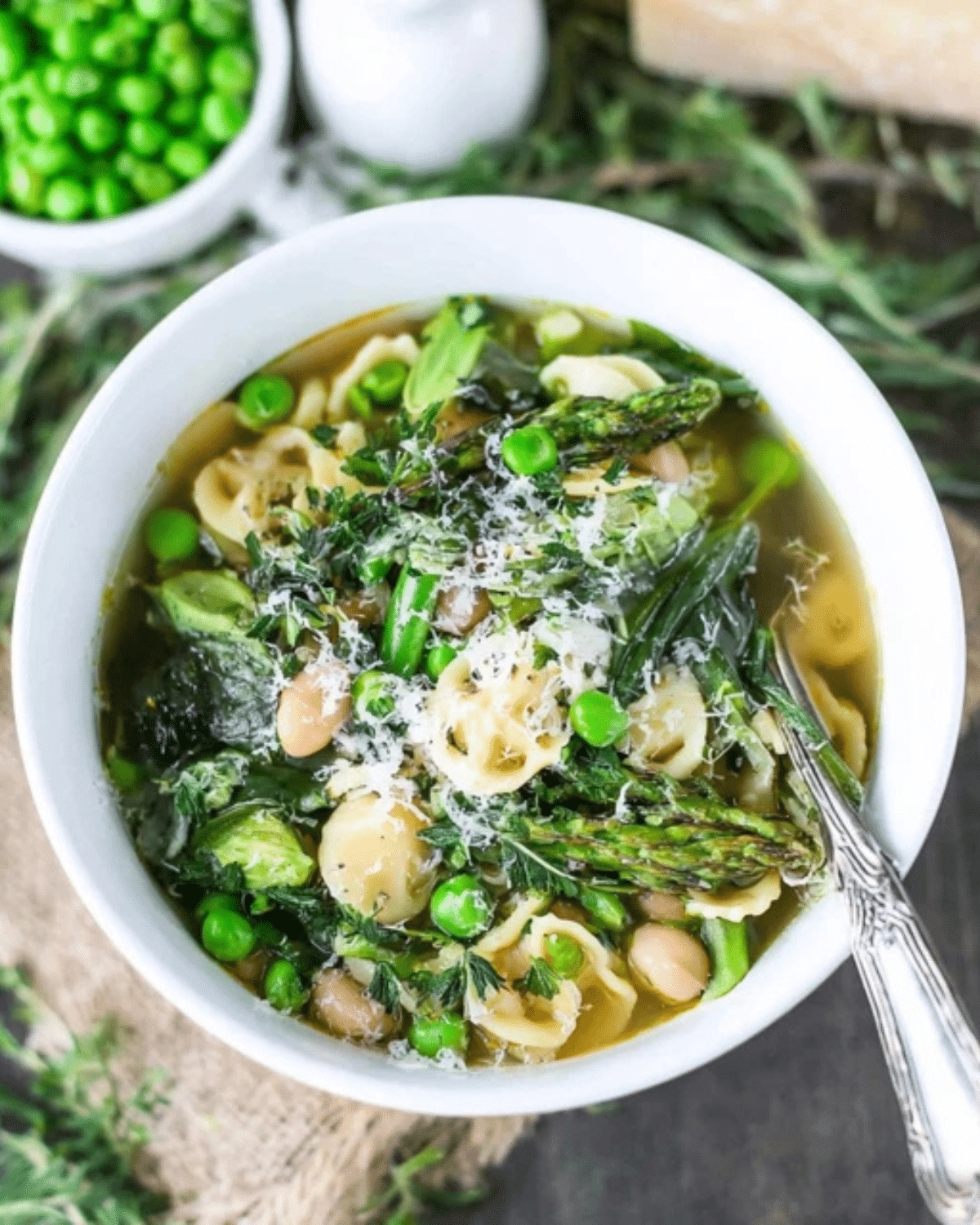
Spring Minestrone Soup is a fresh and vibrant take on the classic Italian vegetable soup, highlighting the best produce of the season. Lighter than traditional minestrone yet still hearty and satisfying, this soup combines tender vegetables, beans, and herbs in a flavorful broth that feels both nourishing and comforting. Spring Minestrone Soup is ideal for transitional weather when you crave warmth without heaviness. In this guide, you’ll learn how to build layers of flavor, choose the best spring vegetables, and customize the soup to fit your preferences while keeping it fresh and balanced.
JUMP TO
Table of Contents
What Is Spring Minestrone Soup?
Spring Minestrone Soup is a seasonal variation of classic minestrone that focuses on lighter vegetables and brighter flavors. Instead of relying on hearty winter produce, this version highlights spring vegetables such as asparagus, peas, zucchini, and tender greens. The result is a soup that feels fresh and energizing while still offering the comfort minestrone is known for.
How Spring Minestrone Differs from Traditional Minestrone
Traditional minestrone often includes dense vegetables, heavier beans, and longer simmer times. Spring Minestrone Soup, on the other hand, uses quicker-cooking vegetables and a lighter broth. The vegetables retain more color and texture, and the soup tastes cleaner and more vibrant. Pasta, if used, is added carefully to avoid overpowering the vegetables.
Why Seasonal Vegetables Matter
Using seasonal vegetables is essential for Spring Minestrone Soup. Fresh spring produce cooks quickly and brings natural sweetness and color to the dish. Seasonal vegetables also require less seasoning, allowing the soup to taste balanced and natural rather than heavy or overly rich.
Why You’ll Love This Spring Minestrone Soup
This soup is more than just healthy—it’s satisfying, flexible, and full of flavor. Spring Minestrone Soup adapts easily to different diets and cooking styles.
Light Yet Hearty Comfort Food
Although Spring Minestrone Soup is lighter than winter soups, it remains filling thanks to beans and vegetables. The broth-based nature keeps it refreshing while still providing enough substance for a complete meal.
Packed with Fresh Spring Vegetables
Every spoonful of Spring Minestrone Soup delivers a mix of textures and flavors. Crisp-tender vegetables, soft beans, and fragrant herbs work together to create a dish that feels both wholesome and exciting.
Naturally Healthy and Satisfying
Spring Minestrone Soup is naturally rich in fiber, vitamins, and plant-based protein. It’s a great option for anyone seeking a nourishing meal without excess heaviness or processed ingredients.
Ingredients Needed for Spring Minestrone Soup

The success of Spring Minestrone Soup depends on fresh, seasonal ingredients that cook quickly and retain their natural flavor. This soup is all about balance, so each component should complement the others without overwhelming the broth.
Best Vegetables for Spring Minestrone
Spring vegetables are the heart of Spring Minestrone Soup. Asparagus adds tenderness and a slightly sweet, grassy note, while zucchini provides softness without heaviness. Carrots and celery still play a supporting role, offering familiar depth, but they are sliced thinner to keep the soup light.
Fresh peas or snap peas bring a pop of sweetness and color. Leafy greens such as spinach or baby kale are added at the end so they wilt gently rather than overcook. Using vegetables at their peak ensures the soup tastes bright and clean rather than dull.
Beans, Pasta, and Broth Choices
Beans give Spring Minestrone Soup its satisfying quality. Chickpeas are especially well-suited because they hold their shape and add mild, nutty flavor. White beans are another good option if you prefer a creamier texture.
Small pasta shapes, such as ditalini or orzo, work best when used sparingly. The goal is to support the vegetables, not dominate them. For the broth, vegetable broth keeps the soup light and plant-based, while still allowing herbs and vegetables to shine.
Herbs and Flavor Enhancers
Fresh herbs are essential for Spring Minestrone Soup. Garlic and onions build the base, while fresh thyme or bay leaf adds gentle warmth during simmering. At the end, chopped parsley or basil brings freshness and lifts the entire dish.
A drizzle of olive oil just before serving enhances richness without weighing the soup down. Lemon zest or a small squeeze of lemon juice can also brighten flavors if the soup needs a final lift.
How to Make Spring Minestrone Soup Step-by-Step
Spring Minestrone Soup comes together in stages, with each step designed to preserve the texture and color of the vegetables. Timing matters, so adding ingredients in the right order is key.
Preparing the Vegetables
Begin by washing and chopping all vegetables before turning on the stove. Keeping vegetables uniform in size ensures even cooking. Softer vegetables are cut slightly larger, while firmer ones are sliced thinner to help them cook at the same pace.
Having everything prepared ahead of time makes the cooking process smooth and prevents overcooking.
Building Flavor in Layers
Start by heating olive oil in a large pot and gently sautéing onion and garlic until fragrant. Add carrots and celery next, allowing them to soften slightly. This step builds the aromatic base of Spring Minestrone Soup.
Pour in the broth and bring it to a gentle simmer before adding chickpeas and firmer vegetables. Simmer just until tender, then add quicker-cooking vegetables like zucchini and asparagus near the end.
Finishing the Soup for Maximum Freshness
Once the vegetables are tender but still vibrant, add pasta if using and cook until just done. Stir in leafy greens and fresh herbs, allowing them to wilt naturally. Taste and adjust seasoning with salt and pepper.
Spring Minestrone Soup should taste light, fresh, and well-balanced, not overly thick or starchy.
Tips for the Best Spring Minestrone Soup
A few small techniques can make a big difference when preparing Spring Minestrone Soup. These tips help preserve texture and flavor.
Preventing Mushy Vegetables
Avoid over-simmering. Spring vegetables cook quickly, and prolonged heat dulls both color and flavor. Adding vegetables in stages keeps them crisp-tender rather than soft and lifeless.
Balancing Broth, Vegetables, and Pasta
Too much pasta can absorb broth and overpower the vegetables. If making the soup ahead, consider cooking pasta separately and adding it just before serving. This keeps Spring Minestrone Soup fresh and light even after storage.
Spring Minestrone Soup Variations
One of the strengths of Spring Minestrone Soup is its flexibility. By adjusting ingredients slightly, you can adapt the soup to different dietary needs and flavor preferences while keeping its fresh, seasonal character.
Vegan and Vegetarian Options
Spring Minestrone Soup is naturally vegetarian when made with vegetable broth and beans. Chickpeas, white beans, or cannellini beans all work well and provide plant-based protein that makes the soup satisfying without heaviness.
For added depth, nutritional yeast or a small amount of miso can be stirred in at the end. These ingredients enhance savory flavor while keeping the soup fully plant-based.
Adding Chicken or Extra Protein
If you prefer a heartier meal, cooked chicken can be added without overpowering the vegetables. Shredded or diced chicken breast works best and should be stirred in near the end so it stays tender.
For non-meat options, extra beans or lentils can increase protein while maintaining the light feel that defines Spring Minestrone Soup.
Gluten-Free and Low-Carb Adaptations
To make Spring Minestrone Soup gluten-free, simply omit the pasta or replace it with gluten-free pasta added just before serving. Rice or quinoa can also work in small amounts.
For a lower-carb version, skip pasta entirely and increase the variety of vegetables. Zucchini ribbons or cauliflower florets provide texture without extra starch.
How to Serve Spring Minestrone Soup
Spring Minestrone Soup is versatile enough to be served as either a starter or a main dish, depending on portion size and accompaniments.
Best Toppings and Garnishes
Fresh herbs like basil or parsley bring brightness to Spring Minestrone Soup just before serving. A drizzle of extra virgin olive oil enhances richness without weighing the soup down.
Grated cheese can be offered on the side for those who enjoy it, but the soup is flavorful enough to stand on its own.
What to Serve Alongside
Crusty bread or a simple green salad pairs beautifully with Spring Minestrone Soup. These sides complement the soup without competing with its fresh vegetable flavors, making the meal feel complete but still light.
Storage and Make-Ahead Tips
Spring Minestrone Soup works well for meal prep, but a few adjustments help preserve its texture and flavor.
How Long Spring Minestrone Soup Lasts
Stored in an airtight container, Spring Minestrone Soup keeps well in the refrigerator for up to four days. The flavors often deepen slightly over time, making leftovers especially enjoyable.
Freezing and Reheating Tips
If freezing, consider leaving out pasta and adding it fresh after reheating. This prevents the soup from becoming too thick. Freeze in individual portions for convenience, and thaw overnight in the refrigerator before reheating gently on the stove.
FAQs About Spring Minestrone Soup
Can minestrone soup be made ahead?
Yes, Spring Minestrone Soup can be made ahead and stored in the refrigerator. It tastes even better the next day as flavors meld.
What vegetables work best in spring minestrone?
Asparagus, peas, zucchini, spinach, and other tender spring vegetables work best because they cook quickly and stay vibrant.
Should pasta be cooked in the soup or separately?
Either method works, but cooking pasta separately helps maintain broth consistency, especially for leftovers.
Can I freeze spring minestrone soup?
Yes, Spring Minestrone Soup freezes well, especially when pasta is omitted until reheating.
Final Thoughts on Spring Minestrone Soup
Spring Minestrone Soup is a celebration of seasonal vegetables, fresh herbs, and simple cooking techniques. It delivers comfort without heaviness and nourishment without complexity. Whether enjoyed as a light lunch or a satisfying dinner, this soup adapts easily to different diets and preferences while staying true to its fresh, vibrant character. With thoughtful ingredient choices and careful timing, Spring Minestrone Soup becomes a reliable, flavorful dish you can return to throughout the season.
PrintSpring Minestrone Soup – The Best Light and Healthy Seasonal Soup

Spring Minestrone Soup is a light and nourishing Italian-style vegetable soup made with fresh spring vegetables, chickpeas, herbs, and a flavorful broth, offering comfort without heaviness.
- Prep Time: 15 minutes
- Cook Time: 30 minutes
- Total Time: 45 minutes
- Yield: 6 servings 1x
- Category: Soup
- Method: Stovetop
- Cuisine: Italian
- Diet: Vegetarian
Ingredients
- 2 tbsp olive oil
- 1 medium yellow onion, diced
- 2 cloves garlic, minced
- 2 carrots, thinly sliced
- 2 celery stalks, thinly sliced
- 1 cup asparagus, cut into 1-inch pieces
- 1 cup zucchini, diced
- 1 cup fresh or frozen peas
- 1 can (15 oz) chickpeas, drained and rinsed
- 6 cups vegetable broth
- 1/2 cup small pasta (ditalini or orzo)
- 2 cups fresh spinach or baby kale
- 1 tsp fresh thyme or 1/2 tsp dried thyme
- 1 bay leaf
- Salt and black pepper to taste
- Fresh parsley or basil for garnish
Instructions
- Heat olive oil in a large pot over medium heat.
- Add diced onion and sauté until soft and translucent.
- Stir in garlic, carrots, and celery, cooking for 3–4 minutes until fragrant.
- Pour in vegetable broth and bring to a gentle simmer.
- Add chickpeas, thyme, and bay leaf, then simmer for 10 minutes.
- Add asparagus and zucchini and cook for 3–4 minutes.
- Stir in pasta and cook until just tender.
- Add peas and spinach, cooking until wilted.
- Remove bay leaf, season with salt and pepper, and adjust to taste.
- Serve hot, garnished with fresh herbs.
Notes
- Add quicker-cooking vegetables near the end to prevent mushiness.
- Pasta can be cooked separately and added before serving for better texture.
- A squeeze of lemon juice brightens the soup before serving.
- Soup thickens as it sits; add broth when reheating if needed.
Nutrition
- Serving Size: 1 bowl
- Calories: 260 kcal
- Sugar: 6 g
- Sodium: 620 mg
- Fat: 7 g
- Saturated Fat: 1 g
- Unsaturated Fat: 5 g
- Trans Fat: 0 g
- Carbohydrates: 38 g
- Fiber: 9 g
- Protein: 10 g
- Cholesterol: 0 mg