
There’s something magical about a Spring Pea Risotto. It’s creamy, comforting, and bursting with bright seasonal flavor — the kind of dish that turns an ordinary weeknight into something special. This Italian-inspired recipe captures the freshness of spring with tender green peas, fragrant mint, and the richness of parmesan cheese, all coming together in one luxurious bite. Unlike heavy winter risottos, this version feels light yet satisfying, making it perfect for spring dinners or weekend gatherings.
The best part? You don’t need to be a professional chef to make it. With a bit of patience and the right ingredients, anyone can prepare a restaurant-worthy risotto right at home. If you’re exploring other easy seasonal recipes, check out our collection of quick spring meals to complement your main course.
JUMP TO
Table of Contents
What Makes Spring Pea Risotto So Special
When the first tender peas of the season appear, it’s a sign that spring has officially arrived. Their natural sweetness, paired with creamy rice and aromatic herbs, makes this risotto stand out from any other comfort food. But the beauty of Spring Pea Risotto lies not only in its ingredients — it’s in the perfect harmony of texture, timing, and taste.
The Charm of Seasonal Ingredients
Spring peas are the heart of this dish. Unlike canned or dried versions, fresh or lightly blanched peas add a subtle sweetness and vibrant color that instantly brightens your plate. When paired with mint, lemon zest, and parmesan, you get a refreshing balance of earthy, tangy, and savory notes.
In Italy, risotto is often considered a celebration of the season’s harvest. That’s why using fresh seasonal produce like peas, mint, and spring onions isn’t just tradition — it’s the key to authentic flavor. If you can’t find fresh peas, frozen ones work surprisingly well; just thaw them gently before adding to your risotto base.
The Role of Arborio Rice in Creamy Risotto
The secret to the risotto’s silky texture is the rice. Arborio rice, named after the town in northern Italy, is a short-grain variety known for its high starch content. When slowly cooked and stirred, it releases starch that naturally thickens the dish — no cream required.
You can also use other risotto rice varieties like Carnaroli or Vialone Nano for slightly different textures. While Arborio gives a creamy yet slightly firm finish, Carnaroli holds its shape better, making it ideal for those who like a little bite. For a deeper understanding of risotto’s chemistry, you can read this detailed guide on risotto techniques from Bon Appétit.
Balancing Flavors: Peas, Parmesan, and Broth
Every great risotto relies on balance. The sweetness of peas and the saltiness of parmesan work together to create depth, while the broth ties everything into a rich, cohesive dish. Use vegetable or chicken stock — preferably homemade or low-sodium — to keep flavors clean.
Adding a squeeze of lemon juice at the end enhances freshness, while a touch of butter brings everything together for that velvety mouthfeel risotto is famous for. Remember: balance is more important than perfection. The goal is to let the simple ingredients shine.
Ingredients for the Perfect Spring Pea Risotto
Creating the best Spring Pea Risotto starts with simple, high-quality ingredients. This dish doesn’t rely on complexity—it’s about freshness, balance, and texture. Whether you’re making it for a family dinner or a cozy weekend treat, these ingredients form the backbone of flavor and creaminess.

Core Ingredients You’ll Need
Below is a list of the essential ingredients that make your Spring Pea Risotto shine. Be sure to measure everything before starting—it makes cooking smoother and more enjoyable.
| Ingredient | Quantity | Notes |
|---|---|---|
| Arborio rice | 1 cup | Use high-quality Italian rice for best results |
| Fresh or frozen peas | 1 ½ cups | Fresh preferred, but frozen works well |
| Vegetable or chicken broth | 4–5 cups | Warm before adding to rice |
| Butter | 2 tbsp | For richness and creaminess |
| Olive oil | 1 tbsp | Helps sauté the aromatics |
| Onion or shallot | 1 small | Finely chopped |
| Garlic | 2 cloves | Minced |
| Parmesan cheese | ½ cup | Freshly grated for smooth blending |
| Fresh mint | 2 tbsp | Chopped finely for freshness |
| Lemon zest | 1 tsp | Optional, adds brightness |
| Salt & pepper | To taste | Adjust based on broth saltiness |
If you’re unsure where to start with cooking basics, see our step-by-step cooking guide for prepping ingredients and kitchen organization.
Optional Additions for Extra Flavor
Want to make your risotto even more exciting? Try these flavorful upgrades:
- Mascarpone cheese: Adds extra creaminess without heaviness.
- Sautéed mushrooms: Deepens the flavor and adds a meaty texture.
- Crispy pancetta or chorizo: For a savory, smoky twist.
- White wine: A splash before adding broth enhances aroma and depth.
If you’re experimenting with variations, you can explore more flavor pairings in our Italian-inspired recipes collection.
Substitutions for Dietary Preferences
One of the best parts of Spring Pea Risotto is its versatility. Here’s how to modify it for different dietary needs:
- Vegetarian: Stick with vegetable broth and omit any meat-based additions.
- Vegan: Substitute butter with olive oil and use nutritional yeast instead of parmesan.
- Dairy-Free: Coconut cream can replace butter for a rich, smooth finish.
- Gluten-Free: Naturally gluten-free, just double-check your broth labels.
For more healthy adaptations, our collection of light spring dishes offers plenty of ideas.
Step-by-Step: How to Make Spring Pea Risotto
Making risotto might seem intimidating, but it’s all about patience and timing. Follow these easy steps to create a creamy, perfectly cooked dish every time.
Preparing Your Ingredients
Start by chopping your onion, mincing garlic, and warming your broth. Keep your peas ready to go—they’ll be added near the end for freshness.
Heat olive oil and butter in a large pan over medium heat. Sauté the onion until translucent, then add garlic and cook briefly until fragrant.
Cooking the Risotto to Perfection
Add the Arborio rice to the pan and stir for 1–2 minutes to coat it in oil. This step lightly toasts the grains, giving risotto its nutty base flavor.
Gradually add one ladle of warm broth at a time, stirring often. As the liquid absorbs, continue adding more broth slowly. This steady process helps release starch, creating a naturally creamy consistency.
The risotto is done when it’s tender yet slightly firm in the center—usually after 18–22 minutes.
Finishing Touches for Extra Creaminess
When your rice is cooked, stir in the peas, parmesan cheese, and mint. The residual heat will warm the peas perfectly without overcooking them. Add a small knob of butter for that luxurious finish.
Season with salt, pepper, and a touch of lemon zest before serving. For a restaurant-style experience, top your risotto with a drizzle of olive oil and a sprinkle of freshly grated parmesan.
Comparison Table: Cooking Methods for Risotto
| Method | Texture | Cook Time | Notes |
|---|---|---|---|
| Traditional Stovetop | Creamy with a slight bite | 20–25 mins | Best control over texture |
| Instant Pot | Slightly denser | 7–9 mins (pressure) | Quick, but less delicate |
| Oven-Baked | Smooth but less creamy | 25–30 mins | Great for hands-free cooking |
If you want to dive deeper into risotto methods and rice types, see this expert tutorial from Food Network.
Tips for Serving and Pairing Spring Pea Risotto
A great Spring Pea Risotto deserves the perfect pairing. Whether you’re planning a family dinner or an elegant spring celebration, how you serve and pair your risotto can make all the difference.
What to Serve With It
The creamy, slightly sweet flavor of Spring Pea Risotto pairs beautifully with light proteins and crisp vegetables. Here are a few ideas to complete your meal:
- Grilled halibut or salmon: The buttery texture complements risotto’s creaminess.
- Roasted asparagus or zucchini: Adds crunch and freshness.
- Simple garden salad: Balances richness with acidity.
For more spring-themed sides, browse our collection of vegetable recipes to find the perfect match.
Presentation Tips for a Restaurant-Style Look
A beautiful plate can elevate even a simple dish. Spoon your risotto into shallow bowls, then swirl it gently for a smooth surface. Top with a drizzle of olive oil, a few mint leaves, and freshly shaved parmesan.
For an elegant touch, scatter a few whole peas or microgreens on top. These little details turn your risotto into a show-stopping centerpiece for any table.
Common Mistakes to Avoid When Making Risotto
Even though risotto is simple at heart, there are a few pitfalls that can affect the texture and taste. Avoid these common mistakes to ensure your Spring Pea Risotto turns out perfectly every time.
Overcooking or Undercooking the Rice
Perfect risotto should be tender but not mushy. The grains should remain slightly firm in the center. Test a spoonful near the end of cooking—if it’s creamy but holds shape, it’s ready.
Adding Broth Too Quickly
Patience is key. Adding broth all at once prevents the rice from releasing its starch properly. Instead, ladle in small amounts of hot broth and stir continuously. This gradual method is what gives risotto its signature silkiness.
Skipping the Stirring
Stirring isn’t optional—it’s essential. Constant motion helps the rice release starch evenly, creating the luxurious creamy texture risotto is known for. A few seconds between stirs is fine, but don’t walk away for too long.
FAQs About Spring Pea Risotto
What kind of rice is best for risotto?
Arborio rice is the most common choice, but Carnaroli and Vialone Nano are excellent alternatives. They hold their shape better and deliver an even creamier consistency.
Can you use frozen peas in spring pea risotto?
Yes! Frozen peas work perfectly. Just thaw them slightly before adding them to avoid cooling the dish too quickly. Their flavor remains sweet and fresh, even after cooking.
How do you reheat risotto without drying it out?
Add a splash of warm broth or water and heat gently on the stove while stirring. This reactivates the starches and restores the creamy consistency. For best results, reheat only what you plan to eat immediately.
Can risotto be made ahead of time?
You can prepare risotto up to 80% ahead—stop cooking when the rice is slightly underdone. Spread it on a tray to cool quickly, then finish cooking with warm broth when ready to serve.
If you’d like more advanced prep tips, visit our meal prep and storage guide.
Conclusion: Bring Spring to Your Table with This Creamy Risotto
Spring Pea Risotto is the perfect celebration of fresh, seasonal ingredients. With its vibrant color, delicate mint aroma, and irresistibly creamy texture, it’s a dish that captures everything we love about springtime cooking. Whether you serve it as a main course or alongside grilled fish, this risotto brings elegance and comfort together in one bowl.
For more recipes that highlight the best of each season, explore our spring-inspired meals and discover new ways to bring freshness to your table.
PrintSpring Pea Risotto
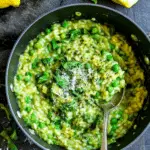
Spring Pea Risotto is a creamy, fresh, and flavorful Italian-inspired dish made with arborio rice, tender peas, mint, and parmesan. This recipe captures the essence of spring in every bite, offering a perfect balance of sweetness, creaminess, and freshness.
- Prep Time: 10 minutes
- Cook Time: 25 minutes
- Total Time: 35 minutes
- Yield: 4 servings
- Category: Main Course
- Method: Stovetop
- Cuisine: Italian
- Diet: Vegetarian
Ingredients
- 1 cup Arborio rice
- 1 ½ cups fresh or frozen peas
- 4–5 cups vegetable or chicken broth (kept warm)
- 2 tbsp butter
- 1 tbsp olive oil
- 1 small onion or shallot, finely chopped
- 2 garlic cloves, minced
- ½ cup freshly grated parmesan cheese
- 2 tbsp fresh mint, chopped
- 1 tsp lemon zest (optional)
- Salt and pepper to taste
Instructions
- Warm the broth in a saucepan and keep it simmering on low heat.
- In a large pan, heat olive oil and 1 tbsp butter over medium heat. Sauté the chopped onion until translucent, then add minced garlic and cook briefly until fragrant.
- Add Arborio rice and stir for 1–2 minutes to coat each grain with oil and butter.
- Pour in one ladle of warm broth, stirring continuously until absorbed. Repeat this process, adding broth gradually while stirring to create a creamy texture.
- Continue cooking for about 18–22 minutes, until the rice is tender but slightly firm in the center.
- Stir in peas, parmesan cheese, and the remaining butter. Mix well until creamy and smooth.
- Add chopped mint, lemon zest, salt, and pepper to taste. Stir gently to combine.
- Serve immediately, topped with extra parmesan and a drizzle of olive oil if desired.
Notes
- Use fresh peas for the best flavor; frozen peas are a great alternative.
- Keep the broth warm throughout cooking for even texture.
- Stir regularly to release starch and achieve natural creaminess.
- Add a splash of white wine after toasting the rice for added depth of flavor.
- For a vegan version, substitute butter with olive oil and parmesan with nutritional yeast.