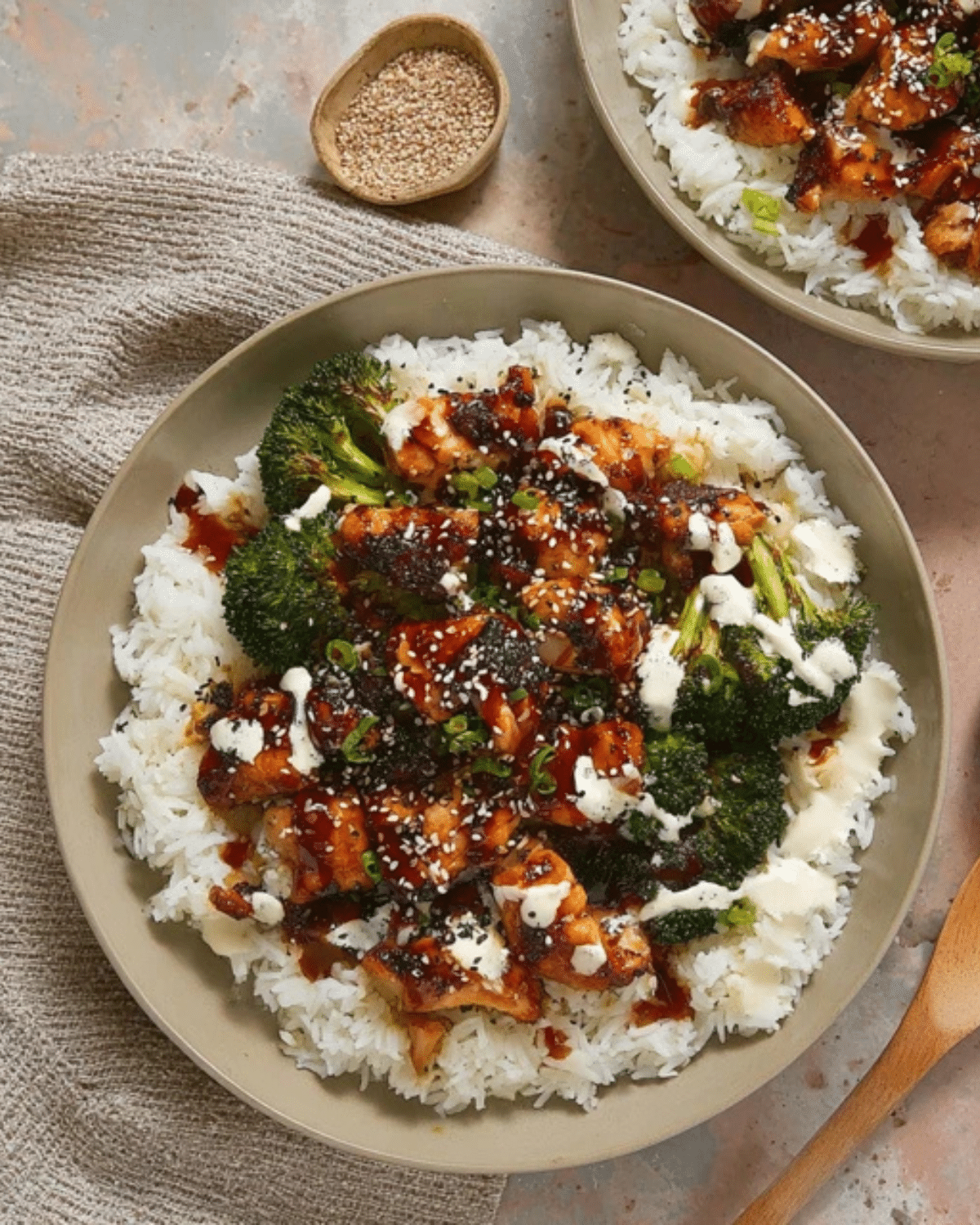
A Sticky Chicken Rice Bowl is the kind of meal that hits all the right notes at once. It’s sweet, savory, slightly sticky, and deeply comforting, yet still simple enough for a weeknight dinner. Juicy chicken coated in a glossy sauce, served over warm rice, and finished with fresh toppings makes this dish both satisfying and versatile. In this guide, you’ll learn exactly what makes a sticky chicken rice bowl so popular, how the flavors come together, and why it’s a go-to option for quick homemade meals that taste better than takeout.
JUMP TO
Table of Contents
What Is a Sticky Chicken Rice Bowl and Why It’s So Popular
A sticky chicken rice bowl is a complete meal built around tender chicken cooked in a thick, flavorful sauce and served over rice. While the concept is simple, the appeal comes from the balance of textures and flavors that feel indulgent without being complicated.
Sticky Chicken Rice Bowl Explained Simply
At its core, this dish combines bite-sized chicken pieces with a sweet and savory sauce that clings to every surface. The sauce thickens as it cooks, creating that signature sticky finish. Once spooned over rice, the chicken and sauce soak slightly into the grains, making each bite rich and flavorful. This format makes a sticky chicken rice bowl easy to customize while still feeling cohesive.
Sweet and Savory Flavor Profile
What sets sticky chicken apart is the balance of flavors. Sweetness often comes from honey or brown sugar, while savory depth comes from soy sauce, garlic, and ginger. A touch of acidity helps cut through the richness, keeping the dish from feeling heavy. Because the sauce coats the chicken rather than pooling at the bottom, the flavor stays bold without overwhelming the rice.
Why Rice Bowls Are Perfect for Easy Meals
Rice bowls are popular for good reason. They’re filling, adaptable, and easy to assemble. A sticky chicken rice bowl works especially well because rice absorbs excess sauce while still maintaining structure. Whether you’re cooking for one or feeding a family, this style of meal scales easily and stores well for leftovers.
Ingredients for the Best Sticky Chicken Rice Bowl
A great sticky chicken rice bowl starts with simple ingredients that work together to build bold flavor. Each component has a purpose, and choosing the right ones makes a noticeable difference in the final result.

Core Ingredients for Sticky Chicken Sauce
The sauce is what defines this dish. A typical sticky sauce combines a sweet element, a salty base, and aromatics. Honey or brown sugar provides sweetness, while soy sauce adds umami and depth. Garlic and ginger bring warmth and fragrance, and a small amount of vinegar or citrus juice balances everything out. When simmered together, these ingredients reduce into a glossy sauce that clings beautifully to the chicken.
Best Cuts of Chicken for Sticky Chicken Bowls
Boneless, skinless chicken thighs are often the top choice because they stay juicy and flavorful during cooking. However, chicken breasts work well too if cooked carefully. Cutting the chicken into evenly sized pieces helps it cook quickly and evenly, which is essential for achieving that sticky coating without drying the meat out.
Choosing the Right Rice for a Rice Bowl
Rice plays a supporting but important role. Jasmine rice is a popular option because it’s fragrant and slightly sticky, making it ideal for soaking up sauce. Long-grain white rice also works well, while brown rice adds a nuttier flavor and extra fiber. The key is to cook the rice until fluffy, not mushy, so it holds up under the saucy chicken.
How to Make Sticky Chicken Rice Bowl Step by Step
This dish comes together quickly once everything is prepped. Cooking in stages ensures the chicken stays tender and the sauce reaches the perfect consistency.
Preparing and Cooking the Chicken
Start by seasoning the chicken lightly with salt and pepper. Heat oil in a skillet over medium-high heat, then add the chicken in a single layer. Let it cook undisturbed for a few minutes so it develops color. Browning the chicken first adds flavor and helps the sauce cling later.
Making the Sticky Sauce Perfectly Thick
Once the chicken is cooked through, reduce the heat slightly and add the sauce ingredients directly to the pan. As the sauce simmers, it begins to thicken and coat the chicken. Stir gently and allow the sauce to reduce until it becomes glossy and sticky. This step is where patience pays off, as rushing can lead to a thin or uneven sauce.
Assembling the Sticky Chicken Rice Bowl
To assemble, spoon warm rice into a bowl and top it with the sticky chicken and sauce. Add fresh toppings like sliced green onions or sesame seeds for contrast. The combination of warm rice, tender chicken, and rich sauce creates a balanced, satisfying bowl.
Sticky Chicken Rice Bowl Variations to Try
One of the biggest advantages of this dish is how adaptable it is. With small changes, you can create a version that suits different tastes or dietary needs.
Spicy Sticky Chicken Rice Bowl
For heat lovers, adding chili paste or red pepper flakes to the sauce brings a spicy kick. The sweetness of the sauce balances the heat, making this version bold without being overpowering.
Healthy Sticky Chicken Rice Bowl Options
To lighten things up, use less sugar in the sauce and serve the chicken over brown rice or cauliflower rice. Adding steamed vegetables like broccoli or snap peas increases volume without adding many calories.
Gluten-Free and Dairy-Free Adjustments
This meal can easily be made gluten-free by using tamari or coconut aminos instead of regular soy sauce. Since the recipe doesn’t rely on dairy, it’s naturally dairy-free as well.
Tips for Perfect Sticky Chicken Every Time
Even though this dish is simple, a few small techniques can make the difference between good and truly great results. These tips help you achieve tender chicken and a sauce that’s glossy, thick, and balanced.
How to Get Chicken Crispy Before Adding Sauce
The key to good texture is browning the chicken properly before introducing any liquid. Make sure the pan is hot and avoid overcrowding. When chicken pieces have space, they sear instead of steaming. That light crust helps the sauce cling better later, giving the bowl more flavor in every bite.
Avoiding Watery or Burnt Sticky Sauce
Sticky sauce needs time to reduce, but too much heat can cause burning. Once the sauce ingredients are added, lower the heat and let it simmer gently. Stir often and watch the texture closely. The sauce should coat the chicken without pooling at the bottom of the pan.
Balancing Sweet, Salty, and Savory Flavors
Taste the sauce as it cooks. If it’s too sweet, a splash of vinegar or citrus juice can help. If it tastes too salty, a bit more honey or water balances things out. This final adjustment step ensures the dish feels rich but not overwhelming.
Meal Prep, Storage, and Reheating Tips
This recipe works extremely well for leftovers, which makes it ideal for busy weeks and planned meals.
Making Sticky Chicken Rice Bowls Ahead of Time
You can prepare the chicken and rice separately up to three days in advance. Store them in airtight containers and assemble just before eating. Keeping components separate helps maintain texture and flavor.
How to Store Leftovers Safely
Leftovers should be cooled fully before refrigerating. Stored properly, the chicken and rice will keep well for up to three days. The sauce often thickens as it sits, which actually enhances the flavor.
Reheating Without Drying Out Chicken
Reheat gently in a skillet or microwave with a splash of water to loosen the sauce. Covering the dish while reheating helps retain moisture and keeps the chicken tender
Sticky Chicken Rice Bowl Nutrition and Dietary Notes
This dish offers a balanced mix of protein, carbohydrates, and fats, making it satisfying and filling without being excessive.
Calories and Nutrition Overview
Chicken provides lean protein, while rice offers energy-sustaining carbohydrates. When paired with vegetables, this meal becomes even more balanced. Portion size plays a big role, but overall, it’s a solid choice for an everyday dinner.
Making a Lower-Calorie Sticky Chicken Bowl
Reducing added sugar and serving smaller portions of rice can significantly lower calories. Swapping white rice for brown rice or adding extra vegetables helps increase fiber and satiety.
Protein and Carb Balance
Because the chicken is the main protein source, this meal keeps you full for hours. Adjusting the rice portion allows you to customize the bowl based on your energy needs.
Frequently Asked Questions About Sticky Chicken Rice Bowls
Can I Use Chicken Thighs Instead of Breasts?
Yes, thighs are often preferred because they stay juicy and flavorful during cooking.
What Makes the Sauce Sticky?
The combination of sugar and gentle simmering causes the sauce to reduce and thicken, creating that sticky texture.
Can Sticky Chicken Rice Bowls Be Frozen?
Yes, the chicken freezes well. For best texture, freeze the chicken separately from the rice.
What Vegetables Go Best in Rice Bowls?
Broccoli, bell peppers, carrots, snap peas, and green onions all pair well with sticky chicken flavors.
Final Thoughts on This Sticky Chicken Rice Bowl Recipe
This sticky chicken rice bowl delivers bold flavor with minimal effort, making it a reliable option for weeknights and meal prep alike. The sweet and savory sauce, tender chicken, and fluffy rice come together in a way that feels comforting yet customizable. Once you master the technique, you can adjust flavors, toppings, and grains to suit your preferences. For additional inspiration on rice bowl cooking methods and flavor balance, trusted food sites like Food Network offer excellent guidance on bowl-style meals.
PrintSticky Chicken Rice Bowl – Sweet, Savory & Better Than Takeout

A sweet and savory sticky chicken rice bowl made with tender chicken coated in a glossy sauce, served over fluffy rice and finished with fresh toppings. Perfect for easy weeknight dinners or meal prep.
- Prep Time: 15 minutes
- Cook Time: 20 minutes
- Total Time: 35 minutes
- Yield: 4 servings 1x
- Category: Main Course
- Method: Stovetop
- Cuisine: Asian-Inspired
- Diet: Low Fat
Ingredients
- 1 lb boneless skinless chicken thighs or breasts, cut into bite-sized pieces
- 1 tablespoon olive oil
- 1/3 cup soy sauce (or tamari for gluten-free)
- 1/4 cup honey or brown sugar
- 2 cloves garlic, minced
- 1 teaspoon fresh ginger, grated
- 1 tablespoon rice vinegar or apple cider vinegar
- 1 teaspoon cornstarch mixed with 2 tablespoons water
- 2 cups cooked jasmine or long-grain white rice
- 2 green onions, sliced
- 1 teaspoon sesame seeds (optional)
Instructions
- Season the chicken lightly with salt and pepper.
- Heat olive oil in a large skillet over medium-high heat.
- Add the chicken in a single layer and cook until browned and cooked through.
- Lower the heat and add soy sauce, honey, garlic, ginger, and vinegar to the pan.
- Simmer for 3–5 minutes, stirring gently, until the sauce begins to thicken.
- Add the cornstarch slurry and cook until the sauce becomes glossy and sticky.
- Serve the sticky chicken over warm rice and garnish with green onions and sesame seeds.
Notes
- Do not overcrowd the pan to ensure the chicken browns properly.
- Adjust sweetness or saltiness by tasting the sauce before serving.
- Chicken thighs stay juicier, but chicken breasts work well if not overcooked.
- Store leftovers in an airtight container for up to 3 days.
Nutrition
- Serving Size: 1 bowl
- Calories: 480 kcal
- Sugar: 14 g
- Sodium: 820 mg
- Fat: 12 g
- Saturated Fat: 2.5 g
- Unsaturated Fat: 8.5 g
- Trans Fat: 0 g
- Carbohydrates: 55 g
- Fiber: 3 g
- Protein: 34 g
- Cholesterol: 95 mg